Cranford
1853
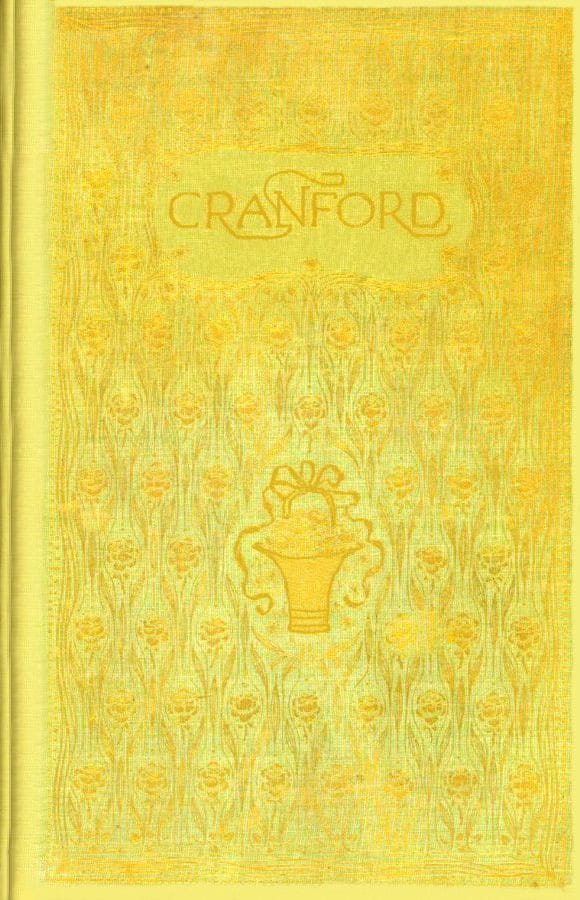
In the small town of Cranford, women rule. Not by revolution, but by quiet decree of custom and circumstance. When the men fade from daily life, the ladies build a civilization of calling cards, elegant poverty, and ironclad propriety. Narrated by a young woman visiting from nearby, the novel observes this peculiar world with fascination and sly affection. At its heart are the Jenkyns sisters: the formidable Miss Deborah and her gentler sibling Miss Matty, who inherits the family home and must navigate dwindling fortunes, social obligations, and the slow march of change. Then Captain Brown arrives, and everything tilts. His informality, his bluntness, his refusal to perform the elaborate rituals the women consider essential, shakes Cranford to its core. What follows is a series of episodes that reveal the town s quirks and contradictions: its generosity and its snobbery, its economy and its elegance, its fear of the new world creeping in. Gaskell wrote something remarkable: a comedy of manners that treats women s inner lives with the same complexity men s novels reserve for parliament and war. It is about what survives when the old order fades, about the small dignities and quiet rebellions of provincial life.
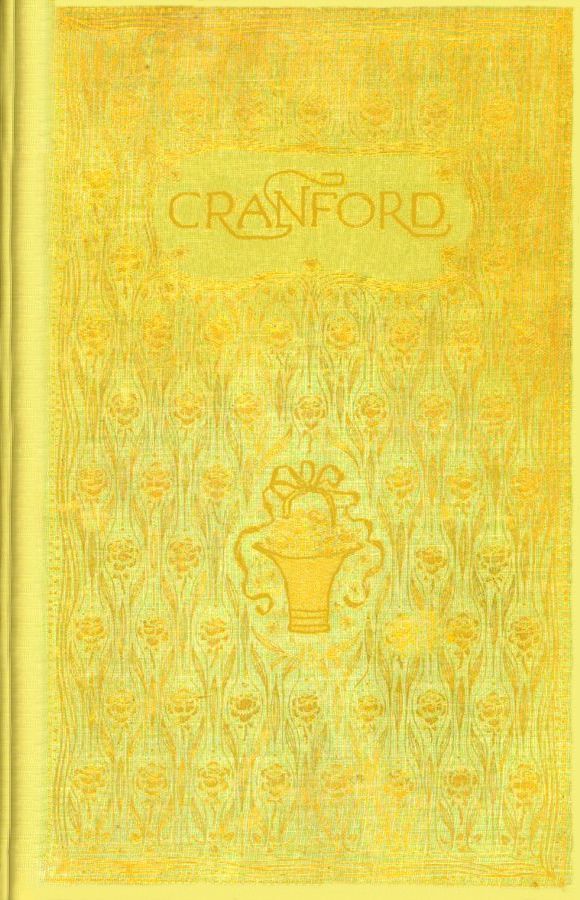
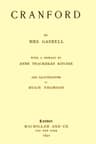
Editions

X-Ray
“I'll not listen to reason... reason always means what someone else has got to say.””
— Elizabeth Cleghorn Gaskell
“Out of the way! We are in the throes of an exceptional emergency! This is no occassion for sport- there is lace at stake!" (Ms. Pole)””
— Elizabeth Cleghorn Gaskell
“Miss Jenkyns wore a cravat, and a little bonnet like a jockey-cap, and altogether had the appearance of a strong-minded woman; although she would have despised the modern idea of women being equal to men. Equal, indeed! she knew they were superior.””
— Elizabeth Cleghorn Gaskell
“Mrs Forrester ... sat in state, pretending not to know what cakes were sent up, though she knew, and we knew, and she knew that we knew, and we knew that she knew that we knew, she had been busy all the morning making tea-bread and sponge-cakes.””
— Elizabeth Cleghorn Gaskell
“But I was right. I think that must be an hereditary quality, for my father says he is scarcely ever wrong.””
— Elizabeth Cleghorn Gaskell
“In the first place, Cranford is in possession of the Amazons; all the holders of houses above a certain rent are women. If a married couple come to settle in the town, somehow the gentleman disappears; he is either fairly frightened to death by being the only man in the Cranford parties, or he is accounted for by being with his regiment, his hip, or closely engaged in business all the week in the great neighbouring commercial town of Drumble, distant only twenty miles on a railroad. In short, whatever does become of the gentlemen, they are not at Cranford.””
— Elizabeth Cleghorn Gaskell
“My father once made us," she began, "keep a diary, in two columns; on one side we were to put down in the morning what we thought would be the course and events of the coming day, and at night we were to put down on the other side what really had happened. It would be to some people rather a sad way of telling their lives," (a tear dropped upon my hand at these words) - "I don't mean that mine has been sad, only so very different to what I expected.””
— Elizabeth Cleghorn Gaskell
“An old lady had an Alderney cow, which she looked upon as a daughter. ....The whole town knew and kindly regarded Miss Betsy Barker's Alderney, therefore great was the sympathy and regret when, in an unguarded moment, the poor cow fell into a lime-pit. She moaned so loudly that she was soon heard and rescued; but meanwhile the poor beast had lost most of her hair and came out looking naked, cold and miserable, in a bare skin. Everybody pitied the animal, though a few could not restrain their smiles at her droll appearance. Miss Betsy Barker absolutely cried with sorrow and dismay; and it was said she thought of trying a bath of oil. This remedy, perhaps, was recommended by some one of the number whose advice she asked; but the proposal, if ever it was made, was knocked on the head by Captain Brown's decided "Get her a flannel waistcoat and flannel drawers, ma'am, if you wish to keep her alive, But my advice is, kill the poor creature at once."Miss Betsy Barker dried her eyes, and thanked the Captain heartily; she set to work, and by-and-by all the town turned out to see the Alderney meekly going to her pasture, clad in dark grey flannel.I have watched her myself many a time. Do you ever see cows dressed in grey flannel in London?””
— Elizabeth Cleghorn Gaskell
“When oranges came in, a curious proceeding was gone through. Miss Jenkyns did not like to cut the fruit, for, as she observed, the juice all ran out nobody knew where, sucking [only I think she used some more recondite word] was in fact the only way of enjoying oranges; but then there was the unpleasant association with a ceremony frequently gone through by little babies; and so, after dessert, in orange season, Miss Jenkyns and Miss Matty used to rise up, possess themselves each of an orange in silence, and withdraw to the privacy of their own rooms to indulge in sucking oranges.””
— Elizabeth Cleghorn Gaskell
About Cranford
Chapter Summaries
- 1
- The narrator introduces Cranford, a town dominated by women who practice 'elegant economy' and adhere to strict social rules. The arrival of Captain Brown, a man who openly discusses his poverty and prefers modern literature, challenges their conventions.
- 2
- Captain Brown's kindness and common sense gradually win over the Cranford ladies, despite Miss Jenkyns's literary rivalry. Tragedy strikes when Captain Brown is killed saving a child from a train, and his elder daughter, Mary, dies shortly after, leaving Miss Jessie alone.
- 3
- After Miss Jenkyns's death, the narrator visits Miss Matty, who is now the head of the household. Miss Pole recounts Miss Matty's youthful love affair with Mr Holbrook, a yeoman deemed unsuitable by Miss Jenkyns, and they encounter him again after decades.
Key Themes
- Gentility and Social Class
- Cranford society is obsessed with maintaining gentility, often at the expense of comfort or practicality. This theme explores the intricate rules of social hierarchy, the importance of 'good blood,' and the subtle ways ladies navigate their status, often contrasting with genuine kindness.
- Economy and Poverty
- The ladies of Cranford practice 'elegant economy,' a euphemism for their genteel poverty, which they strive to conceal. The theme highlights their resourcefulness, pride, and the emotional toll of financial hardship, especially when Miss Matty faces ruin.
- Female Community and Sisterhood
- Cranford is a town 'in possession of the Amazons,' where women form strong bonds and support networks. This theme explores the dynamics of their friendships, their shared values, gossip, and collective efforts to protect and care for one another, particularly in times of crisis.
Characters
- Mary Smith(protagonist)
- The narrator of the story, a young woman from Drumble who frequently visits Cranford and observes its unique society.
- Miss Matty Jenkyns(protagonist)
- A gentle, kind, and somewhat timid spinster, initially overshadowed by her older sister, Deborah, but who grows in strength and independence.
- Miss Jenkyns (Deborah)(supporting)
- Miss Matty's elder sister, a strong-minded, opinionated woman who upholds Cranford's strict social codes and traditions.
- Captain Brown(supporting)
- A kind and sensible half-pay captain who moves to Cranford, initially seen as 'vulgar' for openly discussing his poverty, but eventually earns the ladies' respect.
- Miss Jessie Brown (Mrs Gordon)(supporting)
- Captain Brown's younger daughter, pretty and cheerful, who sacrifices her own happiness to care for her ailing sister and later marries Major Gordon.
- Miss Brown (Mary)(minor)
- Captain Brown's elder daughter, chronically ill and often irritable, whose suffering is a burden on her family.
Link to this book
Add a free, dofollow link to Lex on your blog, forum, syllabus, or reading list.

<a href="https://lex-books.com/book/cranford-f874fbe4-1055-4a98-8581-7531b0db2c1e"><img src="https://lex-books.com/badges/read-on-lex.svg" alt="Read Cranford by Elizabeth Cleghorn Gaskell free on Lex" width="160" height="40"></a>[](https://lex-books.com/book/cranford-f874fbe4-1055-4a98-8581-7531b0db2c1e)[url=https://lex-books.com/book/cranford-f874fbe4-1055-4a98-8581-7531b0db2c1e][img]https://lex-books.com/badges/read-on-lex.svg[/img][/url]Read Cranford by Elizabeth Cleghorn Gaskell free on Lex: https://lex-books.com/book/cranford-f874fbe4-1055-4a98-8581-7531b0db2c1eCite this book
Reading this edition for a paper or guide? Copy a citation.
Gaskell, Elizabeth Cleghorn. Cranford. Lex, lex-books.com/book/cranford-f874fbe4-1055-4a98-8581-7531b0db2c1e.Gaskell, E. C. (1853). Cranford. Lex. https://lex-books.com/book/cranford-f874fbe4-1055-4a98-8581-7531b0db2c1eGaskell, Elizabeth Cleghorn. Cranford. Lex. https://lex-books.com/book/cranford-f874fbe4-1055-4a98-8581-7531b0db2c1e.