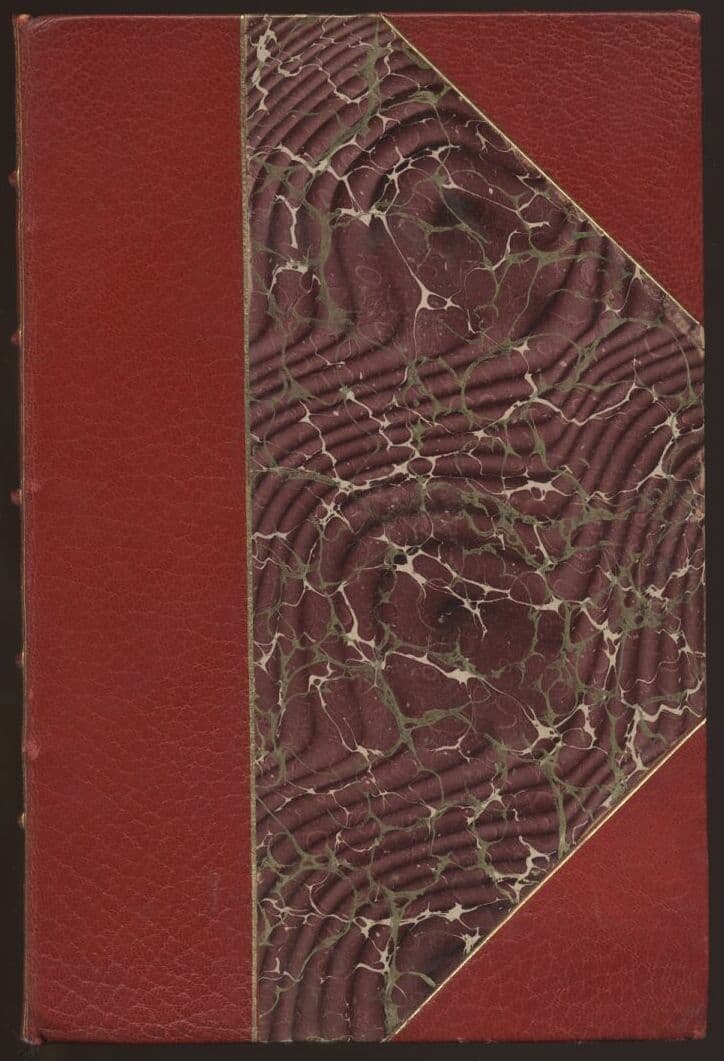
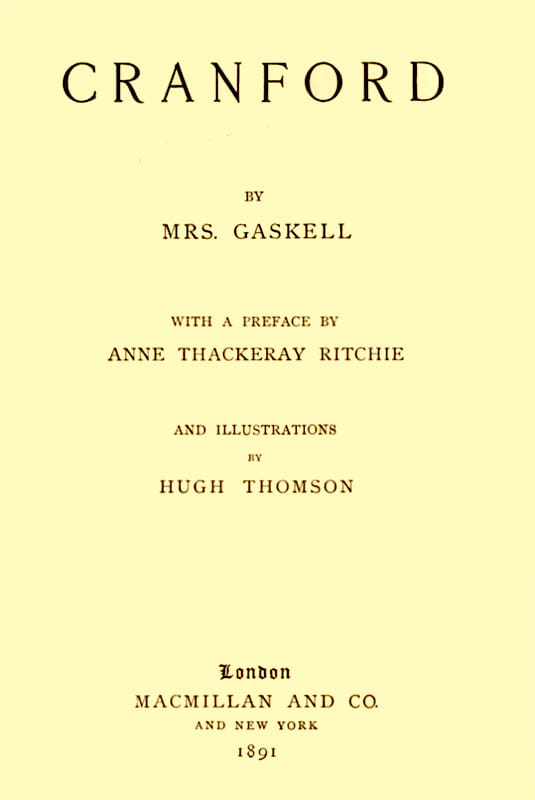
Cranford
1891
In the small town of Cranford, women rule the social roost while the men quietly vanish from dinner parties, too dignified to admit they eat at all. Elizabeth Gaskell crafts a gently devastating portrait of a community where reputations are carefully maintained, small slights are never forgotten, and genuine kindness blooms in the most unexpected corners. At its heart stand the Jenkyns sisters, Miss Matty and Miss Deborah, navigating their diminished fortunes with a mixture of pride and quiet desperation. The Cranford ladies arbitrate fashion, manufacture crises, and maintain what Gaskell calls "elegant economy", a philosophy of dignified poverty that refuses to admit poverty exists at all. What unfolds is neither novel nor short story collection, but something rarer: a sustained meditation on how women build meaning in a world that rarely asks their opinions. Gaskell finds comedy in bonnets and gossip, then pivots to genuine tragedy without ever breaking her warm, watchful eye. Financial collapse, lost loves, and the slow march of modernity all threaten the town's careful equilibrium. Yet Cranford endures because these women do, their eccentricities and cruelties and tenderness all bound together by something like love. For readers who savor the comedy of manners, who find joy in watching clever women negotiate impossible social terrain, this Victorian gem remains as fresh and funny as it was 170 years ago.
Editions

X-Ray
“I'll not listen to reason... reason always means what someone else has got to say.””
— Elizabeth Cleghorn Gaskell
“Out of the way! We are in the throes of an exceptional emergency! This is no occassion for sport- there is lace at stake!" (Ms. Pole)””
— Elizabeth Cleghorn Gaskell
“Miss Jenkyns wore a cravat, and a little bonnet like a jockey-cap, and altogether had the appearance of a strong-minded woman; although she would have despised the modern idea of women being equal to men. Equal, indeed! she knew they were superior.””
— Elizabeth Cleghorn Gaskell
“Mrs Forrester ... sat in state, pretending not to know what cakes were sent up, though she knew, and we knew, and she knew that we knew, and we knew that she knew that we knew, she had been busy all the morning making tea-bread and sponge-cakes.””
— Elizabeth Cleghorn Gaskell
“But I was right. I think that must be an hereditary quality, for my father says he is scarcely ever wrong.””
— Elizabeth Cleghorn Gaskell
“In the first place, Cranford is in possession of the Amazons; all the holders of houses above a certain rent are women. If a married couple come to settle in the town, somehow the gentleman disappears; he is either fairly frightened to death by being the only man in the Cranford parties, or he is accounted for by being with his regiment, his hip, or closely engaged in business all the week in the great neighbouring commercial town of Drumble, distant only twenty miles on a railroad. In short, whatever does become of the gentlemen, they are not at Cranford.””
— Elizabeth Cleghorn Gaskell
“My father once made us," she began, "keep a diary, in two columns; on one side we were to put down in the morning what we thought would be the course and events of the coming day, and at night we were to put down on the other side what really had happened. It would be to some people rather a sad way of telling their lives," (a tear dropped upon my hand at these words) - "I don't mean that mine has been sad, only so very different to what I expected.””
— Elizabeth Cleghorn Gaskell
“An old lady had an Alderney cow, which she looked upon as a daughter. ....The whole town knew and kindly regarded Miss Betsy Barker's Alderney, therefore great was the sympathy and regret when, in an unguarded moment, the poor cow fell into a lime-pit. She moaned so loudly that she was soon heard and rescued; but meanwhile the poor beast had lost most of her hair and came out looking naked, cold and miserable, in a bare skin. Everybody pitied the animal, though a few could not restrain their smiles at her droll appearance. Miss Betsy Barker absolutely cried with sorrow and dismay; and it was said she thought of trying a bath of oil. This remedy, perhaps, was recommended by some one of the number whose advice she asked; but the proposal, if ever it was made, was knocked on the head by Captain Brown's decided "Get her a flannel waistcoat and flannel drawers, ma'am, if you wish to keep her alive, But my advice is, kill the poor creature at once."Miss Betsy Barker dried her eyes, and thanked the Captain heartily; she set to work, and by-and-by all the town turned out to see the Alderney meekly going to her pasture, clad in dark grey flannel.I have watched her myself many a time. Do you ever see cows dressed in grey flannel in London?””
— Elizabeth Cleghorn Gaskell
“When oranges came in, a curious proceeding was gone through. Miss Jenkyns did not like to cut the fruit, for, as she observed, the juice all ran out nobody knew where, sucking [only I think she used some more recondite word] was in fact the only way of enjoying oranges; but then there was the unpleasant association with a ceremony frequently gone through by little babies; and so, after dessert, in orange season, Miss Jenkyns and Miss Matty used to rise up, possess themselves each of an orange in silence, and withdraw to the privacy of their own rooms to indulge in sucking oranges.””
— Elizabeth Cleghorn Gaskell
Link to this book
Add a free, dofollow link to Lex on your blog, forum, syllabus, or reading list.

<a href="https://lex-books.com/book/cranford-0c71a7a6-2902-4cc6-a1e1-21eb3258e366"><img src="https://lex-books.com/badges/read-on-lex.svg" alt="Read Cranford by Elizabeth Cleghorn Gaskell free on Lex" width="160" height="40"></a>[](https://lex-books.com/book/cranford-0c71a7a6-2902-4cc6-a1e1-21eb3258e366)[url=https://lex-books.com/book/cranford-0c71a7a6-2902-4cc6-a1e1-21eb3258e366][img]https://lex-books.com/badges/read-on-lex.svg[/img][/url]Read Cranford by Elizabeth Cleghorn Gaskell free on Lex: https://lex-books.com/book/cranford-0c71a7a6-2902-4cc6-a1e1-21eb3258e366Cite this book
Reading this edition for a paper or guide? Copy a citation.
Gaskell, Elizabeth Cleghorn. Cranford. Lex, lex-books.com/book/cranford-0c71a7a6-2902-4cc6-a1e1-21eb3258e366.Gaskell, E. C. (1891). Cranford. Lex. https://lex-books.com/book/cranford-0c71a7a6-2902-4cc6-a1e1-21eb3258e366Gaskell, Elizabeth Cleghorn. Cranford. Lex. https://lex-books.com/book/cranford-0c71a7a6-2902-4cc6-a1e1-21eb3258e366.