Collected Essays, Volume V: Science and Christian Tradition: Essays
Collected Essays, Volume V: Science and Christian Tradition: Essays
Thomas Henry Huxley, Darwin's ferocious bulldog, turns his considerable intellect to the war between science and Christian tradition in this provocative collection. These late 19th-century essays crackle with the energy of a man who has spent his life challenging religious certainties in defense of empirical truth. Huxley subjects biblical narratives to rigorous scientific scrutiny, questions the foundations of Christian doctrine, and defends his lifelong advocacy for unfettered scientific inquiry against its defenders. The opening reflections reveal a thinker at once combative and contemplative, wrestling with both his critics and his own legacy. For anyone interested in the origins of modern secularism, the birth of scientific agnosticism, or the Victorian intellectual battles that shaped the modern world, these essays remain essential. Huxley spares no one his criticism, but he also models the reasoned, passionate inquiry he demands of others. This is not historical curiosity; it is the foundational text of how we argue about faith and science today.
Editions
X-Ray
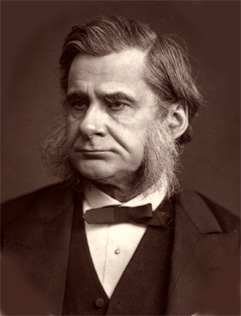
“When I reached intellectual maturity, and began to ask myself whether I was an atheist, a theist, or a pantheist; a materialist or an idealist; a Christian or a freethinker, I found that the more I learned and reflected, the less ready was the answer; until at last I came to the conclusion that I had neither art nor part with any of these denominations, except the last. The one thing in which most of these good people were agreed was the one thing in which I differed from them. They were quite sure that they had attained a certain 'gnosis'--had more or less successfully solved the problem of existence; while I was quite sure I had not, and had a pretty strong conviction that the problem was insoluble. And, with Hume and Kant on my side, I could not think myself presumptuous in holding fast by that opinion ...So I took thought, and invented what I conceived to be the appropriate title of 'agnostic'. It came into my head as suggestively antithetic to the 'gnostic' of Church history, who professed to know so much about the very things of which I was ignorant; and I took the earliest opportunity of parading it at our Society, to show that I, too, had a tail, like the other foxes.””
— Thomas Henry Huxley
Link to this book
Add a free, dofollow link to Lex on your blog, forum, syllabus, or reading list.

<a href="https://lex-books.com/book/collected-essays-volume-v-science-and-christian-tradition-essays-e3323a52-5836-4414-8951-38e9802e5860"><img src="https://lex-books.com/badges/read-on-lex.svg" alt="Read Collected Essays, Volume V: Science and Christian Tradition: Essays by Thomas Henry Huxley free on Lex" width="160" height="40"></a>[](https://lex-books.com/book/collected-essays-volume-v-science-and-christian-tradition-essays-e3323a52-5836-4414-8951-38e9802e5860)[url=https://lex-books.com/book/collected-essays-volume-v-science-and-christian-tradition-essays-e3323a52-5836-4414-8951-38e9802e5860][img]https://lex-books.com/badges/read-on-lex.svg[/img][/url]Read Collected Essays, Volume V: Science and Christian Tradition: Essays by Thomas Henry Huxley free on Lex: https://lex-books.com/book/collected-essays-volume-v-science-and-christian-tradition-essays-e3323a52-5836-4414-8951-38e9802e5860Cite this book
Reading this edition for a paper or guide? Copy a citation.
Huxley, Thomas Henry. Collected Essays, Volume V: Science and Christian Tradition: Essays. Lex, lex-books.com/book/collected-essays-volume-v-science-and-christian-tradition-essays-e3323a52-5836-4414-8951-38e9802e5860.Huxley, T. H. (n.d.). Collected Essays, Volume V: Science and Christian Tradition: Essays. Lex. https://lex-books.com/book/collected-essays-volume-v-science-and-christian-tradition-essays-e3323a52-5836-4414-8951-38e9802e5860Huxley, Thomas Henry. Collected Essays, Volume V: Science and Christian Tradition: Essays. Lex. https://lex-books.com/book/collected-essays-volume-v-science-and-christian-tradition-essays-e3323a52-5836-4414-8951-38e9802e5860.