Yeast
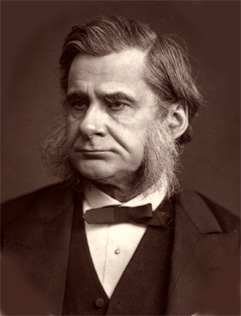
Thomas Henry Huxley, the Victorian firebrand who championed Darwin's theory of evolution, turns his formidable intellect to the humble organism that transforms grape juice into wine and dough into bread. Delivered as a lecture in the late 19th century, "Yeast" is a masterclass in scientific exposition: Huxley begins with the familiar, the bubbles in brewing ale and the rise of dough, then systematically unravels the living machinery behind these transformations. He introduces readers to "Torula", the yeast organism, and walks through elegant experiments that prove this microscopic fungus consumes sugar and excretes alcohol and carbon dioxide with the same mechanical precision as any larger creature. But Huxley being Huxley, he pushes further, drawing a provocative parallel between fermenting yeast and the spread of disease: if these spores can propagate fermentation like contagion, what does that imply about how illnesses travel between bodies? The implication hung in the air of Victorian science like lightning before a storm. Reading this today, you are not just learning about yeast, you are watching one of history's greatest science communicators make the invisible world visible, and wondering what other familiar phenomena conceal universe-shaking secrets.
Editions
Link to this book
Add a free, dofollow link to Lex on your blog, forum, syllabus, or reading list.

<a href="https://lex-books.com/book/yeast-41af28d4-aecb-4f0f-bdaf-004434ed9dd7"><img src="https://lex-books.com/badges/read-on-lex.svg" alt="Read Yeast by Thomas Henry Huxley free on Lex" width="160" height="40"></a>[](https://lex-books.com/book/yeast-41af28d4-aecb-4f0f-bdaf-004434ed9dd7)[url=https://lex-books.com/book/yeast-41af28d4-aecb-4f0f-bdaf-004434ed9dd7][img]https://lex-books.com/badges/read-on-lex.svg[/img][/url]Read Yeast by Thomas Henry Huxley free on Lex: https://lex-books.com/book/yeast-41af28d4-aecb-4f0f-bdaf-004434ed9dd7Cite this book
Reading this edition for a paper or guide? Copy a citation.
Huxley, Thomas Henry. Yeast. Lex, lex-books.com/book/yeast-41af28d4-aecb-4f0f-bdaf-004434ed9dd7.Huxley, T. H. (n.d.). Yeast. Lex. https://lex-books.com/book/yeast-41af28d4-aecb-4f0f-bdaf-004434ed9dd7Huxley, Thomas Henry. Yeast. Lex. https://lex-books.com/book/yeast-41af28d4-aecb-4f0f-bdaf-004434ed9dd7.