On the Study of Zoology
1888
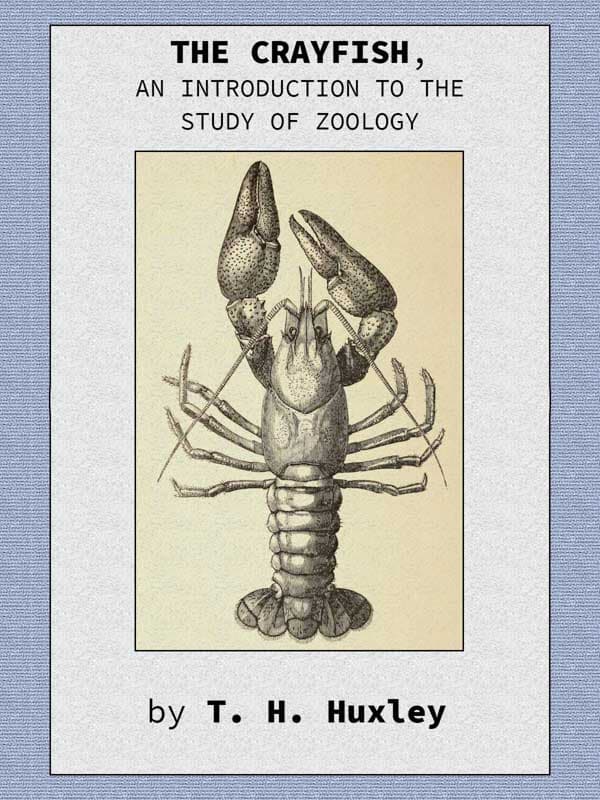
Thomas Henry Huxley brought science to Victorian readers with an intensity that earned him the nickname "Darwin's Bulldog," and this 1888 volume showcases his gifts for making the living world newly intelligible. Rather than overwhelming his readers with taxonomic breadth, Huxley chooses a single creature, the lobster, and dissects it with extraordinary care to reveal the principles of morphology, physiology, and classification that unite all animal life. The result is a masterclass in concrete thinking: abstract scientific concepts become visible through one familiar specimen examined with startling intimacy. What elevates the book beyond mere textbook is Huxley's insistence that science must be done, not just read about. He advocates for hands-on engagement with natural history, arguing that students must handle, observe, and experiment their way to understanding. This practical philosophy helped shape modern science education. While the book naturally sits in Darwin's shadow, Huxley was, after all, evolution's most vocal defender, it functions as a rigorous work of zoological science in its own right, one that demonstrates how much clarity emerges when a brilliant mind commits to teaching well.
Editions
Link to this book
Add a free, dofollow link to Lex on your blog, forum, syllabus, or reading list.

<a href="https://lex-books.com/book/on-the-study-of-zoology-5814316c-30ad-4e13-ac98-d744d72da6c8"><img src="https://lex-books.com/badges/read-on-lex.svg" alt="Read On the Study of Zoology by Thomas Henry Huxley free on Lex" width="160" height="40"></a>[](https://lex-books.com/book/on-the-study-of-zoology-5814316c-30ad-4e13-ac98-d744d72da6c8)[url=https://lex-books.com/book/on-the-study-of-zoology-5814316c-30ad-4e13-ac98-d744d72da6c8][img]https://lex-books.com/badges/read-on-lex.svg[/img][/url]Read On the Study of Zoology by Thomas Henry Huxley free on Lex: https://lex-books.com/book/on-the-study-of-zoology-5814316c-30ad-4e13-ac98-d744d72da6c8Cite this book
Reading this edition for a paper or guide? Copy a citation.
Huxley, Thomas Henry. On the Study of Zoology. Lex, lex-books.com/book/on-the-study-of-zoology-5814316c-30ad-4e13-ac98-d744d72da6c8.Huxley, T. H. (1888). On the Study of Zoology. Lex. https://lex-books.com/book/on-the-study-of-zoology-5814316c-30ad-4e13-ac98-d744d72da6c8Huxley, Thomas Henry. On the Study of Zoology. Lex. https://lex-books.com/book/on-the-study-of-zoology-5814316c-30ad-4e13-ac98-d744d72da6c8.