Chikago: Nykyajan Romaani
1905
Chikago: Nykyajan Romaani
1905
Translated by O. A. (Otto Aleksanteri) Joutsen
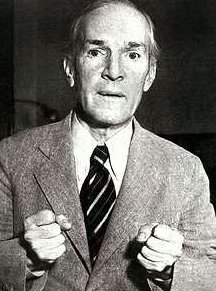
Upton Sinclair's 1905 blockbuster did something few novels have ever achieved: it rewrote American law. But first, it shattered readers with a story of unbearable darkness. Jurgis Rudkus, a Lithuanian immigrant, arrives in Chicago with his young wife Ona and high hopes, believing that honest work in the city's legendary meatpacking plants will build a future. Instead, they find a labyrinth of exploitation so savage it defies imagination. Workers labor in filth that would revolt modern sensibilities, suffer catastrophic injuries on the job only to be cast aside, and watch their wages evaporate into a system designed to keep them trapped. Women face predation from the men who employ them. Children are fed into the machinery of industry. Families disintegrate into poverty, illness, and despair. Sinclair, a muckraking journalist, embedded with workers for months to document what he saw. The result is a novel that reads less like fiction and more like an indictment filed in hell. It caused immediate public furor. President Theodore Roosevelt read it, commissioned an investigation, and within months the Meat Inspection Act and Pure Food and Drug Act became law. But Sinclair aimed higher than regulatory reform. He wanted socialism. What he got was a literary grenade that detonated across American consciousness and refuses to quiet down.
Editions
X-Ray
“They use everything about the hog except the squeal.””
— Upton Sinclair
“The rich people not only had all the money, they had all the chance to get more; they had all the know-ledge and the power, and so the poor man was down, and he had to stay down.””
— Upton Sinclair
“There is one kind of prison where the man is behind bars, and everything that he desires is outside; and there is another kind where the things are behind the bars, and the man is outside.””
— Upton Sinclair
“Into this wild-beast tangle these men had been born without their consent, they had taken part in it because they could not help it; that they were in jail was no disgrace to them, for the game had never been fair, the dice were loaded. They were swindlers and thieves of pennies and dimes, and they had been trapped and put out of the way by the swindlers and thieves of millions of dollars.””
— Upton Sinclair
“The great corporation which employed you lied to you, and lied to the whole country”
— Upton Sinclair
“If we are the greatest nation the sun ever shone upon, it would seem to be mainly because we have been able to goad our wage-earners to this pitch of frenzy.””
— Upton Sinclair
“To do that would mean, not merely to be defeated, but to acknowledge defeat- and the difference between these two things is what keeps the world going.””
— Upton Sinclair
“One could not stand and watch very long without being philosophical, without beginning to deal in symbols and similes, and to hear the hog-squeal of the universe.... Each of them had an individuality of his own, a will of his own, a hope and a heart's desire; each was full of self-confidence, of self-importance, and a sense of dignity. And trusting and strong in faith he had gone about his business, the while a black shadow hung over him, and a horrid Fate in his pathway. Now suddenly it had swooped upon him, and had seized him by the leg. Relentless, remorseless, all his protests, his screams were nothing to it. It did its cruel will with him, as if his wishes, his feelings, had simply no existence at all; it cut his throat and watched him gasp out his life.””
— Upton Sinclair
“They were trying to save their souls- and who but a fool could fail to see that all that was the matter with their souls was that they had not been able to get a decent existence for their bodies?””
— Upton Sinclair
Link to this book
Add a free, dofollow link to Lex on your blog, forum, syllabus, or reading list.

<a href="https://lex-books.com/book/chikago-nykyajan-romaani-695ec228-a8b8-4f23-a6b6-840e83c50efd"><img src="https://lex-books.com/badges/read-on-lex.svg" alt="Read Chikago: Nykyajan Romaani by Upton Sinclair free on Lex" width="160" height="40"></a>[](https://lex-books.com/book/chikago-nykyajan-romaani-695ec228-a8b8-4f23-a6b6-840e83c50efd)[url=https://lex-books.com/book/chikago-nykyajan-romaani-695ec228-a8b8-4f23-a6b6-840e83c50efd][img]https://lex-books.com/badges/read-on-lex.svg[/img][/url]Read Chikago: Nykyajan Romaani by Upton Sinclair free on Lex: https://lex-books.com/book/chikago-nykyajan-romaani-695ec228-a8b8-4f23-a6b6-840e83c50efdCite this book
Reading this edition for a paper or guide? Copy a citation.
Sinclair, Upton. Chikago: Nykyajan Romaani. Lex, lex-books.com/book/chikago-nykyajan-romaani-695ec228-a8b8-4f23-a6b6-840e83c50efd.Sinclair, U. (1905). Chikago: Nykyajan Romaani. Lex. https://lex-books.com/book/chikago-nykyajan-romaani-695ec228-a8b8-4f23-a6b6-840e83c50efdSinclair, Upton. Chikago: Nykyajan Romaani. Lex. https://lex-books.com/book/chikago-nykyajan-romaani-695ec228-a8b8-4f23-a6b6-840e83c50efd.