Chance (version 2)
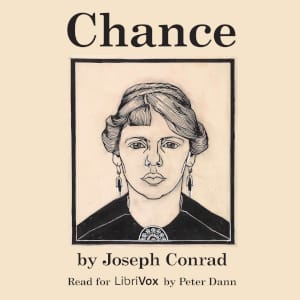
Conrad's most accessible novel is also his most unsettling about the games we play with other people's lives. Narrated by Marlow, the wandering observer who can never quite turn away from a mystery, Chance follows Flora de Barrall, an innocent young woman whose bland, self-important father turns out to be a thoroughly nasty piece of work. When her father fakes his own death and disappears with money he stole from his own investors, Flora is left vulnerable to a parade of would-be saviors: the idealist who thinks he knows what's best for her, the cynic who sees opportunity, and the honest man who loves her but cannot act. Marlow watches, comments, and wrestles with his own powerlessness to change anything. The novel asks an uncomfortable question: when we intervene in another's fate, are we guided by compassion or something closer to vanity? Conrad's portrait of the gap between our stated intentions and our actual motives is merciless and darkly funny. This was his first popular success, and it remains remarkably modern, the closest Conrad comes to writing about the ways decent people become complicit in exploitation simply by assuming they know what's best for those weaker than themselves.
Editions


Link to this book
Add a free, dofollow link to Lex on your blog, forum, syllabus, or reading list.

<a href="https://lex-books.com/book/chance-version-2-587f67e5-8cec-4679-aa69-7aaa0a9fd937"><img src="https://lex-books.com/badges/read-on-lex.svg" alt="Read Chance (version 2) by Joseph Conrad free on Lex" width="160" height="40"></a>[](https://lex-books.com/book/chance-version-2-587f67e5-8cec-4679-aa69-7aaa0a9fd937)[url=https://lex-books.com/book/chance-version-2-587f67e5-8cec-4679-aa69-7aaa0a9fd937][img]https://lex-books.com/badges/read-on-lex.svg[/img][/url]Read Chance (version 2) by Joseph Conrad free on Lex: https://lex-books.com/book/chance-version-2-587f67e5-8cec-4679-aa69-7aaa0a9fd937Cite this book
Reading this edition for a paper or guide? Copy a citation.
Conrad, Joseph. Chance (version 2). Lex, lex-books.com/book/chance-version-2-587f67e5-8cec-4679-aa69-7aaa0a9fd937.Conrad, J. (n.d.). Chance (version 2). Lex. https://lex-books.com/book/chance-version-2-587f67e5-8cec-4679-aa69-7aaa0a9fd937Conrad, Joseph. Chance (version 2). Lex. https://lex-books.com/book/chance-version-2-587f67e5-8cec-4679-aa69-7aaa0a9fd937.