Boheemielämää
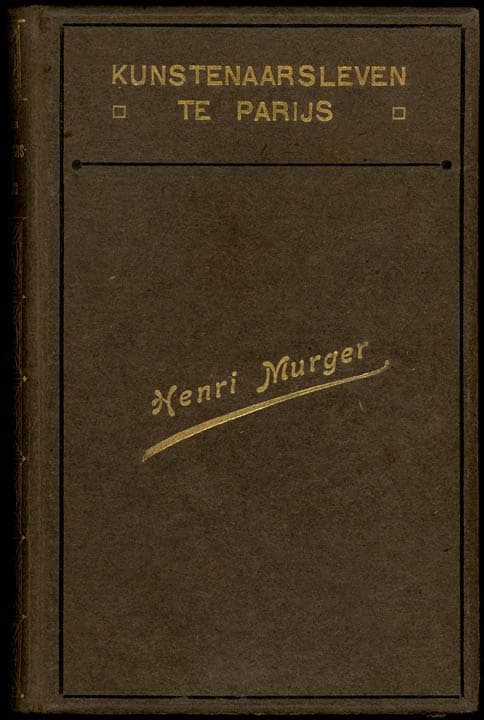
A novel written in the mid-19th century. The narrative centers around a group of young artists and bohemians in Paris, exploring their struggles, dreams, and the vibrant yet harsh realities of creative life. It delves into themes of poverty, artistic ambition, and the complex relationships woven among the characters, particularly highlighting the life of an aspiring artist. At the start of the story, we meet Alexandre Schaunard, a painter who grapples with his looming eviction due to unpaid rent. As the morning progresses, Schaunard humorously navigates his chaotic living situation while preparing for the imminent arrival of his landlord. He is characterized by his whimsical and carefree approach to life, embodying the spirit of the bohemian lifestyle. In a series of interactions, Schaunard’s struggles to secure a new place while juggling his artistic aspirations set the stage for the comical and poignant exploration of a community bound by shared hardships and dreams.
Editions
X-Ray
“Study is the child of silence and mystery.””
— Henri Murger
“Art is a barren route, of which glory is the oasis.””
— Henri Murger
“The day is not over yet. You may still meet with Providence, who never gets up before noon.””
— Henri Murger
“It is extraordinary Monsieur Benoit, but everytime I think of your triple character as a landlord, a bootmaker, and a friend, I am tempted to believe in the Trinity.””
— Henri Murger
“Mida te nimetate õnneks? Kas kirge, mis paneb inimese sellisesse seisukorda nagu Jacques praegu? Näidake talle nüüd mõnda meistriteost, ja ta ei vaataks selle poolegi. Ja selleks et kas või kord veel näha oma kallimat, on ta valmis talluma Tiziani või Raffaeli maalil. Vaat minu kallim on surematu ega reeda mind iialgi. Ta elab Louvre'is ja tema nimi on Mona Lisa.””
— Henri Murger
“Kulla härra. Meist kahest ei saa kunagi sõpru, ja vaat mispärast. Välise sarnasuse puudumine viitab peaaegu alati vaimsele erinevusele, selles suhtes on filosoofia ja arstiteadus täiesti ühel arvamusel." "Mis moodi?" imestas Carolus. "Vaadake," osutas Marcel oma jalgadele, "teie jalanõud on mulle kohutavalt väikesed ja see tõendab, et ka iseloomud on meil täiesti erinevad.””
— Henri Murger
“Täpselt samuti on lugu kolmainsuse, selle jumaliku kolmnurgaga: kui lisada veel üks isik, siis pole see enam kolmainsus, vaid ruut, ja usu aluspõhimõte on rikutud!””
— Henri Murger
“Boheemlus on kunstniku elus proovilepaneku aeg; see juhatab teda kas akadeemikuellu, haiglasse või surnukuuri.””
— Henri Murger
“Rodolphe attendit un quart d'heure sous le vestibule. Quand l'interne revint vers lui, il lui prit la main et ne lui dit que ces mots:”
— Henri Murger
Link to this book
Add a free, dofollow link to Lex on your blog, forum, syllabus, or reading list.

<a href="https://lex-books.com/book/boheemiel-m-e3ad550b-1fd2-45e5-b37c-2db6ecfc2781"><img src="https://lex-books.com/badges/read-on-lex.svg" alt="Read Boheemielämää by Henri Murger free on Lex" width="160" height="40"></a>[](https://lex-books.com/book/boheemiel-m-e3ad550b-1fd2-45e5-b37c-2db6ecfc2781)[url=https://lex-books.com/book/boheemiel-m-e3ad550b-1fd2-45e5-b37c-2db6ecfc2781][img]https://lex-books.com/badges/read-on-lex.svg[/img][/url]Read Boheemielämää by Henri Murger free on Lex: https://lex-books.com/book/boheemiel-m-e3ad550b-1fd2-45e5-b37c-2db6ecfc2781Cite this book
Reading this edition for a paper or guide? Copy a citation.
Murger, Henri. Boheemielämää. Lex, lex-books.com/book/boheemiel-m-e3ad550b-1fd2-45e5-b37c-2db6ecfc2781.Murger, H. (n.d.). Boheemielämää. Lex. https://lex-books.com/book/boheemiel-m-e3ad550b-1fd2-45e5-b37c-2db6ecfc2781Murger, Henri. Boheemielämää. Lex. https://lex-books.com/book/boheemiel-m-e3ad550b-1fd2-45e5-b37c-2db6ecfc2781.