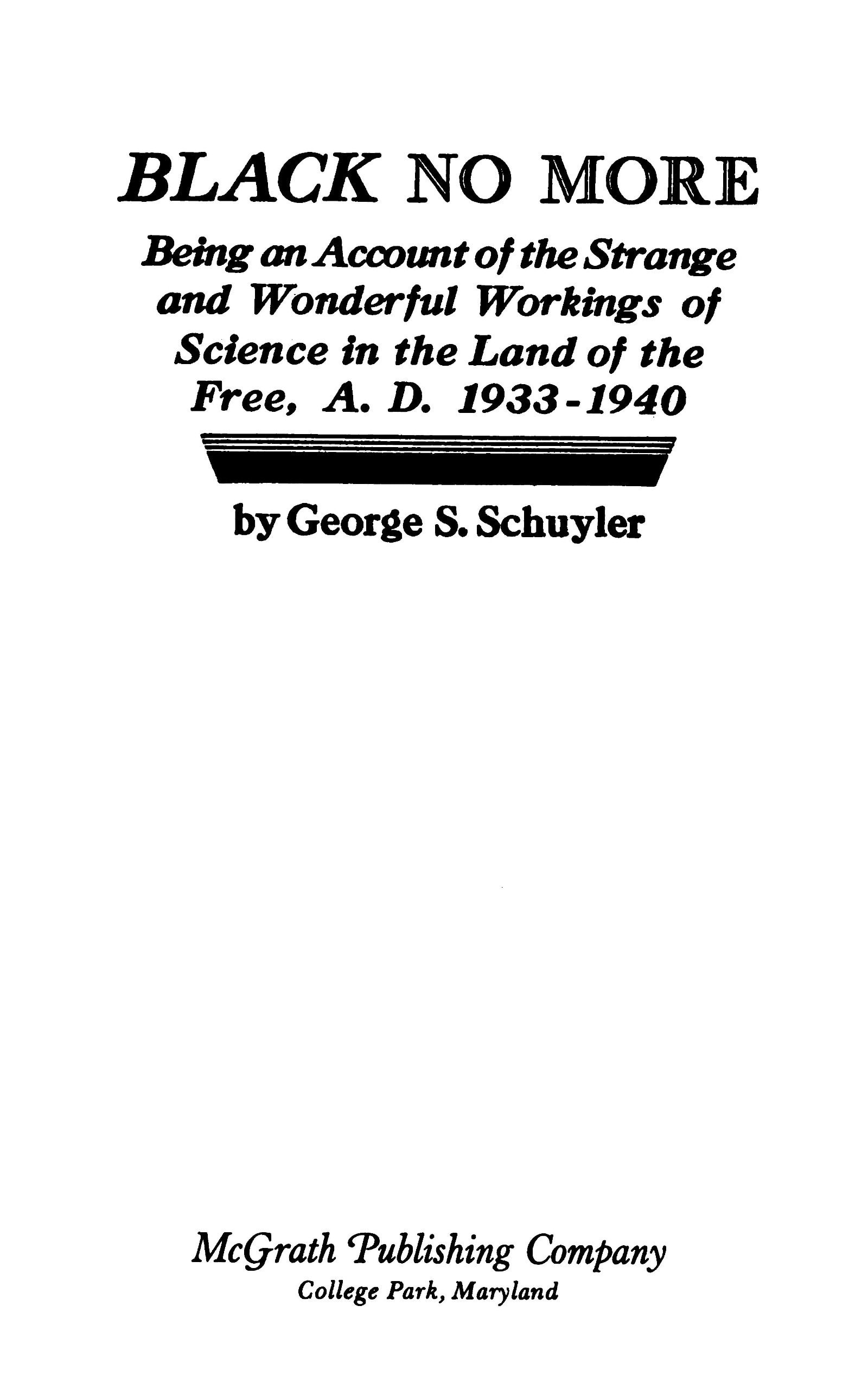
Black No More: Being an Account of the Strange and Wonderful Workings of Science in the Land of the Free, A.d. 1933-1940
1931
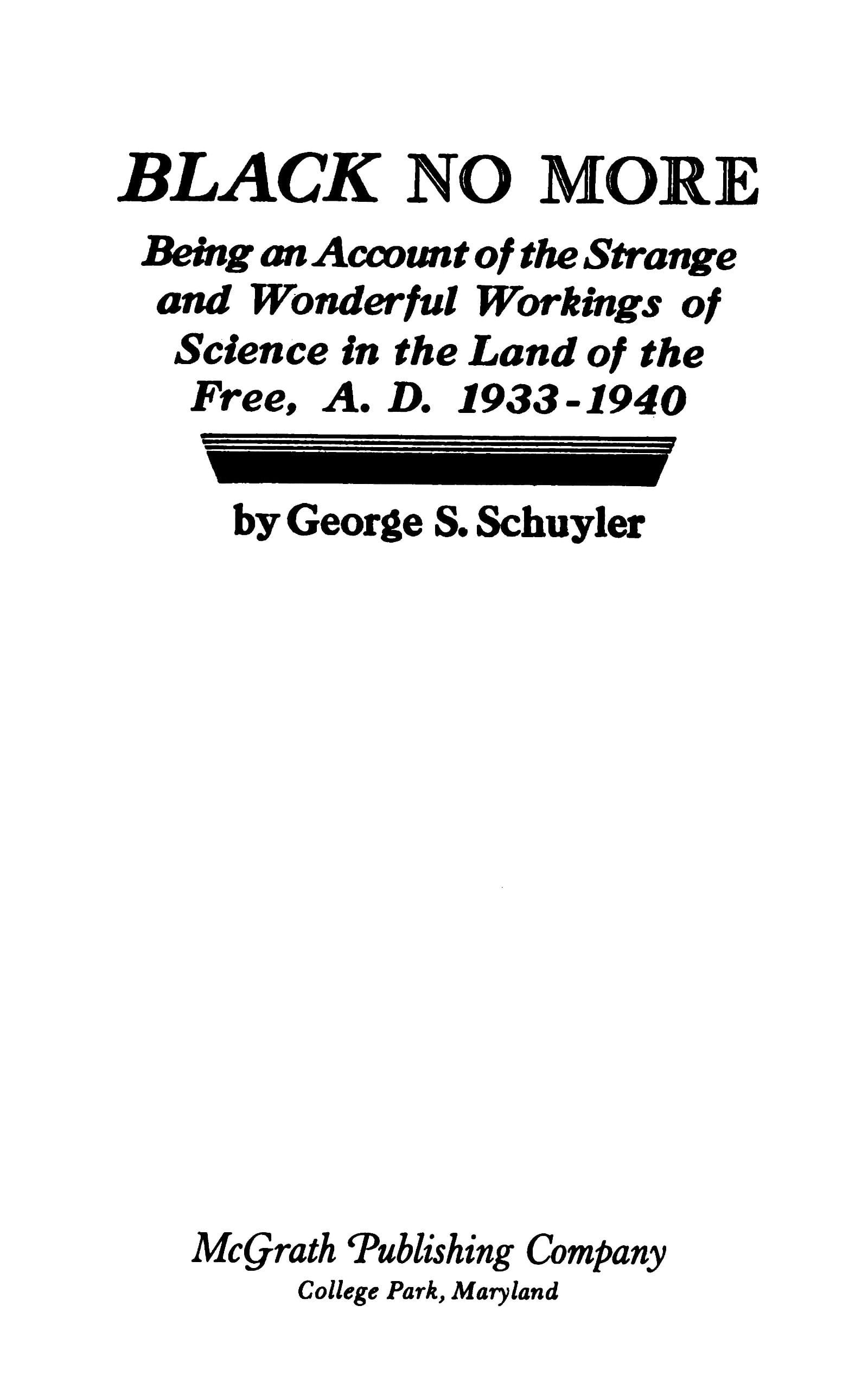
Black No More: Being an Account of the Strange and Wonderful Workings of Science in the Land of the Free, A.d. 1933-1940
1931
What if Black Americans could become white? George S. Schuyler asks this question with merciless wit in a novel that feels almost terrifyingly prescient today. Published in 1931, Black No More imagines a scientific procedure that erases Black identity, and follows every absurd, uncomfortable consequence. Max Disher, a sharp-dressed insurance salesman in Harlem, jumps at the chance to become Matthew Fisher, a white man. He wins the girl who rejected him when she thought he was Black. He infiltrates the Knights of Nordica, a virulently white supremacist organization, and rises to leadership. The satire only gets sharper from there. Schuyler strips racial identity down to its logical extreme: if whiteness is just a costume, who wears it best? The answer is devastating. This is a novel that forces you to laugh at America's most sacred lie, then wonder why you're laughing.
Editions

X-Ray
“He quickly saw that these people would believe anything that was shouted at them loudly and convincingly enough. He knew what would fetch their applause and bring in their memberships and he intended to repeat it over and over.””
— George S. Schuyler
“Like most men with a vision, a plan, a program or a remedy, he fondly imagined people to be intelligent enough to accept a good thing when it was offered to them, which was conclusive evidence that he knew little about the human race.””
— George S. Schuyler
“Another Presidential election was less than two years off. There would have to be fast work to ward off disaster. Far-sighted people, North and South, even foresaw the laboring people soon forsaking both of the old parties and going Socialist. Politicians and business men shuddered at the thought of such a tragedy and saw horrible visions of old-age pensions, eight-hour laws, unemployment insurance, workingmen’s compensation, minimum-wage legislation, abolition of child labor, dissemination of birth-control information, monthly vacations for female workers, two-month vacations for prospective mothers, both with pay, and the probable killing of individual initiative and incentive by taking the ownership of national capital out of the hands of two million people and putting it into the hands of one hundred and twenty million.””
— George S. Schuyler
“What mattered such little things when the very foundation of civilization, white supremacy, was threatened?””
— George S. Schuyler
“Then he recalled what a Negro street speaker had said one night on the corner of 138th Street and Seventh Avenue in New York: that unorganized labor meant cheap labor; that the guarantee of cheap labor was an effective means of luring new industries into the South; that so long as the ignorant white masses could be kept thinking of the menace of the Negro to Caucasian race purity and political control, they would give little thought to labor organization.””
— George S. Schuyler
“A lifetime of being Negroes in the United States had convinced them that there was great advantage in being white.””
— George S. Schuyler
“He would just play around, enjoy life and laugh at the white folks up his sleeve. God! What an adventure! What a treat it would be to mingle with white people in places where as a youth he had never dared to enter. At last he felt like an American citizen.””
— George S. Schuyler
“There was something lacking in these ofay places of amusement or else there was something present that one didn’t find in the black-and-tan resorts in Harlem. The joy and abandon here was obviously forced. Patrons went to extremes to show each other they were having a wonderful time. It was all so strained and quite unlike anything to which he had been accustomed. The Negroes, it seemed to him, were much gayer, enjoyed themselves more deeply and yet they were more restrained, actually more refined. Even their dancing was different. They followed the rhythm accurately, effortlessly and with easy grace; these lumbering couples, out of step half the time and working as strenuously as stevedores emptying the bowels of a freighter, were noisy, awkward, inelegant. At their best they were gymnastic where the Negroes were sensuous.””
— George S. Schuyler
“Among the working classes, in the next few months, there grew up a certain prejudice against all fellow workers who were exceedingly pale.The new Caucasians began to grow self-conscious and resent the curious gazes bestowed upon their lily-white countenances in all public places. They wrote indignant letters to the newspapers about the insults and discriminations to which they were increasingly becoming subjected. They protested vehemently against the effort on the part of employers to pay them less and on the part of the management of public institutions to segregate them.””
— George S. Schuyler
Link to this book
Add a free, dofollow link to Lex on your blog, forum, syllabus, or reading list.

<a href="https://lex-books.com/book/black-no-more-being-an-account-of-the-strange-and-wonderful-workings-of-science--a4162918-fdae-4239-a15f-845cde403f05"><img src="https://lex-books.com/badges/read-on-lex.svg" alt="Read Black No More: Being an Account of the Strange and Wonderful Workings of Science in the Land of the Free, A.d. 1933-1940 by George S. Schuyler free on Lex" width="160" height="40"></a>[](https://lex-books.com/book/black-no-more-being-an-account-of-the-strange-and-wonderful-workings-of-science--a4162918-fdae-4239-a15f-845cde403f05)[url=https://lex-books.com/book/black-no-more-being-an-account-of-the-strange-and-wonderful-workings-of-science--a4162918-fdae-4239-a15f-845cde403f05][img]https://lex-books.com/badges/read-on-lex.svg[/img][/url]Read Black No More: Being an Account of the Strange and Wonderful Workings of Science in the Land of the Free, A.d. 1933-1940 by George S. Schuyler free on Lex: https://lex-books.com/book/black-no-more-being-an-account-of-the-strange-and-wonderful-workings-of-science--a4162918-fdae-4239-a15f-845cde403f05Cite this book
Reading this edition for a paper or guide? Copy a citation.
Schuyler, George S.. Black No More: Being an Account of the Strange and Wonderful Workings of Science in the Land of the Free, A.d. 1933-1940. Lex, lex-books.com/book/black-no-more-being-an-account-of-the-strange-and-wonderful-workings-of-science--a4162918-fdae-4239-a15f-845cde403f05.Schuyler, G. S. (1931). Black No More: Being an Account of the Strange and Wonderful Workings of Science in the Land of the Free, A.d. 1933-1940. Lex. https://lex-books.com/book/black-no-more-being-an-account-of-the-strange-and-wonderful-workings-of-science--a4162918-fdae-4239-a15f-845cde403f05Schuyler, George S.. Black No More: Being an Account of the Strange and Wonderful Workings of Science in the Land of the Free, A.d. 1933-1940. Lex. https://lex-books.com/book/black-no-more-being-an-account-of-the-strange-and-wonderful-workings-of-science--a4162918-fdae-4239-a15f-845cde403f05.