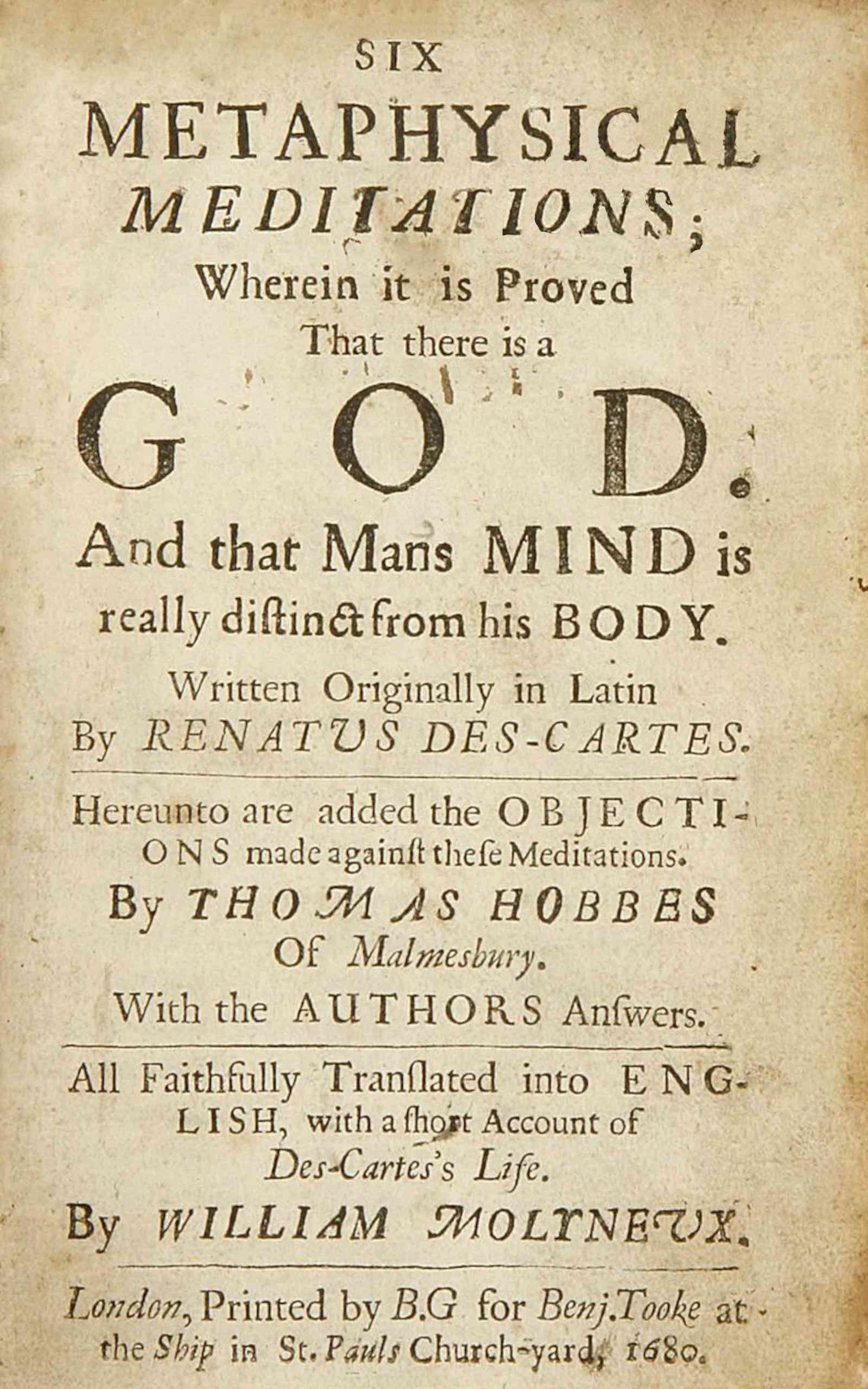
Betrachtungen Über Die Grundlagen Der Philosophie
The most dangerous book in Western philosophy begins with a single, terrifying question: What if everything you believe is false? Descartes sits alone in a room, sets fire to every certainty he has ever held, and watches the world burn. The senses lie, memory deceives, even mathematics might be an elaborate illusion. In this void of radical doubt, he discovers one indubitable truth: the famous "Cogito, ergo sum", the act of being deceived proves a thinker exists. From this slender reed, he rebuilds reality: the existence of God, the nature of the mind as a thinking thing distinct from the body, the reliability of clear and distinct ideas. This 1641 text laid the entire foundation for modern philosophy, the split between subject and object, the primacy of reason over authority, the very idea that philosophy could start from scratch. It demands everything from its reader. If you have ever wondered whether you can know anything with certainty, or whether your mind is more real than your body, this is where the question was first posed with unflinching rigor.
Editions
X-Ray
“It is only prudent never to place complete confidence in that by which we have even once been deceived.””
— René Descartes
“Dubium sapientiae initium. (.)””
— René Descartes
“Some years ago I was struck by the large number of falsehoods that I had accepted as true in my childhood, and by the highly doubtful nature of the whole edifice that I had subsequently based on them. I realized that it was necessary, once in the course of my life, to demolish everything completely and start again right from the foundations if I wanted to establish anything at all in the sciences that was stable and likely to last.””
— René Descartes
“But I cannot forget that, at other times I have been deceived in sleep by similar illusions; and, attentively considering those cases, I perceive so clearly that there exist no certain marks by which the state of waking can ever be distinguished from sleep, that I feel greatly astonished; and in amazement I almost persuade myself that I am now dreaming.””
— René Descartes
“But what then am I? A thing that thinks. What is that? A thing that doubts, understand, affirms, denies, wills, refuses, and that also imagines and senses.””
— René Descartes
“Whatever I have up till now accepted as most true and assured I have gotten either from the senses or through the senses. But from time to time I have found that the senses deceive, and it is prudent never to trust completely those who have deceived us even once.””
— René Descartes
“أرى أن جميع من أنعم الله عليم بنعمة العقل يجب أن يستعملوه قبل كل شيء في محاولة معرفة الله ومعرفة أنفسهم، وهذا هو الأمر الذي اتفقت عليه جمهرة الناظرين، والذي وفقني الله إلى أن أبلغ فيه ما يرضيني تمام الرضا.””
— René Descartes
“When I turn my mind's eye upon myself, I understand that I am a thing which is incomplete and dependent on another and which aspires without limit to ever greater and better things...””
— René Descartes
“The destruction of the foundations necessarily brings down the whole edifice.””
— René Descartes
Link to this book
Add a free, dofollow link to Lex on your blog, forum, syllabus, or reading list.

<a href="https://lex-books.com/book/betrachtungen-ber-die-grundlagen-der-philosophie-0bcee705-09da-461d-8c6f-f3ca8281edb5"><img src="https://lex-books.com/badges/read-on-lex.svg" alt="Read Betrachtungen Über Die Grundlagen Der Philosophie by René Descartes free on Lex" width="160" height="40"></a>[](https://lex-books.com/book/betrachtungen-ber-die-grundlagen-der-philosophie-0bcee705-09da-461d-8c6f-f3ca8281edb5)[url=https://lex-books.com/book/betrachtungen-ber-die-grundlagen-der-philosophie-0bcee705-09da-461d-8c6f-f3ca8281edb5][img]https://lex-books.com/badges/read-on-lex.svg[/img][/url]Read Betrachtungen Über Die Grundlagen Der Philosophie by René Descartes free on Lex: https://lex-books.com/book/betrachtungen-ber-die-grundlagen-der-philosophie-0bcee705-09da-461d-8c6f-f3ca8281edb5Cite this book
Reading this edition for a paper or guide? Copy a citation.
Descartes, René. Betrachtungen Über Die Grundlagen Der Philosophie. Lex, lex-books.com/book/betrachtungen-ber-die-grundlagen-der-philosophie-0bcee705-09da-461d-8c6f-f3ca8281edb5.Descartes, R. (n.d.). Betrachtungen Über Die Grundlagen Der Philosophie. Lex. https://lex-books.com/book/betrachtungen-ber-die-grundlagen-der-philosophie-0bcee705-09da-461d-8c6f-f3ca8281edb5Descartes, René. Betrachtungen Über Die Grundlagen Der Philosophie. Lex. https://lex-books.com/book/betrachtungen-ber-die-grundlagen-der-philosophie-0bcee705-09da-461d-8c6f-f3ca8281edb5.