An Outcast of the Islands
1896
Conrad's second novel is a relentless excavation of a man's moral collapse. Peter Willems arrives on a remote Malayan shore fleeing scandal, a European who believes his respectability can be reclaimed with ease. He is wrong. Drawn into the orbit of the trader Tom Lingard and a hidden native village, Willems finds himself undone not by external forces but by his own capacity for betrayal, lust, and incremental corruption. The jungle becomes Conrad's great metaphor: a consuming, indifferent force that slowly swallows Willems as he abandons his wife, betrays his benefactors, and pursues the tribal chief's daughter with escalating desperation. What makes this novel endure is its unflinching portrait of a man who understands his own descent but cannot stop it. The tragedy is not merely personal but political: Conrad strips away the veneer of colonial superiority to reveal something far more unsettling about European identity and moral fragility.
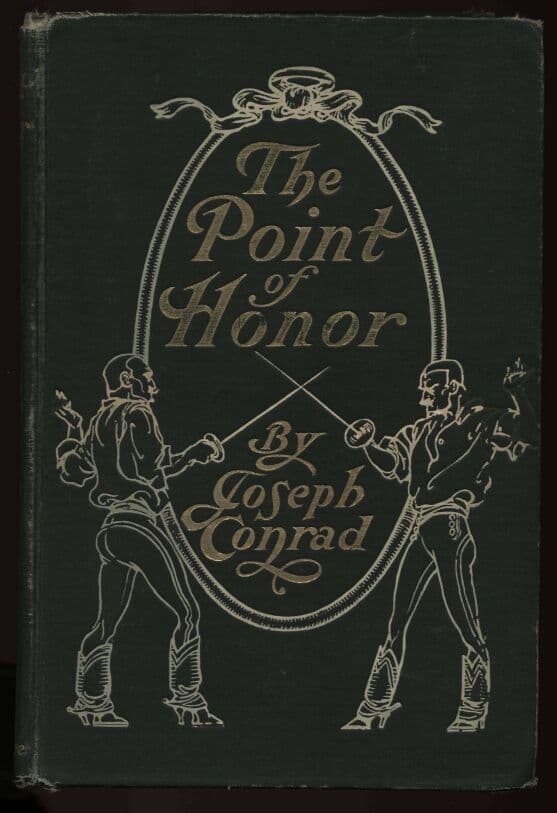
Editions

X-Ray
“It's only those who do nothing that make no mistakes, I suppose.””
— Joseph Conrad
“A half-naked, betel-chewing pessimist stood upon the bank of the tropical river, on the edge of the still and immense forests; a man angry, powerless, empty-handed, with a cry of bitter discontent ready on his lips; a cry that, had it come out, would have rung through the virgin solitudes of the woods as true, as great, as profound, as any philosophical shriek that ever came from the depths of an easy chair to disturb the impure wilderness of chimneys and roofs.””
— Joseph Conrad
“[T]he tremendous fact of our isolation, of the loneliness impenetrable and transparent, elusive and everlasting; of the indestructible loneliness that surrounds, envelops, clothes every human soul from the cradle to the grave, and, perhaps, beyond.””
— Joseph Conrad
“you whites are so great that you disdain to remember your enemies.””
— Joseph Conrad
“It is written that the earth belongs to those who have fair skins and hard but foolish hearts.””
— Joseph Conrad
“Scruples were for imbeciles. His clear duty was to make himself happy.””
— Joseph Conrad
“He felt soothed and happy, as if some gentle and invisible hand had removed from his soul the burden of his body.””
— Joseph Conrad
“he hated the white men who interfered with the manly pursuits of throat-cutting, kidnapping, slave-dealing, and fire-raising,””
— Joseph Conrad
“he affected great piety (as became a pilgrim), although unable to read the inspired words of the Prophet.””
— Joseph Conrad
Link to this book
Add a free, dofollow link to Lex on your blog, forum, syllabus, or reading list.

<a href="https://lex-books.com/book/an-outcast-of-the-islands-09228d18-ae4a-4d95-9bfd-aee6179c190e"><img src="https://lex-books.com/badges/read-on-lex.svg" alt="Read An Outcast of the Islands by Joseph Conrad free on Lex" width="160" height="40"></a>[](https://lex-books.com/book/an-outcast-of-the-islands-09228d18-ae4a-4d95-9bfd-aee6179c190e)[url=https://lex-books.com/book/an-outcast-of-the-islands-09228d18-ae4a-4d95-9bfd-aee6179c190e][img]https://lex-books.com/badges/read-on-lex.svg[/img][/url]Read An Outcast of the Islands by Joseph Conrad free on Lex: https://lex-books.com/book/an-outcast-of-the-islands-09228d18-ae4a-4d95-9bfd-aee6179c190eCite this book
Reading this edition for a paper or guide? Copy a citation.
Conrad, Joseph. An Outcast of the Islands. Lex, lex-books.com/book/an-outcast-of-the-islands-09228d18-ae4a-4d95-9bfd-aee6179c190e.Conrad, J. (1896). An Outcast of the Islands. Lex. https://lex-books.com/book/an-outcast-of-the-islands-09228d18-ae4a-4d95-9bfd-aee6179c190eConrad, Joseph. An Outcast of the Islands. Lex. https://lex-books.com/book/an-outcast-of-the-islands-09228d18-ae4a-4d95-9bfd-aee6179c190e.