An Essay on the Development of Christian Doctrine
1845
An Essay on the Development of Christian Doctrine
1845
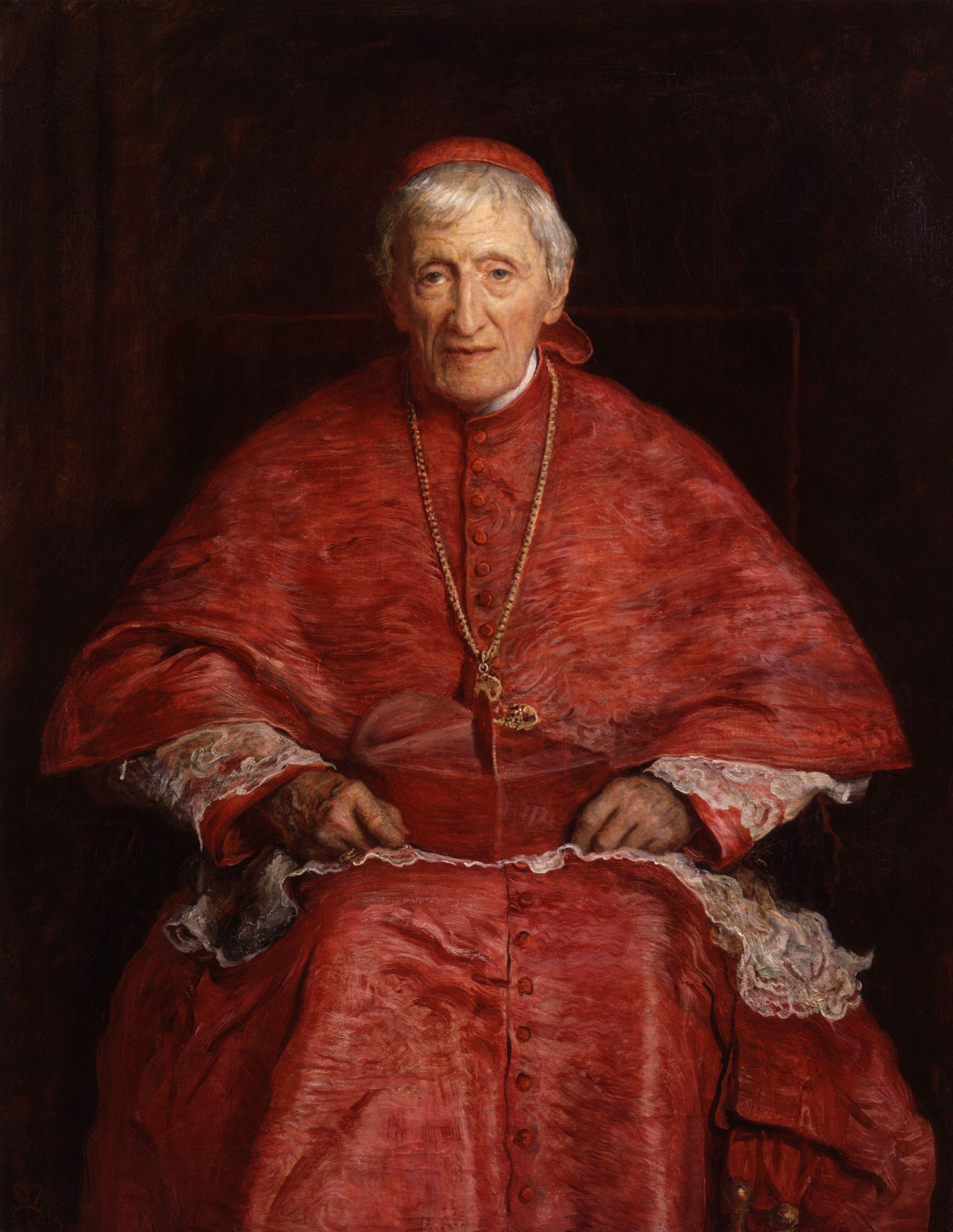
In 1845, a brilliant Oxford theologian written what would become one of the most consequential works in modern religious thought. John Henry Newman faced a challenge that had haunted Christian theology for centuries: if the faith handed down from the apostles is unchanging, why do Catholic doctrines look so different from what Christ taught? His answer revolutionized the field. Newman argued that genuine doctrine does not merely persist, it develops, growing like a living organism from seed to fullness while retaining its essential identity. Drawing on centuries of Church history, he demonstrated that apparent variations in teaching were not corruptions but legitimate expansions, safeguards of truth rather than betrayals of it. The argument is precise, historical, and deeply personal, this book was Newman’s intellectual defense of the Catholic Church, written on the eve of his own conversion. More than theology, it is a meditation on how any ancient tradition survives: not through rigid stasis, but through faithful creativity. Essential reading for anyone curious about how religious ideas endure across centuries, and why doctrinal change need not mean doctrinal loss.
Editions
X-Ray
“But one aspect of Revelation must not be allowed to exclude or to obscure another; and Christianity is dogmatical, devotional, practical all at once; it is esoteric and exoteric; it is indulgent and strict; it is light and dark; it is love, and it is fear.””
— John Henry Newman
“It is love which makes Christian fear differ from servile dread, and true faith differ from the faith of devils; yet in the beginning of the religious life, fear is the prominent evangelical grace, and love is but latent in fear, and has in course of time to be developed out of what seems its contradictory. Then, when it is developed, it takes that prominent place which fear held before, yet protecting not superseding it. Love is added, not fear removed, and the mind is but perfected in grace by what seems a revolution.””
— John Henry Newman
“And this one thing at least is certain; whatever history teaches, whatever it omits, whatever it exaggerates or extenuates, whatever it says and unsays, at least the Christianity of history is not Protestantism. If ever there were a safe truth, it is this.””
— John Henry Newman
“He can no longer have God for a Father, who has not the Church for a Mother.””
— John Henry Newman
“That great portion of what is generally received as Christian truth is, in its rudiments or in its separate parts, to be found in heathen philosophies and religions. For instance, the doctrine of a Trinity is found both in the East and in the West; so is the ceremony of washing; so is the rite of sacrifice. The doctrine of the Divine Word is Platonic; the doctrine of the Incarnation is Indian; of a divine kingdom is Judaic; of Angels and demons is Magian; the connection of sin with the body is Gnostic; celibacy is known to Bonze and Talapoin; a sacerdotal order is Egyptian; the idea of a new birth is Chinese and Eleusinian; belief in sacramental virtue is Pythagorean; and honours to the dead are a polytheism. Such is the general nature of the fact before us; Mr. Milman argues from it,”
— John Henry Newman
“The profession and the developments of a doctrine are according to the emergency of the time, and silence at a certain period implies, not that it was not then held, but that it was not questioned.””
— John Henry Newman
“Again, Arius asserted that the Second Person of the Blessed Trinity was not able to comprehend the First, whereas Eunomius’s characteristic tenet was that all men could comprehend God as fully as the Son comprehended Him Himself; yet no one can doubt that Eunomianism was a true development, not a corruption of Arianism.””
— John Henry Newman
“In a higher world it is otherwise; but here below to live is to change, and to be perfect is to have changed often. I””
— John Henry Newman
“we must determine whether on the one hand Christianity is still to represent to us a definite teaching from above, or whether on the other its utterances have been from time to time so strangely at variance, that we are necessarily thrown back on our own judgment individually to determine, what the revelation of God is, or rather if in fact there is, or has been, any revelation at all.””
— John Henry Newman
Link to this book
Add a free, dofollow link to Lex on your blog, forum, syllabus, or reading list.

<a href="https://lex-books.com/book/an-essay-on-the-development-of-christian-doctrine-dfa4f4f3-8fa7-4234-9a0e-95b5943bc4d1"><img src="https://lex-books.com/badges/read-on-lex.svg" alt="Read An Essay on the Development of Christian Doctrine by John Henry Newman free on Lex" width="160" height="40"></a>[](https://lex-books.com/book/an-essay-on-the-development-of-christian-doctrine-dfa4f4f3-8fa7-4234-9a0e-95b5943bc4d1)[url=https://lex-books.com/book/an-essay-on-the-development-of-christian-doctrine-dfa4f4f3-8fa7-4234-9a0e-95b5943bc4d1][img]https://lex-books.com/badges/read-on-lex.svg[/img][/url]Read An Essay on the Development of Christian Doctrine by John Henry Newman free on Lex: https://lex-books.com/book/an-essay-on-the-development-of-christian-doctrine-dfa4f4f3-8fa7-4234-9a0e-95b5943bc4d1Cite this book
Reading this edition for a paper or guide? Copy a citation.
Newman, John Henry. An Essay on the Development of Christian Doctrine. Lex, lex-books.com/book/an-essay-on-the-development-of-christian-doctrine-dfa4f4f3-8fa7-4234-9a0e-95b5943bc4d1.Newman, J. H. (1845). An Essay on the Development of Christian Doctrine. Lex. https://lex-books.com/book/an-essay-on-the-development-of-christian-doctrine-dfa4f4f3-8fa7-4234-9a0e-95b5943bc4d1Newman, John Henry. An Essay on the Development of Christian Doctrine. Lex. https://lex-books.com/book/an-essay-on-the-development-of-christian-doctrine-dfa4f4f3-8fa7-4234-9a0e-95b5943bc4d1.