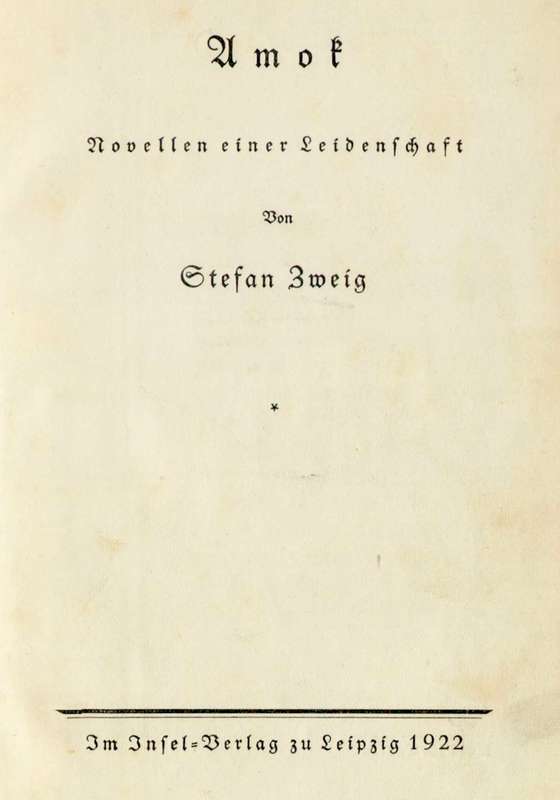
Amok: Novellen Einer Leidenschaft
1922
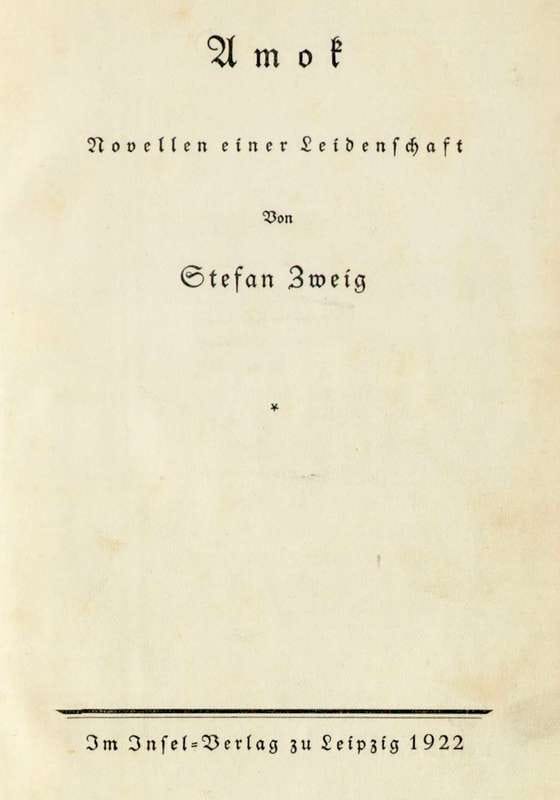
Published in 1922, 'Amok: Novellen Einer Leidenschaft' by Stefan Zweig is a collection of novellas exploring themes of obsession and the complexities of human emotion. The opening story follows a doctor in the Dutch East Indies who grapples with his moral obligation to help a wealthy woman in distress, ultimately succumbing to his own passions and regrets. This work is notable for its psychological depth and portrayal of the darker sides of desire, reflecting the tumultuous human condition in the early 20th century.
Editions
X-Ray
“Söz konusu başkalarının derdi olunca nasıl da daha zeki, daha nesnel oluruz.””
— Stefan Zweig
“Hemen şöyle düşündüm, eğer bir avans veriyorlarsa temiz bir iş olmalı, bu ateşli arazilerde mezar taşlarının bizdekinden üç kat hızlı çoğaldığını biliyordum, ama insan genç olunca ateşin ve ölümün her zaman başkalarına sıçrayacağını düşünür.””
— Stefan Zweig
“İnsan genç olunca ateşin ve ölümün her zaman başkalarına sıçrayacağını düşünür.””
— Stefan Zweig
“«Sa, io sono medico. E allora capitano spesso casi del genere... tragici... sì, diciamo casi limite, in cui uno non sa se ha il dovere... infatti non esiste un solo dovere, ossia quello nei confronti del prossimo, ne esiste uno verso se stessi e uno verso lo Stato e uno verso la scienza... Si è tenuti ad aiutare, certo, si è qui per questo... massime del genere, però, restano sempre e soltanto teoriche... Fino a che punto è doveroso aiutare?.. Lei è lì, una persona a me sconosciuta, e io per lei sono altrettanto sconosciuto, e la prego di mantenere il silenzio sul fatto che mi ha visto... bene, lei sta zitto, adempie questo dovere... Io le chiedo di parlare con me, perché sto crepando a furia di tacere... e lei è disposto a darmi ascolto... bene... Ma questo è facile... Se però le chiedessi di prendermi e scaraventarmi in mare... ecco che allora la compiacenza, la disponibilità all'aiuto cesserebbe. A un certo punto finisce... là dove inizia la propria esistenza, la propria responsabilità... a un certo punto deve pur finire... a un certo punto quest'obbligo deve cessare... O forse proprio per il medico non è lecito che venga meno? Ha da essere un Cristo Salvatore, uno che aiuta tutti quanti, soltanto perché possiede un diploma scritto in latino?, è davvero tenuto a buttare l'esistenza, a ridurre ad acqua il proprio sangue, se una tizia... un tizio arriva a pretendere da lui che sia nobile, soccorrevole e buono? Sì, a un certo punto il dovere cessa... là dove uno non ce la fa più, proprio in quel punto....»””
— Stefan Zweig
“Do you know what the expression ‘running amok’ means?” “‘Running amok?’ Yes, I think I do… a kind of intoxication affecting the Malays…” “It’s more than intoxication… it’s madness, a sort of human rabies, an attack of murderous, pointless monomania that bears no comparison with ordinary alcohol poisoning. I’ve studied several cases myself during my time in the East”
— Stefan Zweig
“made my way up to the deck. It was deserted. And as I looked above the steam from the funnel and the ghostly gleam of the spars, a magical brightness suddenly met my eyes. The sky was radiant, dark behind the white stars wheeling through it and yet radiant, as if a velvet curtain up there veiled a great light, and the twinkling stars were merely gaps and cracks through which that indescribable brightness shone.””
— Stefan Zweig
“Bu bir... evet, bir dakika... bu bir... birinin bir katile karşı uyarmak için diğerinin arkasından koşması ve diğerinin de bizzat onu katil sanması, bu yüzden de kendi mahvoluşuna doğru koşmaya devam etmesi gibi bir şet...””
— Stefan Zweig
“Hayatımda hiçbir zaman, bunu biliyorum, böyle yoğunlaşmış bir enerji hissetmemiştim kendimde, bir daha da asla böyle bir şey hissetmeyeceğim. İnsan her şeyini kaybettiğinde, elinde kalan son şey için umutsuzca savaşır - ve benim elimde kalan son şeyse onun bana bıraktığı mirastı, o sırdı.””
— Stefan Zweig
“Siz insanlara yabancılaşmışsınız doktor, bu da eninde sonunda bir hastalığa dönüşür.””
— Stefan Zweig
Link to this book
Add a free, dofollow link to Lex on your blog, forum, syllabus, or reading list.

<a href="https://lex-books.com/book/amok-novellen-einer-leidenschaft-d6d13bb3-3bba-4ed7-a1ce-85b76e96ca8d"><img src="https://lex-books.com/badges/read-on-lex.svg" alt="Read Amok: Novellen Einer Leidenschaft by Stefan Zweig free on Lex" width="160" height="40"></a>[](https://lex-books.com/book/amok-novellen-einer-leidenschaft-d6d13bb3-3bba-4ed7-a1ce-85b76e96ca8d)[url=https://lex-books.com/book/amok-novellen-einer-leidenschaft-d6d13bb3-3bba-4ed7-a1ce-85b76e96ca8d][img]https://lex-books.com/badges/read-on-lex.svg[/img][/url]Read Amok: Novellen Einer Leidenschaft by Stefan Zweig free on Lex: https://lex-books.com/book/amok-novellen-einer-leidenschaft-d6d13bb3-3bba-4ed7-a1ce-85b76e96ca8dCite this book
Reading this edition for a paper or guide? Copy a citation.
Zweig, Stefan. Amok: Novellen Einer Leidenschaft. Lex, lex-books.com/book/amok-novellen-einer-leidenschaft-d6d13bb3-3bba-4ed7-a1ce-85b76e96ca8d.Zweig, S. (1922). Amok: Novellen Einer Leidenschaft. Lex. https://lex-books.com/book/amok-novellen-einer-leidenschaft-d6d13bb3-3bba-4ed7-a1ce-85b76e96ca8dZweig, Stefan. Amok: Novellen Einer Leidenschaft. Lex. https://lex-books.com/book/amok-novellen-einer-leidenschaft-d6d13bb3-3bba-4ed7-a1ce-85b76e96ca8d.