A Visit from Saint Nicholas
1823
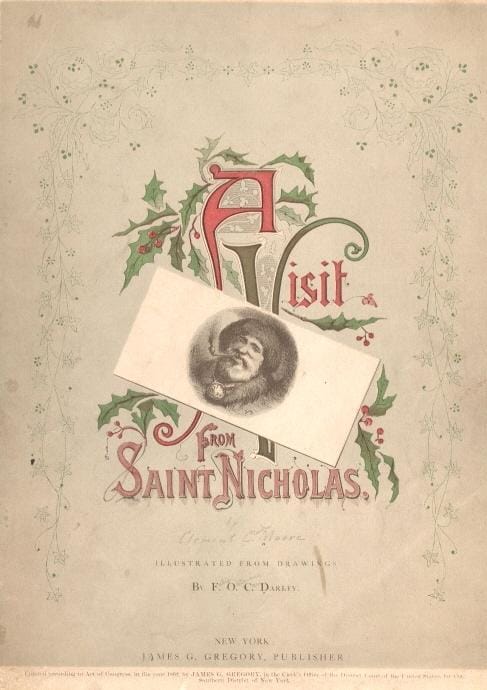
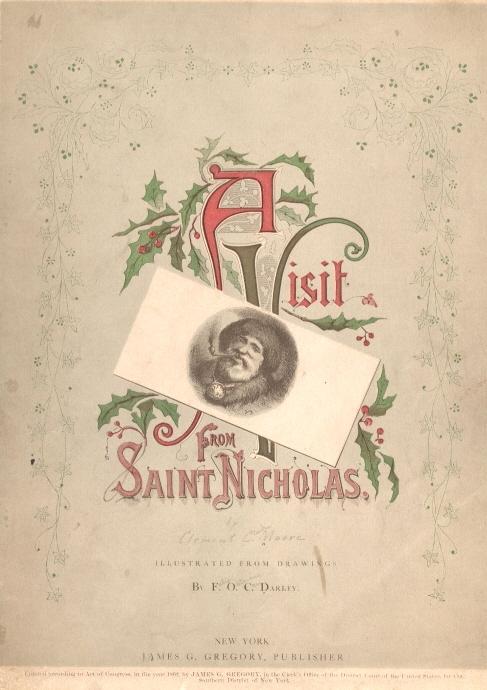
A Visit from Saint Nicholas
1823
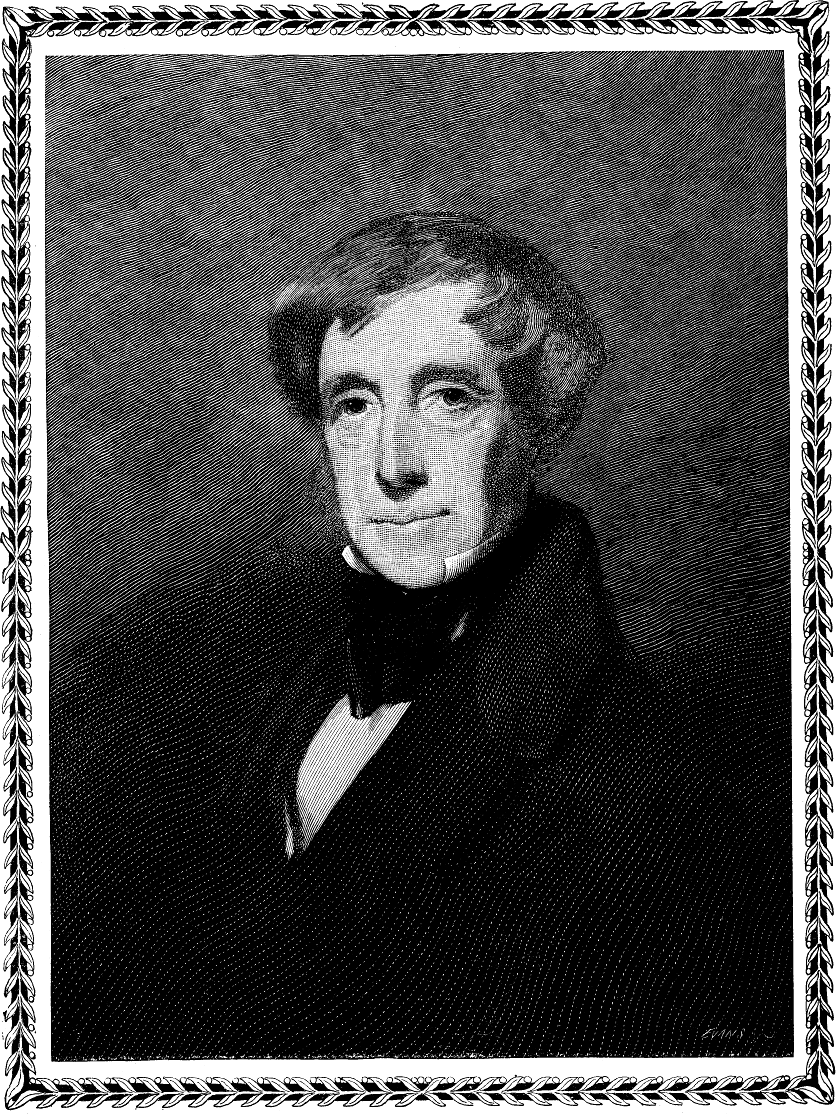
In 1823, someone in Troy, New York, anonymously published a poem that would reshape Christmas forever. The verses that begin "'Twas the night before Christmas" didn't just describe a man in a red suit descending a chimney, they invented him. Before this poem, American Christmas traditions were a hodgepodge of Dutch Sinterklaas, British Father Christmas, and regional variations. After it, we had the belly that shook like a bowlful of jelly, the miniature sleigh pulled by eight tiny reindeer, and the sacred ritual of hanging stockings by the fire. The poem's disputed authorship, Clement Clarke Moore claimed it in 1837, though Henry Livingston Jr.'s family insisted their father wrote it first, only adds to its mystique. What remains undisputed is its power: for two centuries, parents have read these words aloud to children on Christmas Eve, passing down a moment of magic that has survived technological change, cultural shifts, and the erosion of so many other traditions. It is the closest thing America has to a shared Christmas myth.
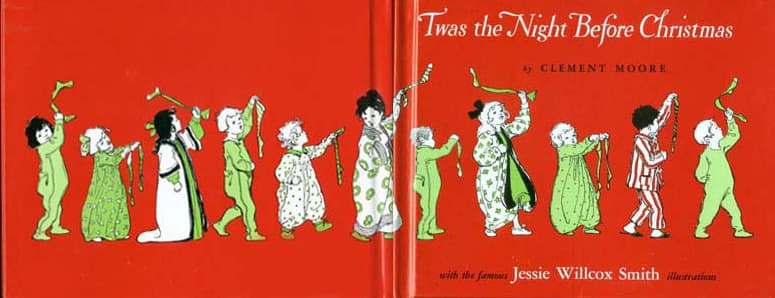
Editions
X-Ray
“Twas the night before Christmas, when all through the house Not a creature was stirring, not even a mouse.””
— Clement Clarke Moore
“Twas the night before Christmas, when all through the houseNot a creature was stirring, not even a mouse;The stockings were hung by the chimney with care,In hopes that St. Nicholas soon would be there;The children were nestled all snug in their beds;While visions of sugar-plums danced in their heads;And mamma in her 'kerchief, and I in my cap,Had just settled our brains for a long winter's nap,When out on the lawn there arose such a clatter,I sprang from my bed to see what was the matter.Away to the window I flew like a flash,Tore open the shutters and threw up the sash.The moon on the breast of the new-fallen snow,Gave a lustre of midday to objects below,When what to my wondering eyes did appear,But a miniature sleigh and eight tiny rein-deer,With a little old driver so lively and quick,I knew in a moment he must be St. Nick.More rapid than eagles his coursers they came,And he whistled, and shouted, and called them by name:"Now, Dasher! now, Dancer! now Prancer and Vixen!On, Comet! on, Cupid! on, Donder and Blixen!To the top of the porch! to the top of the wall!Now dash away! dash away! dash away all!"As leaves that before the wild hurricane fly,When they meet with an obstacle, mount to the sky;So up to the housetop the coursers they flewWith the sleigh full of toys, and St. Nicholas too”
— Clement Clarke Moore
“Now, Dasher! now, Dancer! now, Prancer and Vixen! On, Comet! on, Cupid! on, Donder and Blitzen!””
— Clement Clarke Moore
“Happy Christmas to all, and to all a good-night.””
— Clement Clarke Moore
“there arose such a clatter, I sprang from the bed to see what was the matter. Away to the window I flew like a flash, Tore open the shutters””
— Clement Clarke Moore
“for a Christmas present. They read it just after they had hung up their stockings before one of the big fireplaces in their house. Afterward, they learned it,””
— Clement Clarke Moore
Link to this book
Add a free, dofollow link to Lex on your blog, forum, syllabus, or reading list.

<a href="https://lex-books.com/book/a-visit-from-saint-nicholas-eae0a528-68c3-4a15-8b47-e1e13d740166"><img src="https://lex-books.com/badges/read-on-lex.svg" alt="Read A Visit from Saint Nicholas by Clement Clarke Moore free on Lex" width="160" height="40"></a>[](https://lex-books.com/book/a-visit-from-saint-nicholas-eae0a528-68c3-4a15-8b47-e1e13d740166)[url=https://lex-books.com/book/a-visit-from-saint-nicholas-eae0a528-68c3-4a15-8b47-e1e13d740166][img]https://lex-books.com/badges/read-on-lex.svg[/img][/url]Read A Visit from Saint Nicholas by Clement Clarke Moore free on Lex: https://lex-books.com/book/a-visit-from-saint-nicholas-eae0a528-68c3-4a15-8b47-e1e13d740166Cite this book
Reading this edition for a paper or guide? Copy a citation.
Moore, Clement Clarke. A Visit from Saint Nicholas. Lex, lex-books.com/book/a-visit-from-saint-nicholas-eae0a528-68c3-4a15-8b47-e1e13d740166.Moore, C. C. (1823). A Visit from Saint Nicholas. Lex. https://lex-books.com/book/a-visit-from-saint-nicholas-eae0a528-68c3-4a15-8b47-e1e13d740166Moore, Clement Clarke. A Visit from Saint Nicholas. Lex. https://lex-books.com/book/a-visit-from-saint-nicholas-eae0a528-68c3-4a15-8b47-e1e13d740166.