A Slav Soul, and Other Stories
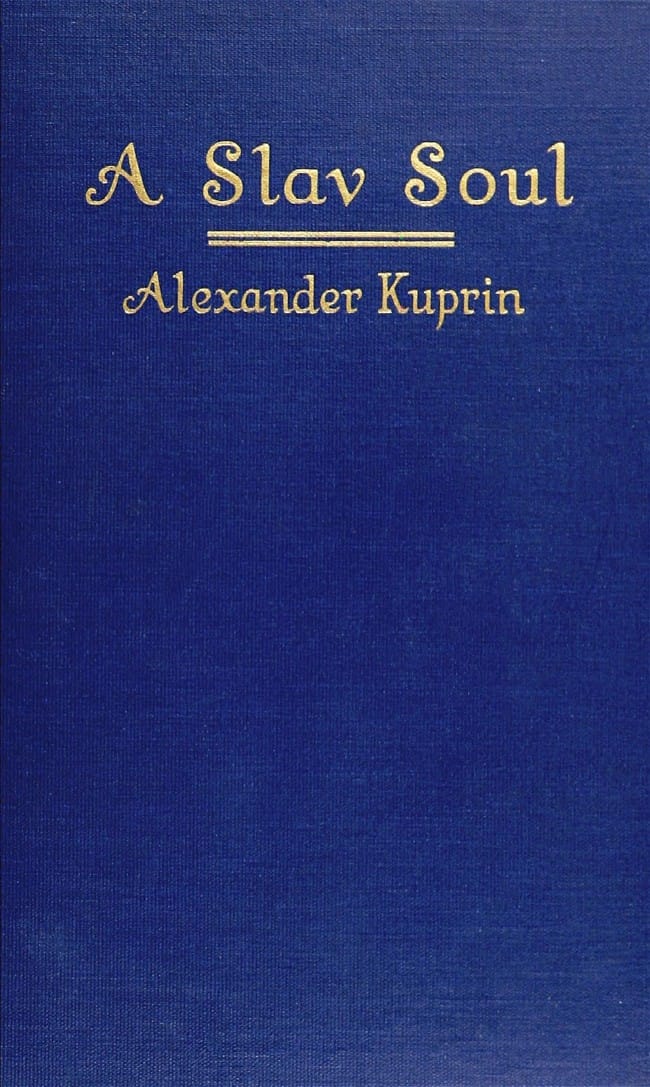
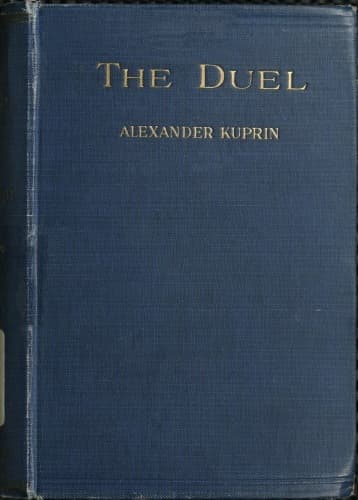
Alexander Kuprin's collection opens with the haunting figure of Yasha, a servant whose proud melancholy and quiet nobility haunted the narrator's childhood. In 'A Slav Soul,' the boundaries between master and servant blur as Yasha's inner life reveals depths of emotion, eccentricity, and hard-won dignity, a man who loves horses and dogs more than people, whose alcoholism masks something the family never quite understands. This is Kuprin at his finest: rendering the Russian soul not as stereotype but as contradiction, tenderness, and fierce pride. The collection spans considerable ground, from the delicate fables 'The Elephant' and 'The White Poodle,' written for children, to darker explorations of obsession, justice, and the thin membrane between civilization and savagery. Kuprin, friend to Gorky and author of The Duel, writes with the eye of a soldier who saw humanity's raw edges and the sensitivity of a poet who refused to look away. These stories endure because they capture lives rarely documented: servants, outcasts, the quietly shattered, the stubbornly noble.
Editions
X-Ray
“I am old, and solitary as well, and you can't think how long the nights are to us old folk.””
— A. I. Kuprin
“And, in conclusion, I say that men are hypocrites; they envy one another, they lie, they are inhospitable, cruel.... And yet they rule over us, and will continue to do so ... because it's arranged like that.””
— A. I. Kuprin
“Are human beings so much more worthy and better than we are, that they are allowed to take advantage of so many cruel privileges with impunity?””
— A. I. Kuprin
“Ladies and gentlemen, is there no way Of getting all honourable dogs free, once and for all, from their shameful slavery to mankind””
— A. I. Kuprin
“You must understand that your daughter's illness is indifference to life, and nothing more....””
— A. I. Kuprin
“the world is really so small that everyone must of necessity meet everyone else””
— A. I. Kuprin
“It was this feeling which had impelled him to visit once more those places familiar to his youth, to live over again in memory those dear, painfully sweet recollections of his childhood, overshadowed with a poetical sadness, to wound his soul once more with the sweet grief of recalling that which was for ever past”
— A. I. Kuprin
Link to this book
Add a free, dofollow link to Lex on your blog, forum, syllabus, or reading list.

<a href="https://lex-books.com/book/a-slav-soul-and-other-stories-13741dbd-6f06-4f53-8f98-309f63076be9"><img src="https://lex-books.com/badges/read-on-lex.svg" alt="Read A Slav Soul, and Other Stories by A. I. Kuprin free on Lex" width="160" height="40"></a>[](https://lex-books.com/book/a-slav-soul-and-other-stories-13741dbd-6f06-4f53-8f98-309f63076be9)[url=https://lex-books.com/book/a-slav-soul-and-other-stories-13741dbd-6f06-4f53-8f98-309f63076be9][img]https://lex-books.com/badges/read-on-lex.svg[/img][/url]Read A Slav Soul, and Other Stories by A. I. Kuprin free on Lex: https://lex-books.com/book/a-slav-soul-and-other-stories-13741dbd-6f06-4f53-8f98-309f63076be9Cite this book
Reading this edition for a paper or guide? Copy a citation.
Kuprin, A. I.. A Slav Soul, and Other Stories. Lex, lex-books.com/book/a-slav-soul-and-other-stories-13741dbd-6f06-4f53-8f98-309f63076be9.Kuprin, A. I. (n.d.). A Slav Soul, and Other Stories. Lex. https://lex-books.com/book/a-slav-soul-and-other-stories-13741dbd-6f06-4f53-8f98-309f63076be9Kuprin, A. I.. A Slav Soul, and Other Stories. Lex. https://lex-books.com/book/a-slav-soul-and-other-stories-13741dbd-6f06-4f53-8f98-309f63076be9.