A Short View of the Immorality, and Profaneness of the English Stage: Together with the Sense of Antiquity on This Argument
1698
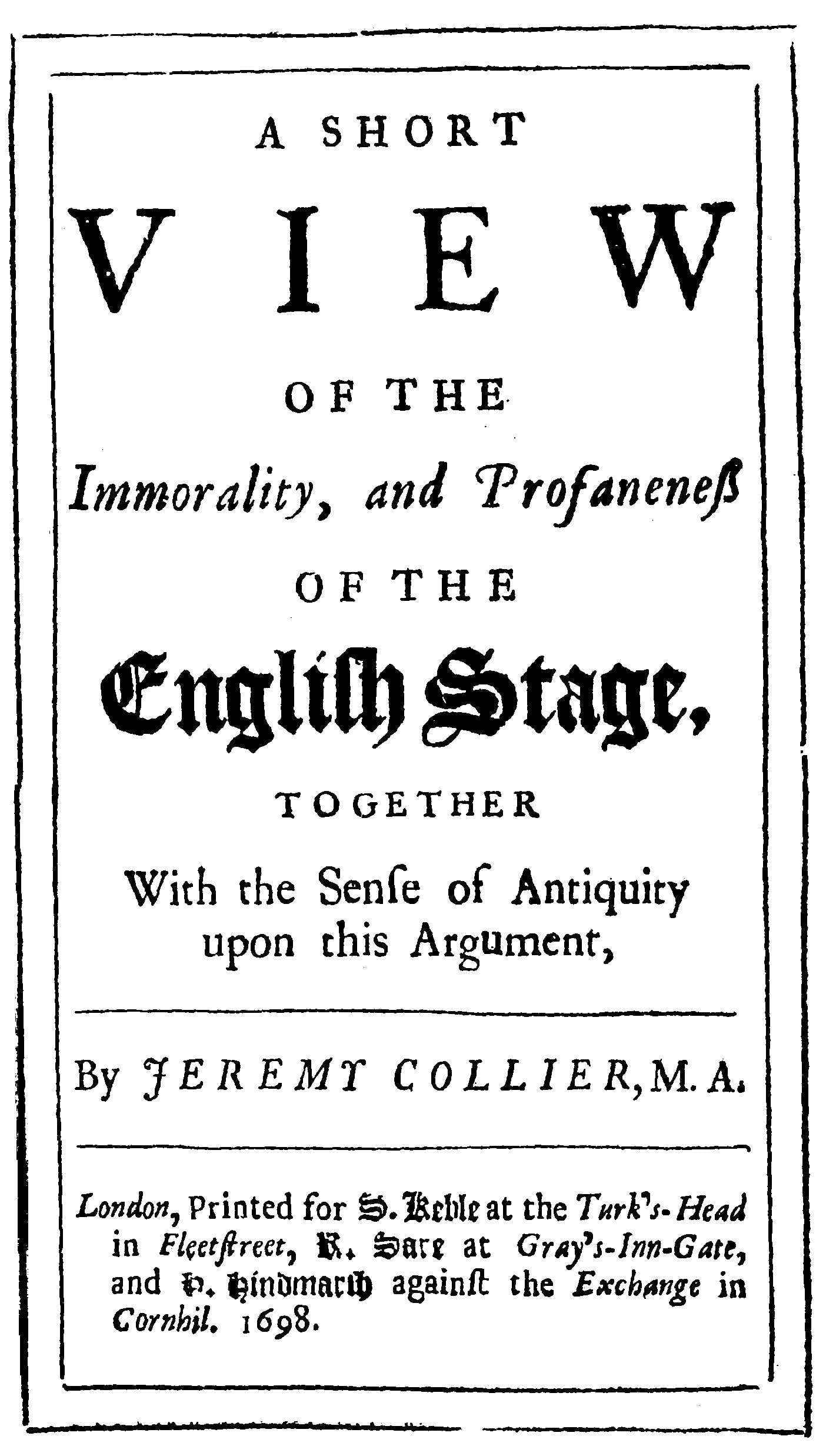
A Short View of the Immorality, and Profaneness of the English Stage: Together with the Sense of Antiquity on This Argument
1698
In 1698, a fierce Anglican clergyman named Jeremy Collier detonated a literary bomb beneath the feet of London's most celebrated playwrights. Targeting Wycherley, Dryden, Congreve, Vanbrugh, and D'Urfey by name, Collier's pamphlet accuses these masters of the stage of profanity, blasphemy, and something more insidious: the calculated corruption of public morality through comedies that make vice look like wit. He argues that English theatre has abandoned the classical standards of decorum, replacing dignified treatment of love and morality with smut and cynicism. The result, he contends, is a culture industry actively debauching its audience. What elevates Collier's polemic beyond mere prudishness is its specificity and ferocity. He doesn't whine about 'the state of theatre' in the abstract; he dissects actual plays, quoting offending passages, exposing the gap between what dramatists claimed to teach and what they actually celebrated. This isn't a quiet scholarly complaint. It's an indictment. The pamphlet sparked a firestorm, dividing London's literati and ultimately influencing the theatrical licensing laws a generation later. For anyone curious about how theatre became a battleground for cultural authority in early modern England, this is the essential primary source: furious, learned, and historically consequential.
Editions
Link to this book
Add a free, dofollow link to Lex on your blog, forum, syllabus, or reading list.

<a href="https://lex-books.com/book/a-short-view-of-the-immorality-and-profaneness-of-the-english-stage-together-wit-d300e04c-3e4c-45bb-9fcf-d4855f0b8b8e"><img src="https://lex-books.com/badges/read-on-lex.svg" alt="Read A Short View of the Immorality, and Profaneness of the English Stage: Together with the Sense of Antiquity on This Argument by Jeremy Collier free on Lex" width="160" height="40"></a>[](https://lex-books.com/book/a-short-view-of-the-immorality-and-profaneness-of-the-english-stage-together-wit-d300e04c-3e4c-45bb-9fcf-d4855f0b8b8e)[url=https://lex-books.com/book/a-short-view-of-the-immorality-and-profaneness-of-the-english-stage-together-wit-d300e04c-3e4c-45bb-9fcf-d4855f0b8b8e][img]https://lex-books.com/badges/read-on-lex.svg[/img][/url]Read A Short View of the Immorality, and Profaneness of the English Stage: Together with the Sense of Antiquity on This Argument by Jeremy Collier free on Lex: https://lex-books.com/book/a-short-view-of-the-immorality-and-profaneness-of-the-english-stage-together-wit-d300e04c-3e4c-45bb-9fcf-d4855f0b8b8eCite this book
Reading this edition for a paper or guide? Copy a citation.
Collier, Jeremy. A Short View of the Immorality, and Profaneness of the English Stage: Together with the Sense of Antiquity on This Argument. Lex, lex-books.com/book/a-short-view-of-the-immorality-and-profaneness-of-the-english-stage-together-wit-d300e04c-3e4c-45bb-9fcf-d4855f0b8b8e.Collier, J. (1698). A Short View of the Immorality, and Profaneness of the English Stage: Together with the Sense of Antiquity on This Argument. Lex. https://lex-books.com/book/a-short-view-of-the-immorality-and-profaneness-of-the-english-stage-together-wit-d300e04c-3e4c-45bb-9fcf-d4855f0b8b8eCollier, Jeremy. A Short View of the Immorality, and Profaneness of the English Stage: Together with the Sense of Antiquity on This Argument. Lex. https://lex-books.com/book/a-short-view-of-the-immorality-and-profaneness-of-the-english-stage-together-wit-d300e04c-3e4c-45bb-9fcf-d4855f0b8b8e.