A Pilgrim Maid: A Story of Plymouth Colony in 1620
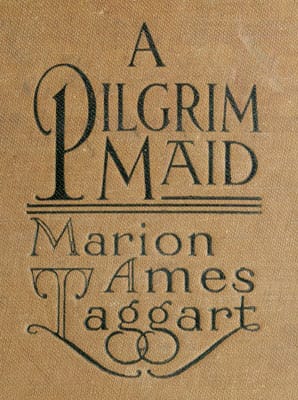
A Pilgrim Maid: A Story of Plymouth Colony in 1620
Fourteen-year-old Constance Hopkins stands on the deck of the Mayflower as England shrinks on the horizon, carrying not just her small trunk but the weight of a fractured family and unspecified dreams. Her stepmother's cold judgment follows her below decks as surely as the ocean swells. This is 1620, and the ship that will carry her across an angry Atlantic holds no浆 of comfort only the desperate hope of religious freedom and a new life in a wilderness no one alive has ever seen. Constance watches her brothers play on the crowded deck, worries over her infant brother Oceanus, and wonders if the New World will offer the fresh start her father promised or simply another arena for her stepmother's disapproval. Taggart, writing in the early 20th century, breathes lived sensation into the historical record. The voyage becomes a crucible, the first brutal winter at Plymouth a test of everything Constance thought she knew about survival and belonging. This is not the sanitized mythology of Thanksgiving but something rawer: a child's-eye view of a civilization being born in blood, grief, and stubborn hope. For readers who want history with a pulse, who understand that the past was as complicated and human as today.
Editions

Link to this book
Add a free, dofollow link to Lex on your blog, forum, syllabus, or reading list.

<a href="https://lex-books.com/book/a-pilgrim-maid-a-story-of-plymouth-colony-in-1620-584130fe-6615-429f-8489-54e7f5bd922c"><img src="https://lex-books.com/badges/read-on-lex.svg" alt="Read A Pilgrim Maid: A Story of Plymouth Colony in 1620 by Marion Ames Taggart free on Lex" width="160" height="40"></a>[](https://lex-books.com/book/a-pilgrim-maid-a-story-of-plymouth-colony-in-1620-584130fe-6615-429f-8489-54e7f5bd922c)[url=https://lex-books.com/book/a-pilgrim-maid-a-story-of-plymouth-colony-in-1620-584130fe-6615-429f-8489-54e7f5bd922c][img]https://lex-books.com/badges/read-on-lex.svg[/img][/url]Read A Pilgrim Maid: A Story of Plymouth Colony in 1620 by Marion Ames Taggart free on Lex: https://lex-books.com/book/a-pilgrim-maid-a-story-of-plymouth-colony-in-1620-584130fe-6615-429f-8489-54e7f5bd922cCite this book
Reading this edition for a paper or guide? Copy a citation.
Taggart, Marion Ames. A Pilgrim Maid: A Story of Plymouth Colony in 1620. Lex, lex-books.com/book/a-pilgrim-maid-a-story-of-plymouth-colony-in-1620-584130fe-6615-429f-8489-54e7f5bd922c.Taggart, M. A. (n.d.). A Pilgrim Maid: A Story of Plymouth Colony in 1620. Lex. https://lex-books.com/book/a-pilgrim-maid-a-story-of-plymouth-colony-in-1620-584130fe-6615-429f-8489-54e7f5bd922cTaggart, Marion Ames. A Pilgrim Maid: A Story of Plymouth Colony in 1620. Lex. https://lex-books.com/book/a-pilgrim-maid-a-story-of-plymouth-colony-in-1620-584130fe-6615-429f-8489-54e7f5bd922c.