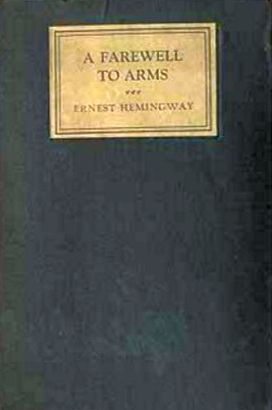
A Farewell to Arms
1929
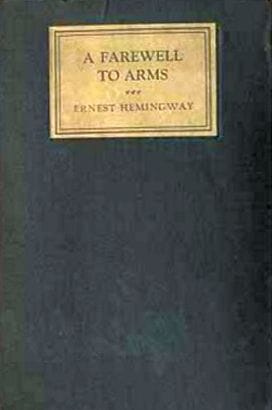
A Farewell to Arms
1929
Frederic Henry, an American ambulance driver serving in the Italian army, meets Catherine Barkley in a military hospital near the front lines, and what begins as a distracted fling becomes the consuming center of his life. As the war grinds through the Italian countryside, as soldiers march past in the rain and shells fall on the mountains, their love intensifies with the desperate knowledge that everything is borrowed time. Hemingway renders the brutality of combat with unflinching clarity, but it's the emotional wreckage that cuts deepest: the way war strips away meaning and leaves only the raw, animal need to hold onto another person. The novel's famous ending, which Hemingway rewrote thirty-nine times, achieves a devastation that feels almost surgical in its precision. This is the prototype of American war fiction, the book that gave the 'lost generation' its voice, and it remains devastating over ninety years later.
Editions

X-Ray
“Maybe...you'll fall in love with me all over again.""Hell," I said, "I love you enough now. What do you want to do? Ruin me?""Yes. I want to ruin you.""Good," I said. "That's what I want too.””
— Ernest Hemingway
“All thinking men are atheists.””
— Ernest Hemingway
“If people bring so much courage to this world the world has to kill them to break them, so of course it kills them. The world breaks every one and afterward many are strong at the broken places. But those that will not break it kills. It kills the very good and the very gentle and the very brave impartially. If you are none of these you can be sure it will kill you too but there will be no special hurry.””
— Ernest Hemingway
“The world breaks every one and afterward many are strong at the broken places.””
— Ernest Hemingway
“I’m not brave any more darling. I’m all broken. They’ve broken me.””
— Ernest Hemingway
“And you'll always love me won't you?YesAnd the rain won't make any difference? No””
— Ernest Hemingway
“The world breaks everyone and afterward many are strong at the broken places. But those that will not break it kills. It kills the very good and the very gentle and the very brave impartially. If you are none of these you can be sure it will kill you too but there will be no special hurry.””
— Ernest Hemingway
“No, that is the great fallacy: the wisdom of old men. They do not grow wise. They grow careful.””
— Ernest Hemingway
“But life isn't hard to manage when you've nothing to lose.””
— Ernest Hemingway
Link to this book
Add a free, dofollow link to Lex on your blog, forum, syllabus, or reading list.

<a href="https://lex-books.com/book/a-farewell-to-arms-d78c3829-2405-4af3-b22a-76f05175a3bf"><img src="https://lex-books.com/badges/read-on-lex.svg" alt="Read A Farewell to Arms by Ernest Hemingway free on Lex" width="160" height="40"></a>[](https://lex-books.com/book/a-farewell-to-arms-d78c3829-2405-4af3-b22a-76f05175a3bf)[url=https://lex-books.com/book/a-farewell-to-arms-d78c3829-2405-4af3-b22a-76f05175a3bf][img]https://lex-books.com/badges/read-on-lex.svg[/img][/url]Read A Farewell to Arms by Ernest Hemingway free on Lex: https://lex-books.com/book/a-farewell-to-arms-d78c3829-2405-4af3-b22a-76f05175a3bfCite this book
Reading this edition for a paper or guide? Copy a citation.
Hemingway, Ernest. A Farewell to Arms. Lex, lex-books.com/book/a-farewell-to-arms-d78c3829-2405-4af3-b22a-76f05175a3bf.Hemingway, E. (1929). A Farewell to Arms. Lex. https://lex-books.com/book/a-farewell-to-arms-d78c3829-2405-4af3-b22a-76f05175a3bfHemingway, Ernest. A Farewell to Arms. Lex. https://lex-books.com/book/a-farewell-to-arms-d78c3829-2405-4af3-b22a-76f05175a3bf.