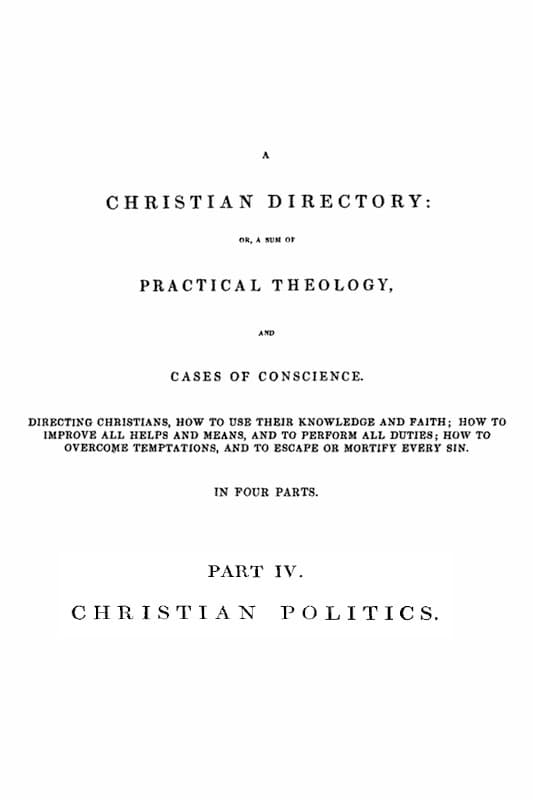
A Christian Directory, Part 1: Christian Ethics
1673
A Christian Directory, Part 1: Christian Ethics
1673
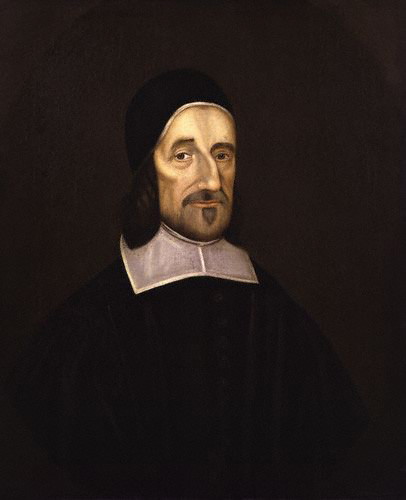
Written in 1673 by the fiery Puritan minister Richard Baxter, this is not a book to sit on a shelf. It is a manual for souls in earnest, a ruthlessly practical guide to living as a Christian when the stakes could not be higher. Baxter assumes nothing less than that your eternity hangs on the decisions you make today, and he refuses to let you look away from yourself. The first volume tackles Christian ethics: what it means to examine your own heart honestly, to mortify sin rather than accommodate it, and to cultivate a living, daily dependence on God. But Baxter is no abstract theorist. He writes for the tired parent, the struggling believer, the young minister unsure how to counsel the desperate. His tone is urgent, intimate, sometimes accusatory, always compassionate. Four centuries later, his directness still confronts comfortable faith. This is spiritual reading for those who mean business with God.
Editions
X-Ray
“he may resolve to save thee, not from affliction and persecution, but in it, and by it.””
— Richard Baxter
“If preachers would speak only to men's fancies or understandings, and not meddle too smartly with their hearts, and lives, and carnal interests, the world would bear them, and hear them as they do stage-players, or at least as lecturers in philosophy or physic. A sermon that hath nothing but some general toothless notions in a handsome dress of words, doth seldom procure offence or persecution: it is rare that such men's preaching is distasted by carnal hearers, or their persons hated for it. "It is a pleasant thing for the eyes to behold the sun," Eccles. xi. 7; but not to be scorched by its heat.””
— Richard Baxter
“It much honoureth God, when his servants can quietly and fearlessly trust in him, in the face of all the dangers and threatenings which devils or men can cast before them; and can joyfully suffer pain or death, in obedience to his commands, and in confidence on his promise of everlasting happiness.”
— Richard Baxter
Link to this book
Add a free, dofollow link to Lex on your blog, forum, syllabus, or reading list.

<a href="https://lex-books.com/book/a-christian-directory-part-1-christian-ethics-edac0e22-b43d-461d-9edd-175febc1c97b"><img src="https://lex-books.com/badges/read-on-lex.svg" alt="Read A Christian Directory, Part 1: Christian Ethics by Richard Baxter free on Lex" width="160" height="40"></a>[](https://lex-books.com/book/a-christian-directory-part-1-christian-ethics-edac0e22-b43d-461d-9edd-175febc1c97b)[url=https://lex-books.com/book/a-christian-directory-part-1-christian-ethics-edac0e22-b43d-461d-9edd-175febc1c97b][img]https://lex-books.com/badges/read-on-lex.svg[/img][/url]Read A Christian Directory, Part 1: Christian Ethics by Richard Baxter free on Lex: https://lex-books.com/book/a-christian-directory-part-1-christian-ethics-edac0e22-b43d-461d-9edd-175febc1c97bCite this book
Reading this edition for a paper or guide? Copy a citation.
Baxter, Richard. A Christian Directory, Part 1: Christian Ethics. Lex, lex-books.com/book/a-christian-directory-part-1-christian-ethics-edac0e22-b43d-461d-9edd-175febc1c97b.Baxter, R. (1673). A Christian Directory, Part 1: Christian Ethics. Lex. https://lex-books.com/book/a-christian-directory-part-1-christian-ethics-edac0e22-b43d-461d-9edd-175febc1c97bBaxter, Richard. A Christian Directory, Part 1: Christian Ethics. Lex. https://lex-books.com/book/a-christian-directory-part-1-christian-ethics-edac0e22-b43d-461d-9edd-175febc1c97b.