What would you like to read?Search books, authors, genres, shelves, users...
Search books, authors, genres, shelves, users...Search books, authors, genres, shelves, users...

What would you like to read?Search books, authors, genres, shelves, users...
Search books, authors, genres, shelves, users...Search books, authors, genres, shelves, users...
1 books
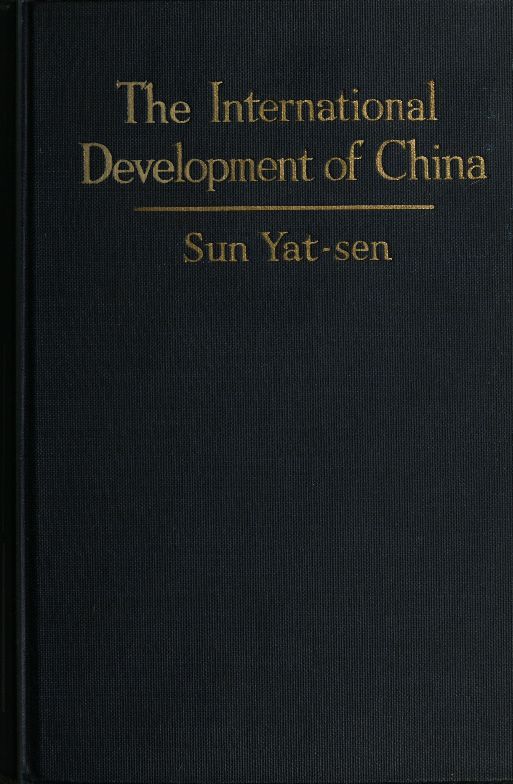
Sun Yat-sen (/ˈsʊnˈjɑːtˈsɛn/; 12 November 1866 – 12 March 1925) was a Chinese physician, revolutionary, statesman, and political philosopher who founded the Republic of China (ROC) and its first political party, the Kuomintang (KMT). As the paramount leader of the 1911 Revolution, Sun is credited with overthrowing the Qing dynasty and served as the first president of the Provisional Government of the Republic of China (1912) and as the inaugural premier of the Kuomintang. Born to a peasant family in Guangdong, Sun was educated overseas in Hawaii and returned to China to graduate from medical school in Hong Kong. He led underground anti-Qing revolutionaries in South China, the United Kingdom, and Japan as one of the Four Bandits and rose to prominence as the founder of multiple resistance movements, including the Revive China Society and the Tongmenghui. He is considered one of the most important figures of modern China, and his political life campaigning against Manchu rule in favor of a Chinese republic featured constant struggles and frequent periods of exile. After the success of the 1911 Revolution, Sun proclaimed the establishment of the Republic of China but had to relinquish the presidency to general Yuan Shikai who controlled the powerful Beiyang Army, ultimately going into exile in Japan. He later returned to launch a revolutionary government in southern China to challenge the warlords who controlled much of the country following Yuan's death in 1916. In 1923, Sun invited representatives of the Communist International to Guangzhou to reorganize the KMT and formed the First United Front with the Chinese Communist Party (CCP). He did not live to see his party unify the country under his successor, Chiang Kai-shek, in the Northern Expedition. While residing in Beijing, Sun died of gallbladder cancer in 1925.