William Thomas Wilson
William Thomas Wilson was an American attorney and politician known for his long tenure in the Virginia House of Delegates, where he served from 1974 to 1990. As a member of the Democratic Party, Wilson was involved in various legislative initiatives that shaped Virginia's political landscape during his time in office. His commitment to public service and legal expertise contributed to his influence in state politics, although he faced challenges in his later years, ultimately losing his reelection bid in 1989 to Republican Bo Trumbo. Wilson's career reflects the complexities of political life in Virginia during a period of significant change and realignment in American politics. Beyond his legislative work, Wilson's background as an attorney provided him with a unique perspective on the law and governance, allowing him to advocate for policies that aimed to improve the lives of his constituents. His contributions to the Virginia House of Delegates are remembered as part of the broader narrative of the state's political history, particularly in the context of the shifting dynamics between the Democratic and Republican parties in the late 20th century.
Famous Quotes
View all 2 quotes“In seeking to establish the causes of poverty and other social problems among black Americans, for example, sociologist William Julius Wilson pointed to factors such as “the enduring effects of slavery, Jim Crow segregation, public school segregation, legalized discrimination, residential segregation, the FHA’s redlining of black neighborhoods in the 1940s and ’50s, the construction of public housing projects in poor black neighborhoods, employer discrimination, and other racial acts and processes.”1 These various facts might be summarized as examples of racism, so the causal question is whether racism is either the cause, or one of the major causes, of poverty and other social problems among black Americans today. Many might consider the obvious answer to be “yes.” Yet some incontrovertible facts undermine that conclusion. For example, despite the high poverty rate among black Americans in general, the poverty rate among black married couples has been less than 10 percent every year since 1994.2 The poverty rate of married blacks is not only lower than that of blacks as a whole, but in some years has also been lower than that of whites as a whole.3 In 2016, for example, the poverty rate for blacks was 22 percent, for whites was 11 percent, and for black married couples was 7.5 percent.4 Do racists care whether someone black is married or unmarried? If not, then why do married blacks escape poverty so much more often than other blacks, if racism is the main reason for black poverty? If the continuing effects of past evils such as slavery play a major causal role today, were the ancestors of today’s black married couples exempt from slavery and other injustices? As far back as 1969, young black males whose homes included newspapers, magazines, and library cards, and who also had the same education as young white males, had similar incomes as their white counterparts.5 Do racists care whether blacks have reading material and library cards?””
“Byron himself and the philosopher William Godwin, who brought along his daughter Mary Wollstonecraft Godwin – braved the cold to watch the bloated, despairing, opium-exhausted poet swerve violently off course.””
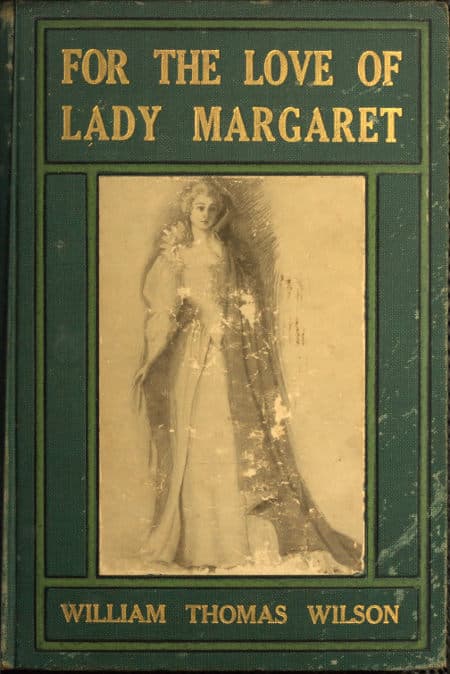
Books from the author





Link to this page
Add a free, dofollow link to Lex on your blog, forum, syllabus, or reading list.

<a href="https://lex-books.com/author/william-thomas-wilson"><img src="https://lex-books.com/badges/read-on-lex.svg" alt="William Thomas Wilson on Lex" width="160" height="40"></a>[](https://lex-books.com/author/william-thomas-wilson)[url=https://lex-books.com/author/william-thomas-wilson][img]https://lex-books.com/badges/read-on-lex.svg[/img][/url]William Thomas Wilson on Lex: https://lex-books.com/author/william-thomas-wilson