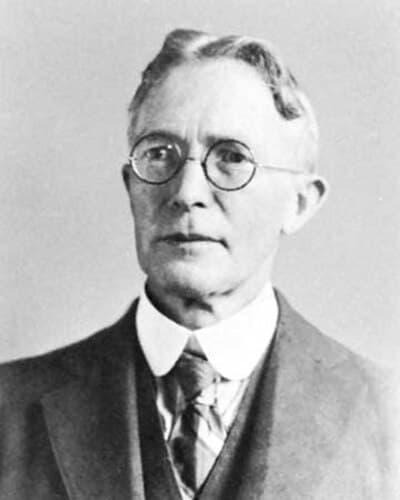
William Diller Matthew
William Diller Matthew was a prominent vertebrate paleontologist whose work significantly advanced the understanding of mammal fossils. Born in Saint John, New Brunswick, he was deeply influenced by his father's passion for geology and paleontology, which sparked his own interest in the earth sciences. Matthew pursued higher education at the University of New Brunswick and later earned his Ph.D. from Columbia University. His career flourished as he became the curator at the American Museum of Natural History, where he worked from the mid-1890s until 1927, and subsequently served as the director of the University of California Museum of Paleontology until his death in 1930. Matthew's contributions to paleontology include the description of Tetraceratops insignis, which has been suggested to be one of the oldest known therapsids from the Early Permian period. His research extended beyond vertebrates, encompassing areas such as mineralogy and botany, showcasing his diverse scientific interests. As a member of the American Philosophical Society, Matthew left a lasting legacy in the field of paleontology, influencing future generations of scientists and contributing to the broader understanding of prehistoric life.
Books from the author





Link to this page
Add a free, dofollow link to Lex on your blog, forum, syllabus, or reading list.

<a href="https://lex-books.com/author/william-diller-matthew"><img src="https://lex-books.com/badges/read-on-lex.svg" alt="William Diller Matthew on Lex" width="160" height="40"></a>[](https://lex-books.com/author/william-diller-matthew)[url=https://lex-books.com/author/william-diller-matthew][img]https://lex-books.com/badges/read-on-lex.svg[/img][/url]William Diller Matthew on Lex: https://lex-books.com/author/william-diller-matthew