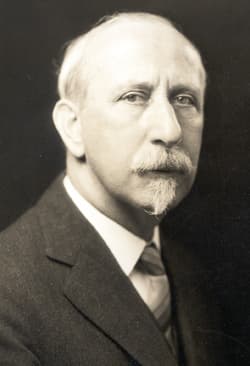
William Allan Neilson
William Allan Neilson was an influential American educator, writer, and lexicographer, best known for his significant contributions to the field of English language and literature. Born in Scotland, he graduated from the University of Edinburgh in 1891 before earning his PhD from Harvard University in 1898. Neilson's academic career flourished as he took on the role of president at Smith College from 1917 to 1939, where he was instrumental in promoting women's education and expanding the college's academic programs. His leadership helped to elevate Smith College's reputation as a premier institution for higher learning for women. In addition to his administrative accomplishments, Neilson made notable contributions to lexicography and literature. He was involved in the compilation of several important dictionaries, including the 'New Century Dictionary,' which aimed to provide a comprehensive and accessible reference for English speakers. His scholarly work and writings reflected a deep understanding of language and its evolution, influencing both students and educators alike. Neilson's legacy endures through his commitment to education and his efforts to enhance the study of English language and literature, making him a significant figure in American academia during the early 20th century.
Famous Quotes
View all 3 quotes“Yet though I must lose my life, fear shall never make me change colour.”
“What I have lately said of painting is equally true with respect to poetry. It is only necessary for us to know what is really excellent, and venture to give it expression; and that is saying much in few words. To-day I have had a scene which, if literally related, would make the most beautiful idyl in the world. But why should I talk of poetry and scenes and idyls? Can we never take pleasure in Nature without having recourse to art? If”
“Human nature," I continued, "has its limits. It is able to endure a certain degree of joy, sorrow, and pain, but becomes annihilated as soon as this measure is exceeded. The question, therefore, is, not whether a man is strong or weak, but whether he is able to endure the measure of his sufferings. The suffering may be moral or physical; and in my opinion it is just as absurd to call a man a coward who destroys himself, as to call a man a coward who dies of a malignant fever." "Paradox,”
Books from the author






Link to this page
Add a free, dofollow link to Lex on your blog, forum, syllabus, or reading list.

<a href="https://lex-books.com/author/william-allan-neilson"><img src="https://lex-books.com/badges/read-on-lex.svg" alt="William Allan Neilson on Lex" width="160" height="40"></a>[](https://lex-books.com/author/william-allan-neilson)[url=https://lex-books.com/author/william-allan-neilson][img]https://lex-books.com/badges/read-on-lex.svg[/img][/url]William Allan Neilson on Lex: https://lex-books.com/author/william-allan-neilson