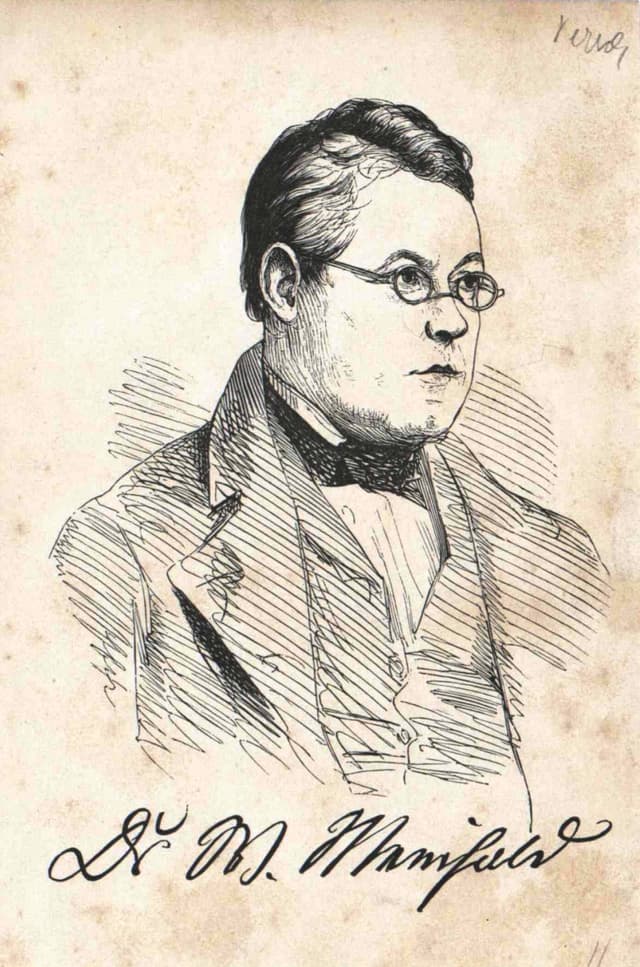
Wilhelm Meinhold
Wilhelm Meinhold was a Pomeranian priest and author known for his contributions to German literature in the 19th century. He gained prominence with his novel 'Gothland,' which is notable for its blend of historical narrative and supernatural elements, reflecting the Romantic fascination with folklore and the mysterious. Meinhold's works often explored themes of faith, morality, and the human condition, drawing from his own experiences as a clergyman and his deep connection to the landscapes of Pomerania. Meinhold's literary significance lies in his ability to weave local legends and religious motifs into compelling narratives, which resonated with the German Romantic movement. His storytelling not only entertained but also provoked thought about the intersection of belief and reality. Despite being less known today, his influence can be seen in the works of later authors who similarly sought to capture the essence of their cultural heritage through fiction. Meinhold's legacy endures as a reflection of the spiritual and cultural currents of his time, marking him as a noteworthy figure in the landscape of German literature.
Famous Quotes
View all 1 quotes“Jacob Schwarten his wife heeded it not, but still plagued my child to give her her apron to make a christening coat for her baby, for that it was pity to let it be burnt, her goodman gave her such a thump on her back with a knotted stick which he had pulled out of the hedge that she fell down with loud shrieks; and when he went to help her up she pulled him down by his hair, and, as reverend Martinus said, now executed what she had threatened; inasmuch as she struck him on the nose with her fist with might and main, until the other people came running up to them, and held her back.”
Books from the author




Link to this page
Add a free, dofollow link to Lex on your blog, forum, syllabus, or reading list.

<a href="https://lex-books.com/author/wilhelm-meinhold"><img src="https://lex-books.com/badges/read-on-lex.svg" alt="Wilhelm Meinhold on Lex" width="160" height="40"></a>[](https://lex-books.com/author/wilhelm-meinhold)[url=https://lex-books.com/author/wilhelm-meinhold][img]https://lex-books.com/badges/read-on-lex.svg[/img][/url]Wilhelm Meinhold on Lex: https://lex-books.com/author/wilhelm-meinhold