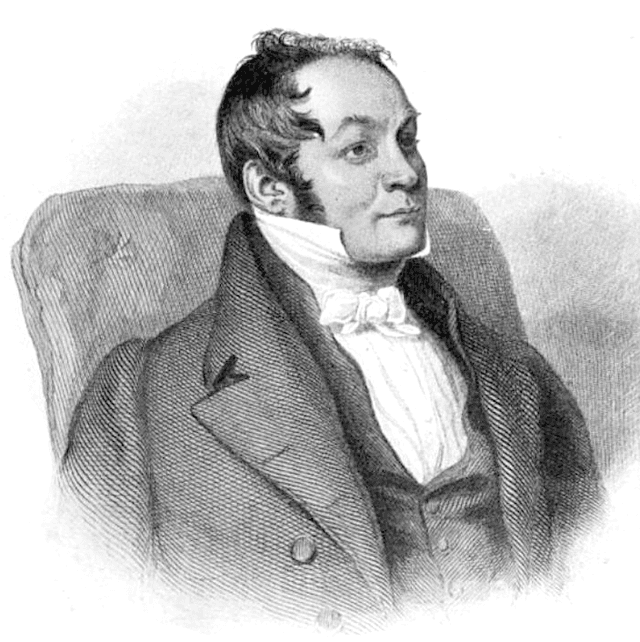
Thomas Ingoldsby
Thomas Ingoldsby, the pseudonym of Richard Harris Barham, was an English cleric and a notable figure in 19th-century literature, celebrated for his humorous poetry and storytelling. He gained prominence with his work 'The Ingoldsby Legends,' a collection of tales that blended folklore, history, and wit, showcasing his unique ability to entertain while engaging with the literary traditions of his time. The legends, often set in the English countryside, were characterized by their playful language and satirical tone, appealing to a wide audience and establishing Ingoldsby as a significant voice in Victorian literature. Ingoldsby's literary contributions extended beyond mere entertainment; his works reflected the social and cultural dynamics of his era, often critiquing contemporary society through humor and irony. His influence can be seen in the works of later writers who embraced similar themes of satire and narrative style. Despite his clerical background, Ingoldsby's legacy lies in his ability to transcend the boundaries of religious and moralistic writing, leaving behind a body of work that continues to be appreciated for its cleverness and charm.
Famous Quotes
View all 3 quotes“Bolsover Priory was founded in the reign of Henry the Sixth, about the beginning of the eleventh century. Hugh de Bolsover had accompanied that monarch to the Holy Land, in the expedition undertaken by way of penance for the murder of his young nephews in the Tower. Upon the dissolution of the monasteries, the veteran was enfeoffed in the lands and manor, to which be gave his own name of Bowlsover, or Bee-owls-over, (by corruption Bolsover) — a Bee in chief, over three Owls, all proper, being the armorial ensigns borne by this distinguished crusader at the siege of Acre.”
“His inaugural essay on the President’s cocked hat was considered a miracle of erudition: and his account of the earliest application of gilding to gingerbread, a masterpiece of antiquarian research. His eldest daughter was of a kindred spirit: if her father’s mantle had not fallen upon her, it was only because he had not thrown it off himself; she had caught hold of its tail, however, while it yet hung upon his honoured shoulders. To souls so congenial, what a sight was the magnificent ruin of Bolsover! its broken arches, its mouldering pinnacles, and the airy tracery of its half-demolished windows. The party were in raptures; Mr. Simpkinson began to meditate an essay, and his daughter an ode: even Seaforth, as he gazed on these lonely relics of the olden time, was betrayed into a momentary forgetfulness of his love and losses: the widow’s eye-glass turned from her cicisbeo’s whiskers to the mantling ivy; Mrs. Peters wiped her spectacles; and ‘her P.’ supposed the central tower ‘had once been the county jail.’ The squire was a philosopher, and had been there often before, so he ordered out the cold tongue and chickens.”
“Tappington (generally called Tapton) Everard is an antiquated but commodious manor-house in the eastern division of the county of Kent. A former proprietor had been High-sheriff in the days of Elizabeth, and many a dark and dismal tradition was yet extant of the licentiousness of his llfe, and the enormity of his offences. The Glen, which the keeper’s daughter was seen to enter, but never known to quit, still frowns darkly as of yore; while an ineradicable bloodstain on the oaken stair yet bids defiance to the united energies of soap and sand.”
Books from the author


Link to this page
Add a free, dofollow link to Lex on your blog, forum, syllabus, or reading list.

<a href="https://lex-books.com/author/thomas-ingoldsby"><img src="https://lex-books.com/badges/read-on-lex.svg" alt="Thomas Ingoldsby on Lex" width="160" height="40"></a>[](https://lex-books.com/author/thomas-ingoldsby)[url=https://lex-books.com/author/thomas-ingoldsby][img]https://lex-books.com/badges/read-on-lex.svg[/img][/url]Thomas Ingoldsby on Lex: https://lex-books.com/author/thomas-ingoldsby