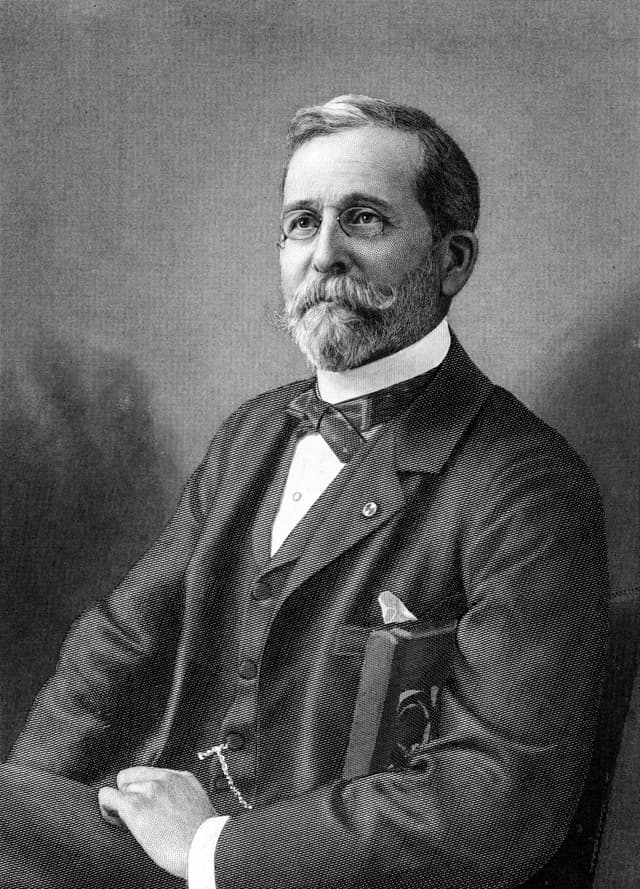
Theodore Ayrault Dodge
Theodore Ayrault Dodge was an American military officer, historian, and businessman known for his extensive writings on military history. He served as a Union officer during the American Civil War, an experience that deeply influenced his later work. Dodge dedicated himself to studying and documenting the lives and strategies of great military leaders, both from the Civil War and from ancient and European history. His notable works include 'The Campaign of Chancellorsville' and 'Alexander,' where he provided detailed analyses of military tactics and leadership, showcasing his deep understanding of warfare and its historical significance. Dodge's contributions to military literature were significant, as he combined rigorous research with engaging narrative style, making complex historical events accessible to a broader audience. His works not only served as valuable resources for military students and historians but also contributed to the popular understanding of military strategy and leadership. Through his writings, Dodge left a lasting legacy in the field of military history, influencing both contemporary and future scholars in their study of warfare and its key figures.
Famous Quotes
View all 2 quotes“Hannibal excelled as a tactician. No battle in history is a finer sample of tactics than Cannae. But he was yet greater in logistics and strategy. No captain ever marched to and fro among so many armies of troops superior to his own numbers and material as fearlessly and skillfully as he. No man ever held his own so long or so ably against such odds. Constantly overmatched by better soldiers, led by generals always respectable, often of great ability, he yet defied all their efforts to drive him from Italy, for half a generation. …As a soldier, in the countenance he presented to the stoutest of foes and in the constancy he exhibited under the bitterest adversity, Hannibal stands alone and unequaled. As a man, no character in history exhibits a purer life or nobler patriotism.”
“I. Carthage. 900–200 B.C. In the third century B.C., Rome and Carthage divided the power of the Mediterranean world. Rome was first on land, Carthage first at sea. Intolerant of powerful neighbors, Rome quarreled with Carthage, and in the First Punic War brought her to her knees. The Carthaginians were of Phœnician origin, one of the early settlements of Tyre. By their energy and intelligence they succeeded in acquiring the hegemony of all the Phœnician colonies on the Mediterranean, as Tyre had done at home. The government was an aristocracy of capitalists, controlled by a senate. This “London of antiquity” gradually extended her conquests all around the western Mediterranean. The city was strongly walled and beautifully built; and in addition possessed vast commercial works, harbors and arsenals. Agriculture was as highly esteemed and practiced as commerce, and the land was worked by rich planters. The prosperity of the city was equally indebted to either art. Carthage was really the capital of a great North African empire, as Rome was of the Italian peninsula.”
Books from the author
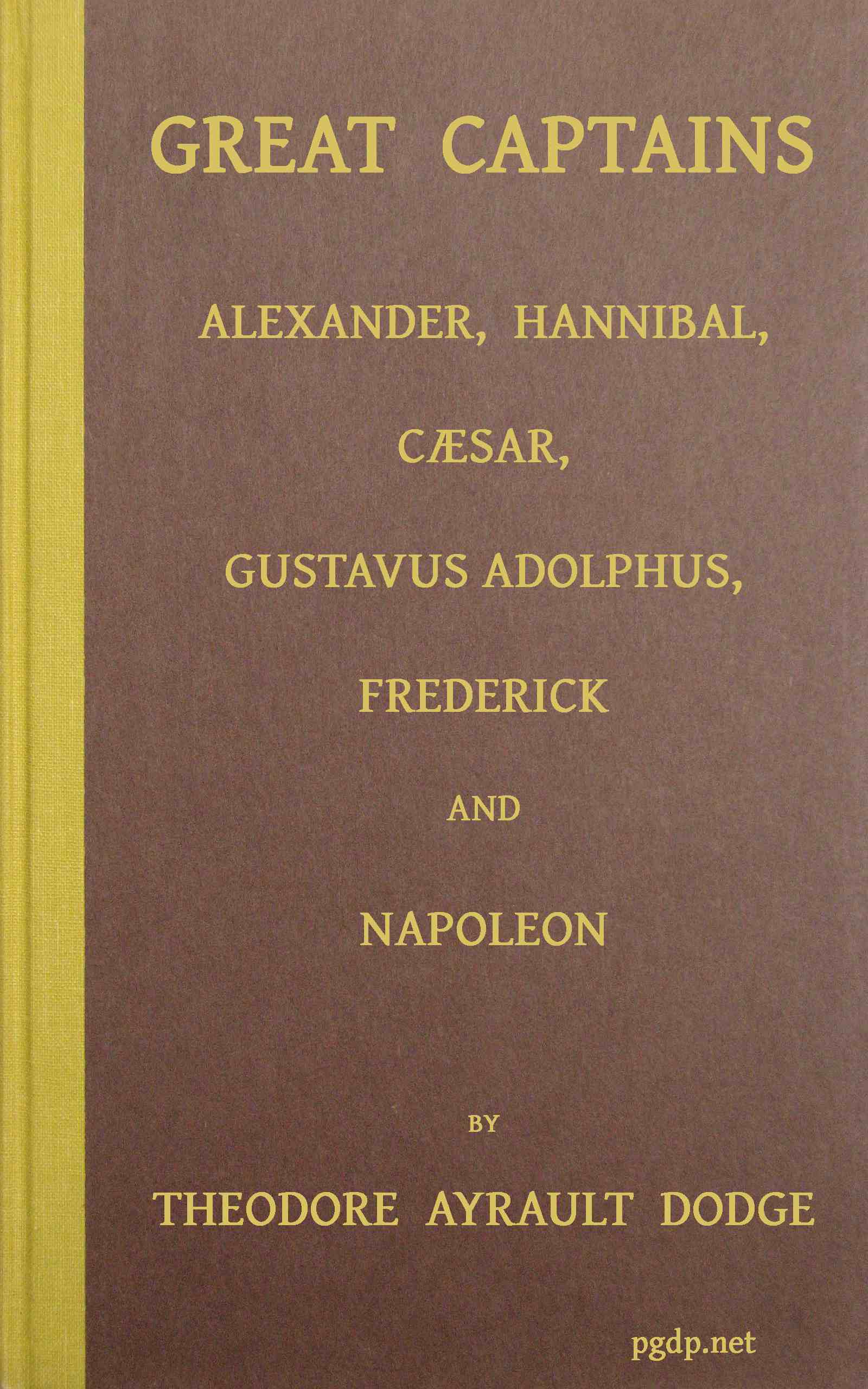

Link to this page
Add a free, dofollow link to Lex on your blog, forum, syllabus, or reading list.

<a href="https://lex-books.com/author/theodore-ayrault-dodge"><img src="https://lex-books.com/badges/read-on-lex.svg" alt="Theodore Ayrault Dodge on Lex" width="160" height="40"></a>[](https://lex-books.com/author/theodore-ayrault-dodge)[url=https://lex-books.com/author/theodore-ayrault-dodge][img]https://lex-books.com/badges/read-on-lex.svg[/img][/url]Theodore Ayrault Dodge on Lex: https://lex-books.com/author/theodore-ayrault-dodge