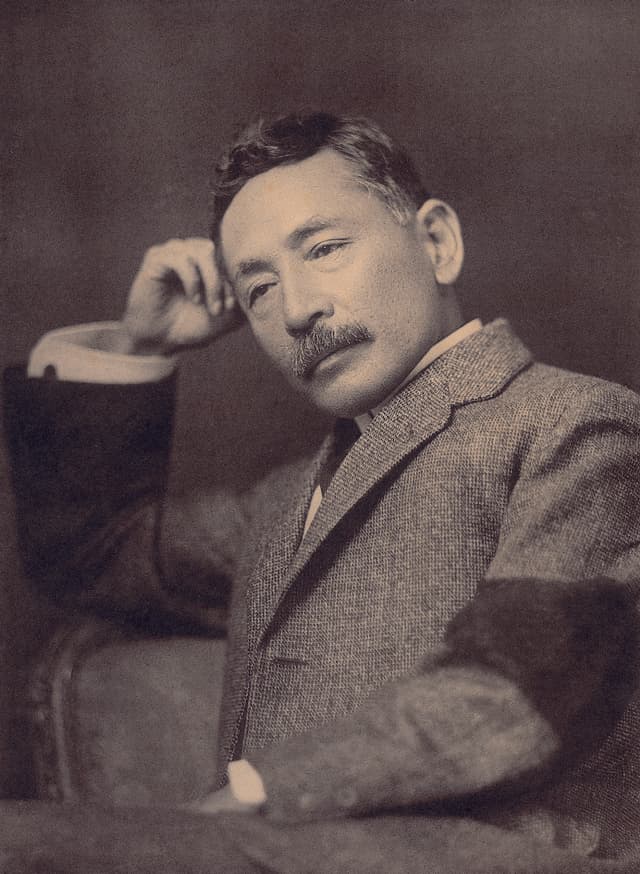
Soseki Natsume
Natsume Sōseki was a pivotal figure in modern Japanese literature, often hailed as the first modern novelist of Japan. Born Natsume Kinnosuke in 1867, he experienced a tumultuous childhood, having been adopted twice. His academic journey led him to Tokyo Imperial University, where he specialized in English literature. In 1900, Sōseki traveled to London on a government scholarship, an experience that proved profoundly challenging, marked by poverty and cultural alienation. This period of struggle deeply influenced his later works, which often grappled with themes of individualism and the clash between traditional Japanese values and the encroaching Western influences of the Meiji era. Sōseki's literary career took off with the publication of his satirical novel, I Am a Cat, in 1905. This work, along with others such as Botchan, Sanshirō, and Kokoro, showcased his keen observations of human nature and societal change. His writing is characterized by a deep psychological insight and a nuanced understanding of loneliness and existential conflict. Sōseki's legacy is profound; he not only shaped the landscape of Japanese literature but also paved the way for future generations of authors. His influence extends beyond Japan, as his works continue to be studied and appreciated worldwide, marking him as a central figure in the canon of modern literature.
Famous Quotes
View all 20 quotes“I believe that words uttered in passion contain a greater living truth than do those words which express thoughts rationally conceived. It is blood that moves the body. Words are not meant to stir the air only: they are capable of moving greater things.””
“You seem to be under the impression that there is a special breed of bad humans. There is no such thing as a stereotype bad man in this world. Under normal conditions, everybody is more or less good, or, at least, ordinary. But tempt them, and they may suddenly change. That is what is so frightening about men.””
“You see, loneliness is the price we have to pay for being born in this modern age, so full of freedom, independence, and our own egoistical selves.””
Books from the author




Link to this page
Add a free, dofollow link to Lex on your blog, forum, syllabus, or reading list.

<a href="https://lex-books.com/author/soseki-natsume"><img src="https://lex-books.com/badges/read-on-lex.svg" alt="Soseki Natsume on Lex" width="160" height="40"></a>[](https://lex-books.com/author/soseki-natsume)[url=https://lex-books.com/author/soseki-natsume][img]https://lex-books.com/badges/read-on-lex.svg[/img][/url]Soseki Natsume on Lex: https://lex-books.com/author/soseki-natsume