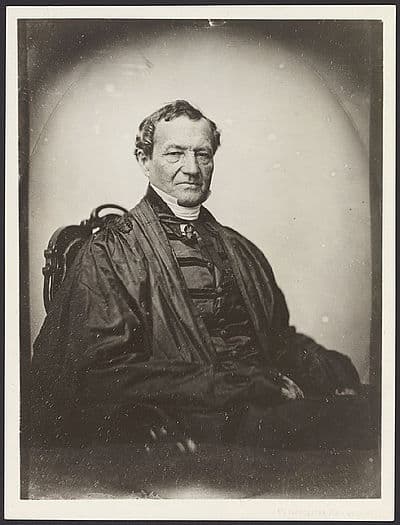
Simon Greenleaf
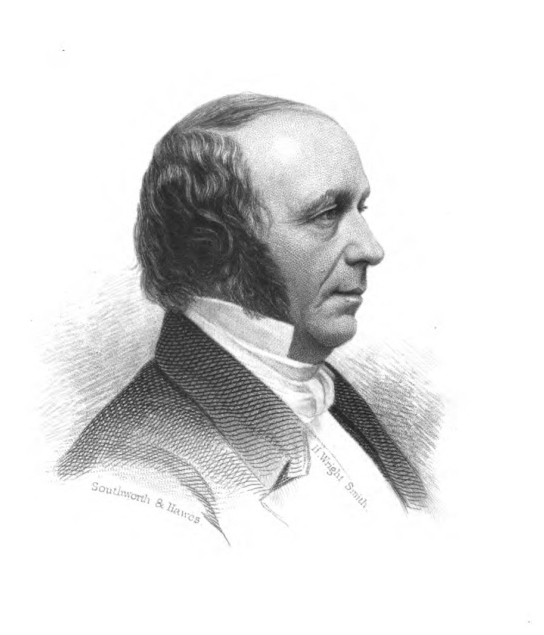
Simon Greenleaf was an influential American lawyer and jurist, best known for his significant contributions to the field of legal evidence and the study of law. Born in Newburyport, Massachusetts, he later moved to New Gloucester, where he began his legal career after being admitted to the Cumberland County bar. Greenleaf's most notable work, 'A Treatise on the Law of Evidence,' published in 1842, became a foundational text in American jurisprudence, shaping the way evidence is understood and applied in legal proceedings. His rigorous analysis and systematic approach to legal principles established him as a leading figure in the development of evidentiary law. In addition to his work on evidence, Greenleaf served as a professor at Harvard Law School, where he influenced a generation of lawyers and legal scholars. His teachings emphasized the importance of rational thought and empirical evidence in the legal process. Greenleaf's legacy endures through his writings and the principles he championed, which continue to inform legal education and practice in the United States. His commitment to the rule of law and the pursuit of justice has left an indelible mark on American legal history.
Famous Quotes
View all 3 quotes“But the Christian writer seems, by the usual course of the argument, to have been deprived of the common presumption of charity in his favor; and reversing the ordinary rule of administering justice in human tribunals, his testimony is unjustly presumed to be false, until it is proved to be true. ...{independent historians} have been treated, in the argument, almost as if the New Testament were the entire production, at once, of a body of men, conspiring by a joint fabrication, to impose a false religion upon the world.”
“In all human transactions, the highest degree of assurance to which we can arrive, short of the evidence of our own senses, is that of probability. The most that can be asserted is, that the narrative is more likely to be true than false; and it may be in the highest degree more likely, but still be short of absolute mathematical certainty. Yet this very probability may be so great as to satisfy the mind of the most cautious, and enforce the assent of the most reluctant and unbelieving. If it is such as usually satisfies reasonable men, in matters of ordinary transaction, it is all which the greatest sceptic has a right to require; for it is by such evidence alone that our rights are determined, in the civil tribunals; and on no other evidence do they proceed, even in capital cases.”
“Every document, apparently ancient, coming from the proper repository or custody, and bearing on its face no evident marks of forgery, the law presumes to be genuine, and devolves on the opposing party the burden of proving it to be otherwise.”
Books from the author



Link to this page
Add a free, dofollow link to Lex on your blog, forum, syllabus, or reading list.

<a href="https://lex-books.com/author/simon-greenleaf"><img src="https://lex-books.com/badges/read-on-lex.svg" alt="Simon Greenleaf on Lex" width="160" height="40"></a>[](https://lex-books.com/author/simon-greenleaf)[url=https://lex-books.com/author/simon-greenleaf][img]https://lex-books.com/badges/read-on-lex.svg[/img][/url]Simon Greenleaf on Lex: https://lex-books.com/author/simon-greenleaf