Russell Burton
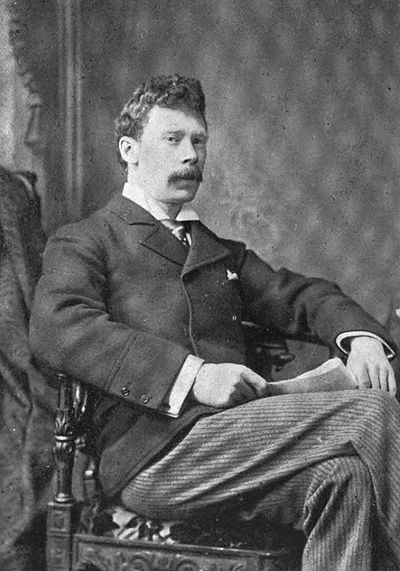
Russell Barton was a prominent figure in the Australian political and agricultural landscape during the late 19th and early 20th centuries. Born in Penge, England, he migrated with his family to Adelaide in 1839, where he initially worked on cattle and sheep stations. His ventures took him to the Victorian goldfields in the early 1850s, after which he returned to Adelaide to acquire land. Barton married Jane McCulloch Davey in 1855, and together they raised eleven children. Despite facing adversity, including the destruction of his property by fire the same year he married, he continued to manage various sheep stations, particularly in New South Wales, and engaged in mining speculation, becoming one of the early owners of the Great Cobar mine. Barton’s influence extended beyond agriculture into the realm of finance and insurance, where he held significant positions, including director roles at several insurance companies and managing director of the Pastoral Finance Association Ltd. His contributions to the development of the pastoral and mining industries in Australia were notable, reflecting the entrepreneurial spirit of the era. Barton's legacy is marked by his involvement in shaping the economic landscape of early Australian society, particularly through his dual focus on agriculture and mining, which laid the groundwork for future developments in these sectors.
Famous Quotes
View all 11 quotes“As the sign of a deeper truth, metaphor was close to sacrament. Because the vastness and richness of reality cannot be expressed by the overt sense of a statement alone.””
“The problem of evil can be stated simply: God is omnipotent; God is perfectly good; such a God would not permit evil to exist; but we observe that evil exists; therefore God does not exist. Variations on this theme are nearly infinite. The problem is not only abstract and philosophical, of course; it is also personal and immediate. Believers tend to forget that their God takes away everything that one cares about: possessions, comforts, success, profession or craft, knowledge, friends, family and life. What kind of God is this? Any decent religion must face this question squarely, and no answer is credible that cannot be given in the face of dying children.””
“The first concerns how an investor should choose among different types of broad-based index funds. The best-known of the broad stock market mutual funds and ETFs in the United States track the S&P 500 index of the largest stocks. We prefer using a broader index that includes more smaller-company stocks, such as the Russell 3000 index or the Dow-Wilshire 5000 index. Funds that track these broader indexes are often referred to as “total stock market” index funds. More than 80 years of stock market history confirm that portfolios of smaller stocks have produced a higher rate of return than the return of the S&P 500 large-company index. While smaller companies are undoubtedly less stable and riskier than large firms, they are likely”
Books from the author






Link to this page
Add a free, dofollow link to Lex on your blog, forum, syllabus, or reading list.

<a href="https://lex-books.com/author/russell-burton"><img src="https://lex-books.com/badges/read-on-lex.svg" alt="Russell Burton on Lex" width="160" height="40"></a>[](https://lex-books.com/author/russell-burton)[url=https://lex-books.com/author/russell-burton][img]https://lex-books.com/badges/read-on-lex.svg[/img][/url]Russell Burton on Lex: https://lex-books.com/author/russell-burton