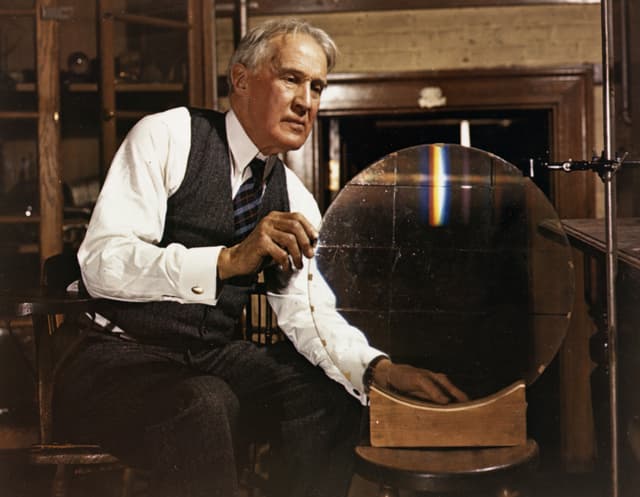
Robert Williams Wood
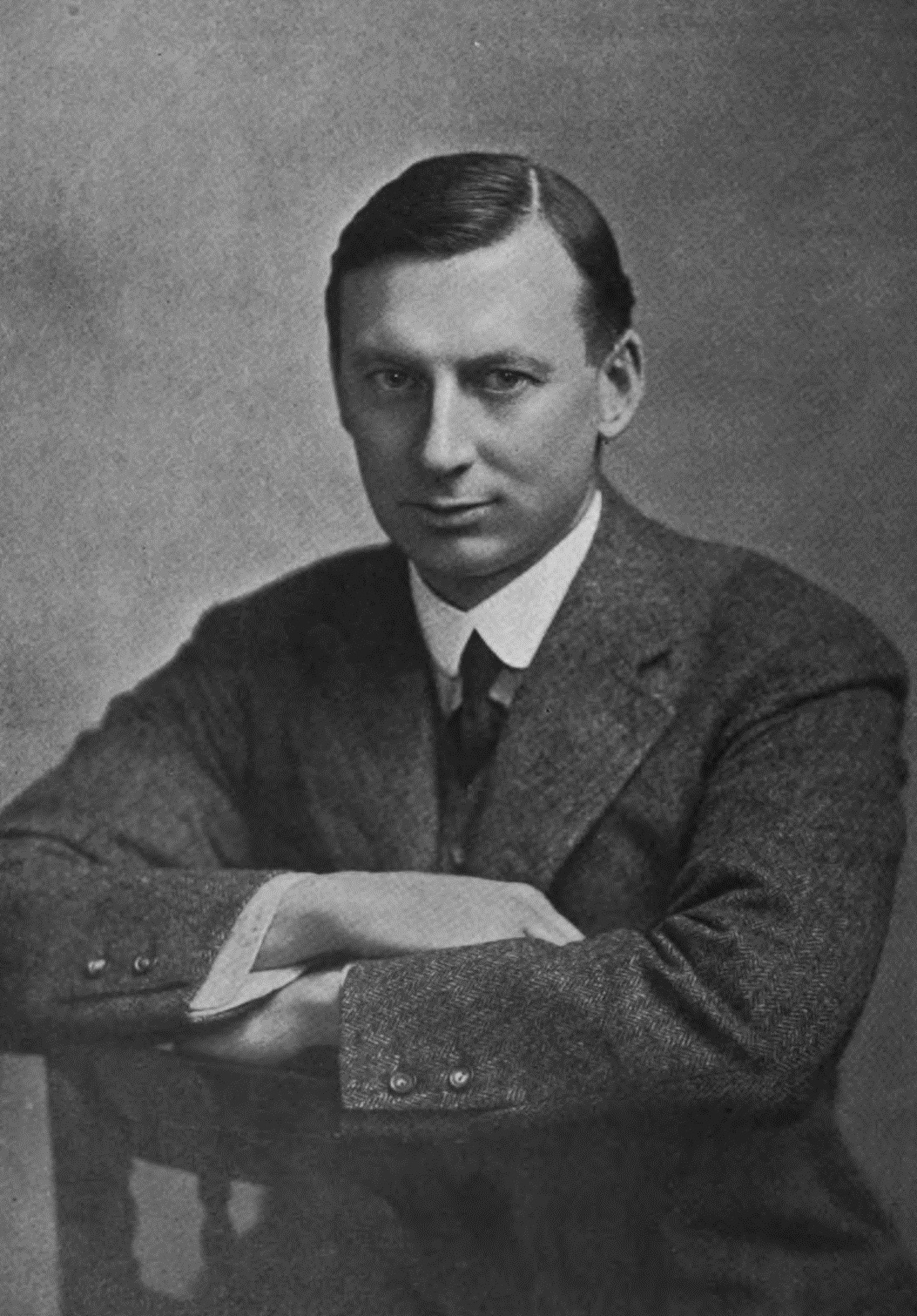
Robert Williams Wood was an influential American physicist and inventor renowned for his groundbreaking contributions to optics. He was a pioneer in the fields of infrared and ultraviolet photography, which laid the groundwork for advancements in the understanding and application of ultraviolet light. His innovative patents and theoretical explorations significantly enhanced the scientific community's grasp of spectroscopy, phosphorescence, and diffraction, leading to practical applications that emerged prominently after World War I. Wood's work not only advanced the study of light but also opened up new avenues for technology and industry, particularly in the realm of UV fluorescence. His extensive publications and research have left a lasting impact on the field of physics, influencing both contemporary studies and future innovations in optical science. Wood's legacy endures through the continued relevance of his discoveries in modern optics and photography, marking him as a pivotal figure in the evolution of these disciplines.
Famous Quotes
View all 8 quotes“We read the pagan sacred books with profit and delight. With myth and fable we are ever charmed, and find a pleasure in the endless repetition of the beautiful, poetic, and absurd. We find, in all these records of the past, philosophies and dreams, and efforts stained with tears, of great and tender souls who tried to pierce the mystery of life and death, to answer the eternal questions of the Whence and Whither, and vainly sought to make, with bits of shattered glass, a mirror that would, in very truth, reflect the face and form of Nature's perfect self.These myths were born of hopes, and fears, and tears, and smiles, and they were touched and colored by all there is of joy and grief between the rosy dawn of birth, and death's sad night. They clothed even the stars with passion, and gave to gods the faults and frailties of the sons of men. In them, the winds and waves were music, and all the lakes, and streams, and springs,”
“if you don't first accept the gift as it is”
“I really didn't mean to steal it." Mr. Williams shook his head. He scratched at his chin nervously. "Why not? That's what they're there for. Tunes belong to everybody. So do stories.””
Books from the author





Link to this page
Add a free, dofollow link to Lex on your blog, forum, syllabus, or reading list.

<a href="https://lex-books.com/author/robert-williams-wood"><img src="https://lex-books.com/badges/read-on-lex.svg" alt="Robert Williams Wood on Lex" width="160" height="40"></a>[](https://lex-books.com/author/robert-williams-wood)[url=https://lex-books.com/author/robert-williams-wood][img]https://lex-books.com/badges/read-on-lex.svg[/img][/url]Robert Williams Wood on Lex: https://lex-books.com/author/robert-williams-wood