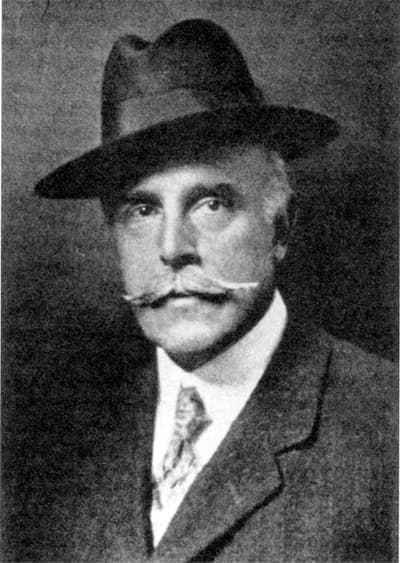
Madison Grant
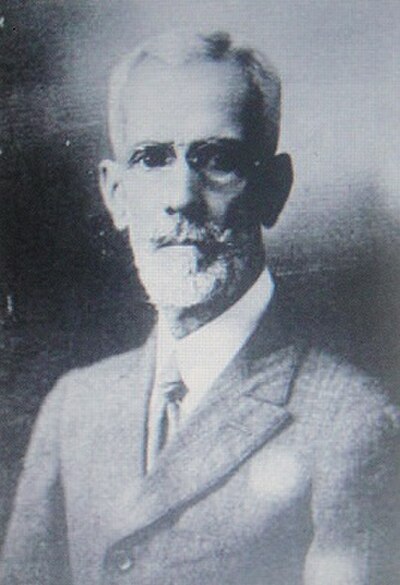
Madison Grant was an American lawyer, zoologist, anthropologist, and writer whose legacy is marked by both significant contributions to conservation and controversial views on race. He is perhaps best known for his book, The Passing of the Great Race, published in 1916, which espoused a pseudoscientific form of racism known as Nordicism. This work gained notoriety for its influence on eugenics and was even referred to by Adolf Hitler as his personal Bible. Grant's advocacy for white supremacy and his role in shaping immigration policies and anti-miscegenation laws in the United States have left a troubling imprint on American history. Despite his controversial beliefs, Grant made notable strides in conservation, playing a pivotal role in the establishment of several national parks, including Glacier National Park and Denali National Park. He was instrumental in the creation of the Bronx Zoo and co-founded the Save the Redwoods League, contributing to the preservation of various species, including the American bison. Grant's work laid the groundwork for wildlife management as a discipline, showcasing a complex legacy that intertwines environmental advocacy with deeply problematic ideologies.
Famous Quotes
View all 3 quotes“Large cities from the days of Rome, Alexandria, and Byzantium have always been gathering points of diverse races, but New York is becoming a cloaca gentium, which will produce many amazing racial hybrids and some ethnic horrors that will be beyond the powers of the future anthropologists to unravel.”
“Experiments in limiting reproduction to the undesirable classes were unconsciously made in mediæval Europe under the guidance of the church. After the fall of Rome social conditions were such that all those who loved a studious and quiet life were compelled to seek refuge from the violence of the times in monastic institutions and upon such the church imposed the obligation of celibacy and thus deprived the world of offspring from these desirable classes. In the Middle Ages, through persecution resulting in actual death, life imprisonment and banishment, the free thinking, progressive and intellectual elements were persistently eliminated over large areas, leaving the perpetuation of the race to be carried on by the brutal, the servile and the stupid. It is now impossible to say to what extent the Roman Church by these methods has impaired the brain capacity of Europe, but in Spain alone, for a period of over three centuries from the years 1471 to 1781, the Inquisition condemned to the stake or imprisonment an average of 1,000 persons annually. During these three centuries no less than 32,000 were burned alive and 291,000 were condemned to various terms of imprisonment and other penalties and 17,000 persons were burned in effigy, representing men who had died in prison or had fled the country. No better method of eliminating the genius producing strains of a nation could be devised and if such were its purpose the result was eminently satisfactory, as is demonstrated by the superstitious and unintelligent Spaniard of to-day. A similar elimination of brains and ability took place in northern Italy, in France and in the Low Countries, where hundreds of thousands of Huguenots were murdered or driven into exile.”
“It sometimes happens that a section of the population of a large nation gathers around language, reinforced by religion, as an expression of individuality. The struggle between the French-speaking Alpine Walloons and the Nordic Flemings of Low Dutch tongue in Belgium is an example of two competing languages in an artificial nation which was formed originally around religion. On the other hand, the Irish National movement centres chiefly around religion reinforced by myths of ancient grandeur. The French Canadians and the Poles use both religion and language to hold together what they consider a political unit. None of these so-called nationalities are founded on race.”
Books from the author












Link to this page
Add a free, dofollow link to Lex on your blog, forum, syllabus, or reading list.

<a href="https://lex-books.com/author/madison-grant"><img src="https://lex-books.com/badges/read-on-lex.svg" alt="Madison Grant on Lex" width="160" height="40"></a>[](https://lex-books.com/author/madison-grant)[url=https://lex-books.com/author/madison-grant][img]https://lex-books.com/badges/read-on-lex.svg[/img][/url]Madison Grant on Lex: https://lex-books.com/author/madison-grant