The Rocky Mountain Goat
1905
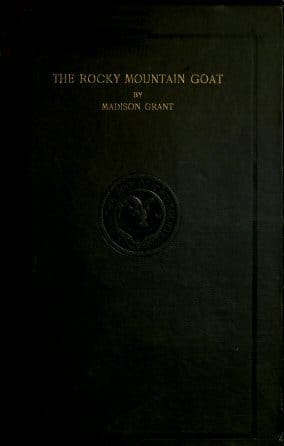
The Rocky Mountain Goat
1905
In 1905, the Rocky Mountain goat remained one of North America's most elusive large mammals, so rare and remote that naturalists routinely confused it with white sheep and even deer. Madison Grant, secretary of the New York Zoological Society, wrote this pioneering study to correct a century of misinformation, drawing on the handful of specimens ever held in captivity (just eight young animals across Boston, Philadelphia, and New York) and the expeditions that had managed to reach its high-altitude kingdom. The book meticulously documents the goat's physical attributes, habitat preferences, and the subspecies distinctions that separated it from its mountain-sheep cousins. Grant systematically untangles the taxonomic confusion that had plagued natural histories, contrasting the goat's behavior and environment with other alpine dwellers. His prose captures the thrill of discovery, here was an animal most humans would never see, living in a world above the treeline that few would ever visit. Yet what gives the work lasting resonance is its urgent conservation plea. Grant warns that overhunting and encroaching civilization threaten an animal already pushed to the edges of the continent. Written at a turning point in American wildlife preservation, the book stands as a historical document of early conservation concern, for anyone curious about the roots of American natural history or the secret life of one of the continent's most mysterious creatures.
Editions

Link to this book
Add a free, dofollow link to Lex on your blog, forum, syllabus, or reading list.

<a href="https://lex-books.com/book/the-rocky-mountain-goat-63b38394-3209-414b-a3ae-592c4aea9c2f"><img src="https://lex-books.com/badges/read-on-lex.svg" alt="Read The Rocky Mountain Goat by Madison Grant free on Lex" width="160" height="40"></a>[](https://lex-books.com/book/the-rocky-mountain-goat-63b38394-3209-414b-a3ae-592c4aea9c2f)[url=https://lex-books.com/book/the-rocky-mountain-goat-63b38394-3209-414b-a3ae-592c4aea9c2f][img]https://lex-books.com/badges/read-on-lex.svg[/img][/url]Read The Rocky Mountain Goat by Madison Grant free on Lex: https://lex-books.com/book/the-rocky-mountain-goat-63b38394-3209-414b-a3ae-592c4aea9c2fCite this book
Reading this edition for a paper or guide? Copy a citation.
Grant, Madison. The Rocky Mountain Goat. Lex, lex-books.com/book/the-rocky-mountain-goat-63b38394-3209-414b-a3ae-592c4aea9c2f.Grant, M. (1905). The Rocky Mountain Goat. Lex. https://lex-books.com/book/the-rocky-mountain-goat-63b38394-3209-414b-a3ae-592c4aea9c2fGrant, Madison. The Rocky Mountain Goat. Lex. https://lex-books.com/book/the-rocky-mountain-goat-63b38394-3209-414b-a3ae-592c4aea9c2f.