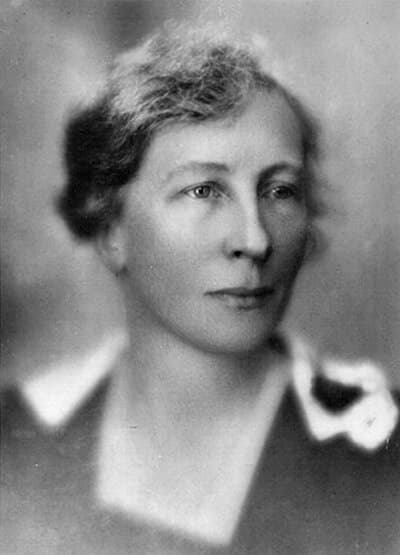
Lillian Moller Gilbreth
Lillian Moller Gilbreth was a pioneering American psychologist and industrial engineer, renowned for her groundbreaking work in applying psychological principles to time-and-motion studies. As one of the first women to earn a Ph.D. in engineering, she broke significant barriers in a male-dominated field and is often regarded as the first industrial/organizational psychologist. Alongside her husband, Frank Bunker Gilbreth, she advanced the study of efficiency and human factors, contributing to the development of modern industrial engineering practices. Her innovative approaches not only transformed workplaces but also influenced the organization of everyday life. Gilbreth's legacy extends beyond her professional achievements; her family life was famously chronicled in the books "Cheaper by the Dozen" and "Belles on Their Toes," written by her children. These works provide a humorous and insightful look at how the principles of efficiency were applied to managing a large household. The stories of the Gilbreth family, filled with both challenges and triumphs, were later adapted into popular films, further cementing her influence on American culture. Lillian Moller Gilbreth's contributions to psychology and engineering continue to resonate, highlighting the importance of human factors in both work and home environments.
Famous Quotes
View all 1 quotes“I'd be very interrested in a two headed boy!”
Books from the author






Link to this page
Add a free, dofollow link to Lex on your blog, forum, syllabus, or reading list.

<a href="https://lex-books.com/author/lillian-moller-gilbreth"><img src="https://lex-books.com/badges/read-on-lex.svg" alt="Lillian Moller Gilbreth on Lex" width="160" height="40"></a>[](https://lex-books.com/author/lillian-moller-gilbreth)[url=https://lex-books.com/author/lillian-moller-gilbreth][img]https://lex-books.com/badges/read-on-lex.svg[/img][/url]Lillian Moller Gilbreth on Lex: https://lex-books.com/author/lillian-moller-gilbreth