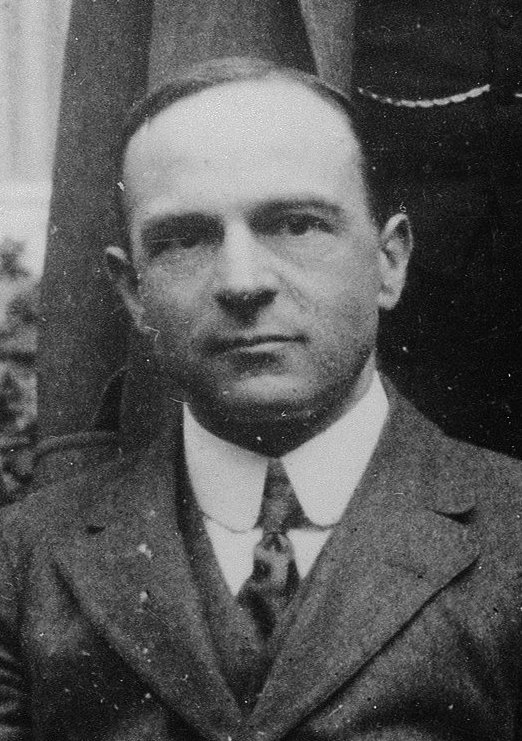
Ernest Jones
Alfred Ernest Jones was a pioneering Welsh neurologist and psychoanalyst, recognized as the first English-speaking practitioner of psychoanalysis. His lifelong friendship with Sigmund Freud, which began in 1908, positioned him as a key figure in the development and dissemination of psychoanalytic theory in the English-speaking world. As Freud's official biographer, Jones played a crucial role in interpreting and promoting Freud's ideas, helping to establish psychoanalysis as a legitimate field of study and practice. In the 1920s and 1930s, Jones served as President of both the International Psychoanalytical Association and the British Psycho-Analytical Society, where he significantly influenced the formation of these organizations and their scholarly publications. His notable works include 'The Life and Work of Sigmund Freud,' which remains a critical resource for understanding Freud's contributions to psychology. Jones's legacy endures through his foundational role in shaping psychoanalysis, making it accessible and respected in the English-speaking academic and clinical communities.
Famous Quotes
View all 3 quotes“The control man has secured over nature has far outrun his control over himself.”
“Man's chief enemy is his own unruly nature and the dark forces put up within him.”
“Writing on this subject in 1904 Freud gave the reason for our unshakable conviction of freedom of choice. He remarked that it is far stronger with trivial decisions than with weighty ones; with the latter we commonly feel that our inner nature compels us, that we really have no alternative. With the former, however, for example the arbitrary choice of a number, we discern no motive and therefore feel it is an uncaused act on the part of our ego. If we now subject the example to a psycho-analysis we discover that the choice has after all been determined, but this time the motive is an unconscious one. We actually leave the matter to be decided by our unconscious mind and then claim the credit for the outcome. If unconscious motivation is taken into account, therefore, the rule of determinism is of general validity. Freud never wavered in this attitude and all his researches into the workings of the mind are entirely based on a belief in a regular chain of mental events. He would have endorsed the views of the great anthropologist Tylor that 'the history of mankind is part and parcel of the history of Nature, that our thoughts, will and actions accord with laws as definite as those which govern the motion of the waves'. When enumerating the essential elements of psycho-analytical theory, in 1924, he included 'the thorough-going meaningfulness and determinism of even the apparently most obscure and arbitrary mental phenomena.”
Books from the author




Link to this page
Add a free, dofollow link to Lex on your blog, forum, syllabus, or reading list.

<a href="https://lex-books.com/author/ernest-jones"><img src="https://lex-books.com/badges/read-on-lex.svg" alt="Ernest Jones on Lex" width="160" height="40"></a>[](https://lex-books.com/author/ernest-jones)[url=https://lex-books.com/author/ernest-jones][img]https://lex-books.com/badges/read-on-lex.svg[/img][/url]Ernest Jones on Lex: https://lex-books.com/author/ernest-jones