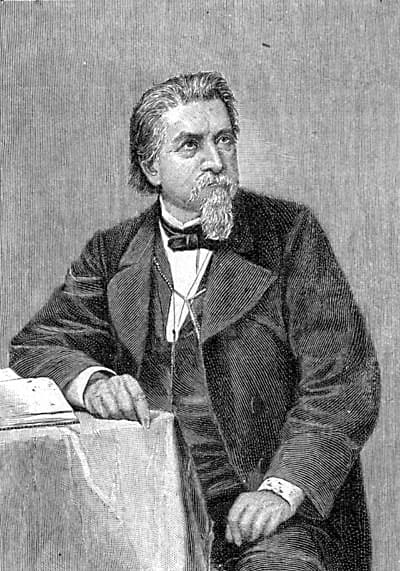
Karl Gutzkow
Karl Gutzkow was a prominent German writer and dramatist known for his advocacy of political and social reform. Born in Berlin, he studied philosophy and theology under influential figures like Georg Wilhelm Friedrich Hegel and Friedrich Schleiermacher. His early literary contributions, including the satirical novel 'Maha-Guru, Geschichte eines Gottes' (1833), showcased his critical perspective on society. However, it was his 1835 novel 'Wally, die Zweiflerin' that brought him notoriety, resulting in his imprisonment and the suppression of his work. This incident marked a pivotal moment in the emergence of the Young Germany movement, which sought to challenge the conservative norms of the time. Gutzkow's influence extended beyond novels; his plays, particularly 'Uriel Acosta' (1847), which drew inspiration from the life of Uriel da Costa, left a significant mark on both German and Yiddish theater. His works often explored themes of doubt, faith, and the individual's struggle against societal constraints. Through his literary endeavors, Gutzkow not only contributed to the cultural landscape of his era but also laid the groundwork for future generations of writers who would continue to grapple with issues of reform and identity in their own works. His legacy endures as a key figure in the development of modern German literature and theater.
Famous Quotes
View all 2 quotes“Eduard Gans war Heinrich Heine, wenn letzterer, um mit seinem Oheim Salomon Heine zu reden, »etwas gelernt gehabt hätte«.”
“Sein Antlitz hatte die Eigenheit der Kurzsichtigen, daß es viel strenger und herber aussah, als seinem Wesen entsprach.”
Books from the author




Link to this page
Add a free, dofollow link to Lex on your blog, forum, syllabus, or reading list.

<a href="https://lex-books.com/author/karl-gutzkow"><img src="https://lex-books.com/badges/read-on-lex.svg" alt="Karl Gutzkow on Lex" width="160" height="40"></a>[](https://lex-books.com/author/karl-gutzkow)[url=https://lex-books.com/author/karl-gutzkow][img]https://lex-books.com/badges/read-on-lex.svg[/img][/url]Karl Gutzkow on Lex: https://lex-books.com/author/karl-gutzkow