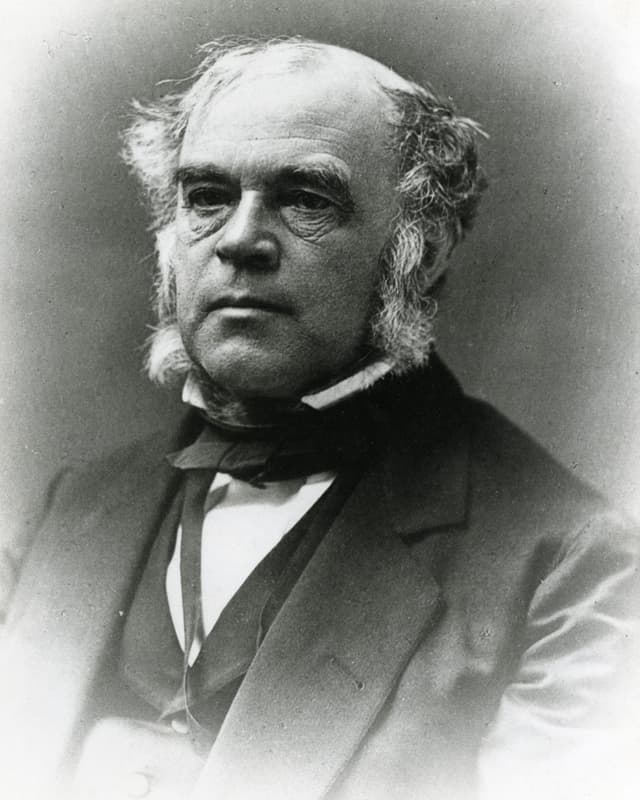
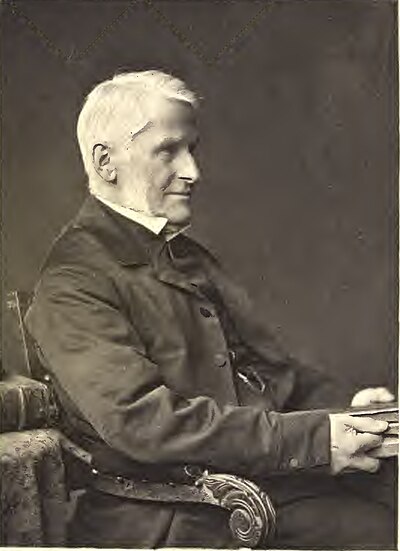
John William Draper
John William Draper was an English polymath whose contributions spanned science, philosophy, medicine, and photography. He is best known for his pioneering work in portrait photography, having created the first detailed photograph of the moon in 1840, marking a significant advancement in both the fields of photography and astronomy. Draper was also a prominent figure in the scientific community, serving as the first president of the American Chemical Society and playing a crucial role in founding the New York University School of Medicine. His diverse expertise underscored the interconnectedness of various disciplines during a transformative period in science and education. Draper’s literary contributions included the influential book "History of the Conflict between Religion and Science," which popularized the conflict thesis that posits an intrinsic hostility between religion and science. This work sparked considerable debate and was widely read, being translated into multiple languages, thus cementing his legacy as a thinker who challenged conventional views. Draper's family continued his scientific legacy, with his descendants making notable contributions to astronomy and paleontology, further highlighting the impact of his intellectual lineage. Through his multifaceted achievements, Draper left an indelible mark on both the scientific and cultural landscapes of his time.
Famous Quotes
View all 3 quotes“The history of Science is not a mere record of isolated discoveries; it is a narrative of the conflict of two contending powers, the expansive force of the human intellect on one side, and the compression arising from traditionary faith and human interests on the other.”
“As to Science, she has never sought to ally herself to civil power. She has never attempted to throw odium or inflict social ruin on any human being. She has never subjected anyone to mental torment, physical torture, least of all to death, for the purpose of upholding or promoting her ideas. She presents herself unstained by cruelties and crimes. But in the Vatican—we have only to recall the Inquisition—the hands that are now raised in appeals to the 'Most Merciful' are crimsoned. They have been steeped in blood!”
“The history of Science is not a mere record of isolated discoveries; it is a narrative of the conflict of two contending powers, the expansive force of the human intellect on one side, and the compression arising from traditionary faith and”
Books from the author




Link to this page
Add a free, dofollow link to Lex on your blog, forum, syllabus, or reading list.

<a href="https://lex-books.com/author/john-william-draper"><img src="https://lex-books.com/badges/read-on-lex.svg" alt="John William Draper on Lex" width="160" height="40"></a>[](https://lex-books.com/author/john-william-draper)[url=https://lex-books.com/author/john-william-draper][img]https://lex-books.com/badges/read-on-lex.svg[/img][/url]John William Draper on Lex: https://lex-books.com/author/john-william-draper