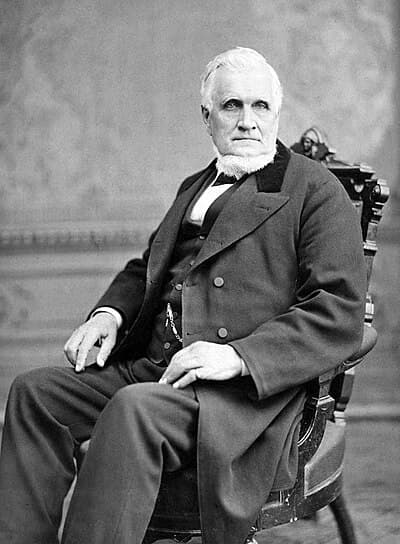
John M. Taylor
John M. Taylor was an American historian and author known for his in-depth examination of the witch trials that occurred in colonial Connecticut. His most notable work, 'The Witchcraft Delusion in Colonial Connecticut (1647-1697)', provides a comprehensive analysis of the social, political, and religious factors that fueled the witchcraft hysteria in New England during the 17th century. Through meticulous research, Taylor illuminated the complexities of the witch trials, revealing how fear and superstition intertwined with the societal norms of the time. Taylor's scholarship not only contributed to the understanding of witchcraft in American history but also reflected broader themes of justice, morality, and the consequences of mass hysteria. His work remains significant for its detailed documentation and critical perspective on a dark chapter in colonial history, influencing subsequent studies on the subject. Taylor's legacy endures as a pivotal figure in the field of early American history, particularly regarding the intersection of law, religion, and societal behavior during a tumultuous period.
Famous Quotes
View all 5 quotes“I didn’t “teach” Ron Hansen or Stephen Wright or T. Coraghessan Boyle or Susan Taylor Chehak or Allan Gurganus or Gail Harper or Kent Haruf or Robert Chibka or Douglas Unger how to write, but I hope I may have encouraged them and saved them a little time. I did nothing more for them than Kurt Vonnegut did for me, but in my case Mr. Vonnegut”
“When we adults think of children there is a simple truth which we ignore: childhood is not preparation for life, childhood is life. A child isn’t getting ready to live, a child is living.Children are constantly confronted with the nagging question, “What are you going to be?” Courageous would be the youngster who, looking the adult squarely in the face, would say, “I’m not going to be anything; I already am.””
“Today’s Children, The Woman in White, and The Guiding Light crossed over and interchanged in respective storylines.) June 2, 1947–June 29, 1956, CBS. 15m weekdays at 1:45. Procter & Gamble’s Duz Detergent. CAST: 1937 to mid-1940s: Arthur Peterson as the Rev. John Ruthledge of Five Points, the serial’s first protagonist. Mercedes McCambridge as Mary Ruthledge, his daughter; Sarajane Wells later as Mary. Ed Prentiss as Ned Holden, who was abandoned by his mother as a child and taken in by the Ruthledges; Ned LeFevre and John Hodiak also as Ned. Ruth Bailey as Rose Kransky; Charlotte Manson also as Rose. Mignon Schrieber as Mrs. Kransky. Seymour Young as Jacob Kransky, Rose’s brother. Sam Wanamaker as Ellis Smith, the enigmatic “Nobody from Nowhere”; Phil Dakin and Raymond Edward Johnson also as Ellis. Henrietta Tedro as Ellen, the housekeeper. Margaret Fuller and Muriel Bremner as Fredrika Lang. Gladys Heen as Torchy Reynolds. Bill Bouchey as Charles Cunningham. Lesley Woods and Carolyn McKay as Celeste, his wife. Laurette Fillbrandt as Nancy Stewart. Frank Behrens as the Rev. Tom Bannion, Ruthledge’s assistant. The Greenman family, early characters: Eloise Kummer as Norma; Reese Taylor and Ken Griffin as Ed; Norma Jean Ross as Ronnie, their daughter. Transition from clergy to medical background, mid-1940s: John Barclay as Dr. Richard Gaylord. Jane Webb as Peggy Gaylord. Hugh Studebaker as Dr. Charles Matthews. Willard Waterman as Roger Barton (alias Ray Brandon). Betty Lou Gerson as Charlotte Wilson. Ned LeFevre as Ned Holden. Tom Holland as Eddie Bingham. Mary Lansing as Julie Collins. 1950s: Jone Allison as Meta Bauer. Lyle Sudrow as Bill Bauer. Charita Bauer as Bert, Bill’s wife, a role she would carry into television and play for three decades. Laurette Fillbrandt as Trudy Bauer. Glenn Walken as little Michael. Theo Goetz as Papa Bauer. James Lipton as Dr. Dick Grant. Lynn Rogers as Marie Wallace, the artist.””
Books from the author


Link to this page
Add a free, dofollow link to Lex on your blog, forum, syllabus, or reading list.

<a href="https://lex-books.com/author/john-m-taylor"><img src="https://lex-books.com/badges/read-on-lex.svg" alt="John M. Taylor on Lex" width="160" height="40"></a>[](https://lex-books.com/author/john-m-taylor)[url=https://lex-books.com/author/john-m-taylor][img]https://lex-books.com/badges/read-on-lex.svg[/img][/url]John M. Taylor on Lex: https://lex-books.com/author/john-m-taylor