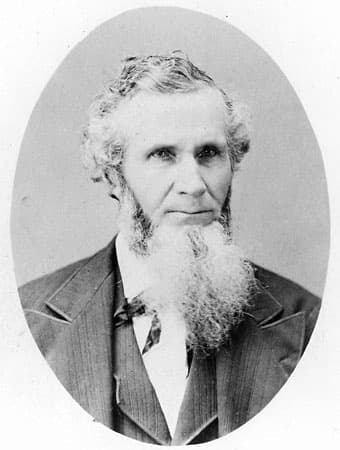
Joel Palmer
Joel Palmer was an influential American pioneer and politician in the Oregon Territory, known for his significant contributions to the settlement and governance of the region. Born in Upper Canada and raised in New York and Pennsylvania, he ventured westward in 1845, where he played a pivotal role in establishing the Barlow Road, the final segment of the Oregon Trail. His adventurous spirit was exemplified when he ascended Mount Hood to survey the landscape, aiding fellow travelers in their journey to the fertile lands of Oregon. Palmer's experiences during this period led him to author a popular guidebook for immigrants, which provided invaluable insights for those seeking to settle in the Pacific Northwest. Beyond his pioneering efforts, Palmer was a prominent political figure in Oregon's early statehood. He co-founded the town of Dayton and served in various capacities within the Oregon Legislative Assembly, including a term as Speaker of the House in 1862. His tenure as an administrator of Indian Affairs was marked by controversy, reflecting the complex and often fraught relationships between settlers and Native American tribes. Despite his political ambitions, including a failed bid for the governorship in 1870, Palmer's legacy endures through his contributions to Oregon's development and the preservation of his home, the Palmer House, which is recognized as a historic site.
Books from the author



Link to this page
Add a free, dofollow link to Lex on your blog, forum, syllabus, or reading list.

<a href="https://lex-books.com/author/joel-palmer"><img src="https://lex-books.com/badges/read-on-lex.svg" alt="Joel Palmer on Lex" width="160" height="40"></a>[](https://lex-books.com/author/joel-palmer)[url=https://lex-books.com/author/joel-palmer][img]https://lex-books.com/badges/read-on-lex.svg[/img][/url]Joel Palmer on Lex: https://lex-books.com/author/joel-palmer