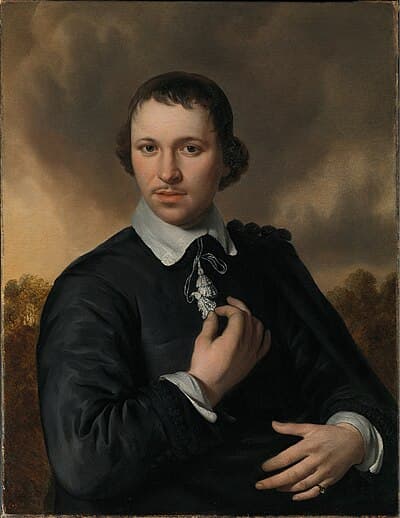
J. van de Capelle
J. van de Capelle was a prominent Dutch painter known for his exquisite seascapes and winter landscapes during the Golden Age of Dutch art. Born in Amsterdam, he dedicated much of his life to both his artistic pursuits and managing his family's dyeworks, which specialized in the production of carmine dye. This dual commitment to industry and art resulted in a relatively small oeuvre, with fewer than 150 surviving works. Despite the limited number of paintings, van de Capelle's mastery of marine scenes, particularly estuary and river landscapes, established him as a significant figure in 17th-century Dutch painting. His unique ability to capture the calmness of water, reflecting the atmospheric conditions above, became a hallmark of his style and set him apart from his contemporaries. Van de Capelle's legacy lies not only in his artistry but also in his role as an industrialist and art collector, which reflects the interconnectedness of commerce and culture during his time. His works, characterized by serene compositions and meticulous attention to detail, continue to be celebrated for their beauty and technical skill. As a result, he is often regarded as the outstanding marine painter of his era, influencing subsequent generations of artists who sought to emulate his tranquil depictions of nature.
Books from the author



Link to this page
Add a free, dofollow link to Lex on your blog, forum, syllabus, or reading list.

<a href="https://lex-books.com/author/j-van-de-capelle"><img src="https://lex-books.com/badges/read-on-lex.svg" alt="J. van de Capelle on Lex" width="160" height="40"></a>[](https://lex-books.com/author/j-van-de-capelle)[url=https://lex-books.com/author/j-van-de-capelle][img]https://lex-books.com/badges/read-on-lex.svg[/img][/url]J. van de Capelle on Lex: https://lex-books.com/author/j-van-de-capelle