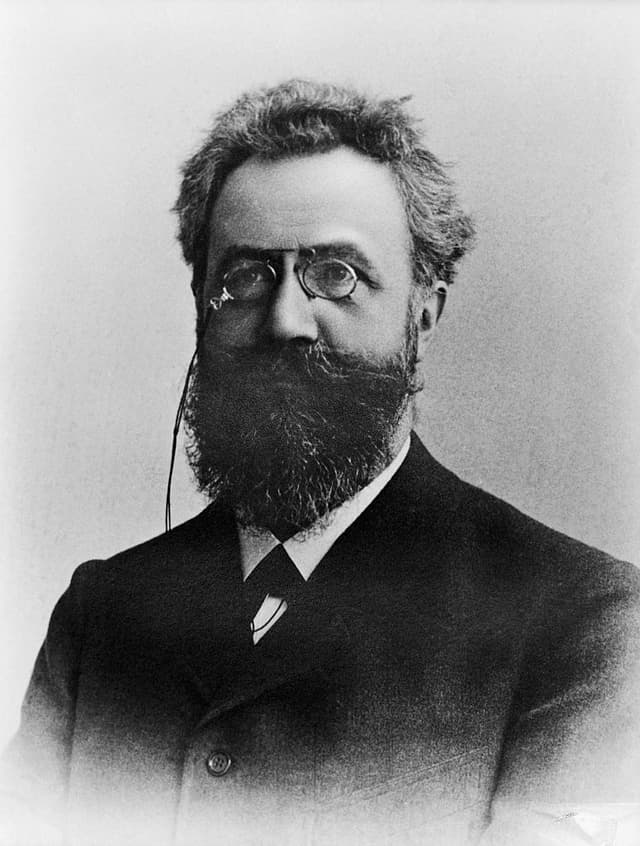
Hermann Ebbinghaus
Hermann Ebbinghaus was a groundbreaking German psychologist known for his pioneering work in the experimental study of memory. He conducted some of the first systematic experiments on memory processes, leading to the discovery of key concepts such as the forgetting curve and the spacing effect. Ebbinghaus's innovative approach involved the use of nonsense syllables to eliminate prior knowledge's influence on memory retention, allowing him to quantify how information is forgotten over time and how spaced repetition enhances learning efficiency. His formulation of the learning curve provided a foundational understanding of how individuals acquire knowledge and skills over time. Ebbinghaus's contributions significantly advanced the field of psychology, particularly in understanding cognitive processes related to memory. His work laid the groundwork for future research in educational psychology and cognitive science, influencing both theoretical and practical approaches to learning and memory. As a prominent figure in neo-Kantian philosophy, he also contributed to discussions on the nature of knowledge and cognition. Ebbinghaus's legacy endures in contemporary psychological research, where his findings continue to inform educational practices and memory studies.
Famous Quotes
View all 1 quotes“Psychology has a long past, yet its real history is short.”
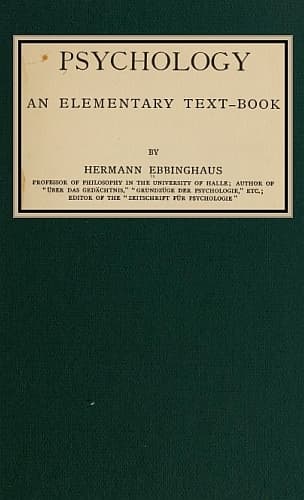
Books from the author





Link to this page
Add a free, dofollow link to Lex on your blog, forum, syllabus, or reading list.

<a href="https://lex-books.com/author/hermann-ebbinghaus"><img src="https://lex-books.com/badges/read-on-lex.svg" alt="Hermann Ebbinghaus on Lex" width="160" height="40"></a>[](https://lex-books.com/author/hermann-ebbinghaus)[url=https://lex-books.com/author/hermann-ebbinghaus][img]https://lex-books.com/badges/read-on-lex.svg[/img][/url]Hermann Ebbinghaus on Lex: https://lex-books.com/author/hermann-ebbinghaus