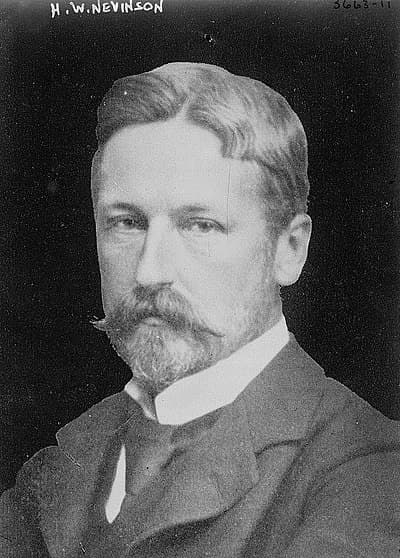
Henry Woodd Nevinson
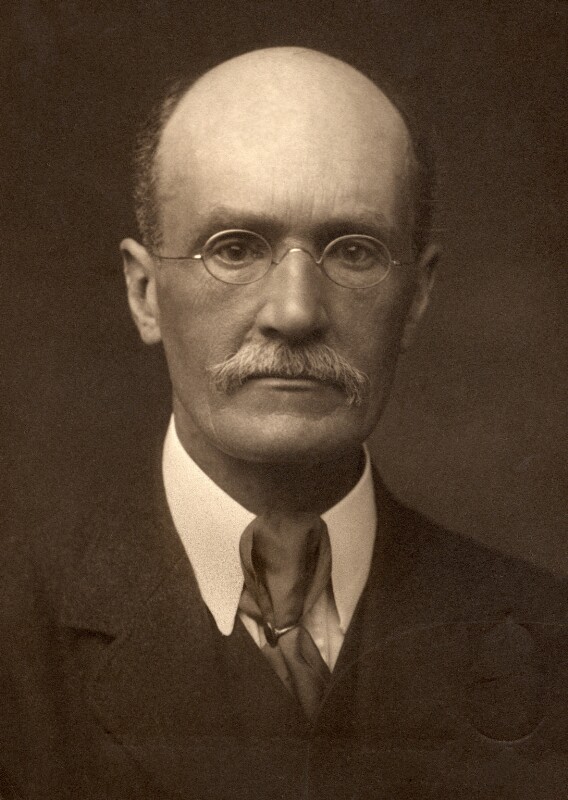
Henry Woodd Nevinson was an influential English war correspondent, journalist, and political commentator known for his advocacy on social issues. Born in Leicester, he was educated at Shrewsbury School and Christ Church, Oxford, where he was inspired by John Ruskin's ideas. His early career included missionary work at Toynbee Hall in London's East End, which deepened his commitment to social reform. Nevinson's literary debut came in 1884 with 'Herder and his Times,' one of the first English studies of the German philosopher Johann Gottfried Herder. This marked the beginning of a prolific career that would see him engage with significant social and political movements of his time. Nevinson gained prominence as a war correspondent during the Second Boer War and World War I, where his reporting brought attention to the realities of conflict and the plight of soldiers. He was also a campaigning journalist who exposed the horrors of slavery in western Africa, showcasing his dedication to humanitarian causes. As a suffragist, he advocated for women's rights, aligning himself with the broader social justice movements of the early 20th century. His contributions to journalism and literature not only highlighted pressing social issues but also influenced public opinion and policy, solidifying his legacy as a key figure in the fight for social reform and human rights.
Books from the author







Link to this page
Add a free, dofollow link to Lex on your blog, forum, syllabus, or reading list.

<a href="https://lex-books.com/author/henry-woodd-nevinson"><img src="https://lex-books.com/badges/read-on-lex.svg" alt="Henry Woodd Nevinson on Lex" width="160" height="40"></a>[](https://lex-books.com/author/henry-woodd-nevinson)[url=https://lex-books.com/author/henry-woodd-nevinson][img]https://lex-books.com/badges/read-on-lex.svg[/img][/url]Henry Woodd Nevinson on Lex: https://lex-books.com/author/henry-woodd-nevinson