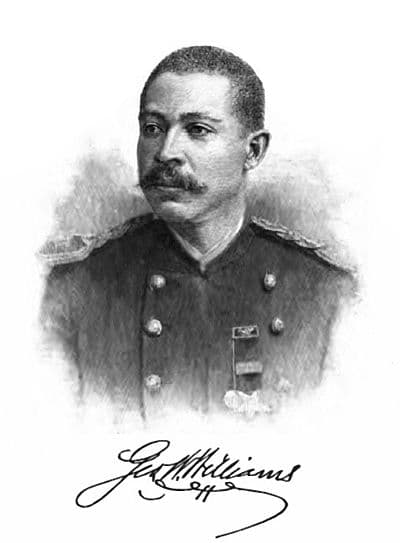
George Washington Williams
George Washington Williams was a multifaceted figure whose life spanned military service, politics, and advocacy for African-American history. Born in 1849, he served as a soldier during the American Civil War and later in Mexico before transitioning into a career as a Baptist minister, politician, lawyer, journalist, and historian. Williams was notably active in the Ohio House of Representatives, where he championed the rights of African Americans and worked to elevate their historical narratives. His commitment to social justice and historical accuracy marked him as a significant voice of his time. In the late 1880s, Williams turned his attention to international issues, particularly those affecting Africa. His encounter with King Leopold II of Belgium led him to the Congo Free State in 1890, where he was horrified by the exploitation and atrocities committed against the Congolese people. In response, he penned a groundbreaking open letter to Leopold, which highlighted the brutal conditions and suffering inflicted by the king's regime. This letter not only brought global attention to the plight of the Congolese but also introduced the term 'crimes against humanity' into public discourse, making Williams a pivotal figure in the early human rights movement. His legacy endures as a testament to the power of advocacy and the importance of bearing witness to injustice.
Books from the author


Link to this page
Add a free, dofollow link to Lex on your blog, forum, syllabus, or reading list.

<a href="https://lex-books.com/author/george-washington-williams"><img src="https://lex-books.com/badges/read-on-lex.svg" alt="George Washington Williams on Lex" width="160" height="40"></a>[](https://lex-books.com/author/george-washington-williams)[url=https://lex-books.com/author/george-washington-williams][img]https://lex-books.com/badges/read-on-lex.svg[/img][/url]George Washington Williams on Lex: https://lex-books.com/author/george-washington-williams