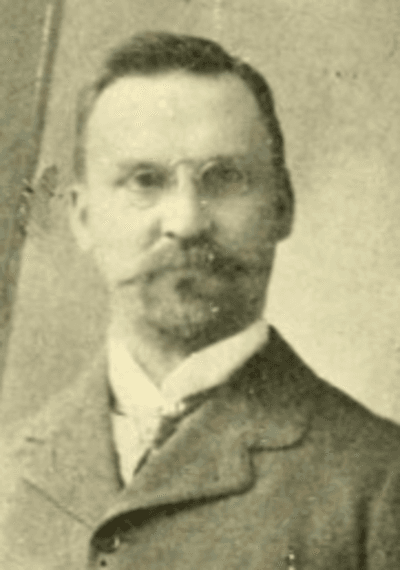
George Francis Dow
George Francis Dow was an influential American antiquarian and preservationist, renowned for his dedication to the history and heritage of New England. Born in Wakefield, New Hampshire, he became a prominent figure in the Society for the Preservation of New England Antiquities and joined the American Antiquarian Society in 1910. Dow's passion for historical preservation led to significant projects, including the restoration of the Parson Capen House in Topsfield, Massachusetts, in 1913. His vision extended to the creation of Pioneer Village, a living history museum designed to showcase life in 1630 Salem, Massachusetts, in celebration of the city's 300th anniversary. This innovative project was a collaboration with architect Joseph Everett Chandler and landscape architect Harlan Page Kelsey, marking one of the earliest examples of a living history museum in the United States. Dow's influence on historical preservation continued with the relocation and restoration of the John Ward House, which opened to the public in 1911 as the first outdoor museum of architecture in the country. His efforts not only preserved vital pieces of American history but also set a precedent for future preservation initiatives. The John Ward House, built in 1684 and now a National Historic Landmark, stands as a testament to Dow's legacy in safeguarding New England's architectural heritage. Through his work, Dow significantly contributed to the field of historical preservation, ensuring that future generations could appreciate and learn from the past.
Famous Quotes
View all 3 quotes“Tabby. Named for a quarter of Bagdad where the stuff was woven. A general term for a silk taffeta, applied originally to the striped patterns, but afterwards applied also to silks of uniform color waved or watered. The bride and bridegroom were both clothed in white tabby (1654). A child's mantle of a sky-colored tabby (1696). A pale blue watered tabby (1760). Rich Morrello Tabbies. (Boston Gazette, March 25, 1734).”
“Our ancestors had a highly developed appreciation of the value of condiments. In a Salem inventory at a somewhat later date appear salt, pepper, ginger, cloves, mace, cinnamon, nutmegs, and allspice.”
“One of the standard examples of American humor is the picture of the Mayflower loaded to the cross-trees with the chairs, chests and cradles that devout New Englanders now own and claim were brought over on that memorable voyage.”
Books from the author



Link to this page
Add a free, dofollow link to Lex on your blog, forum, syllabus, or reading list.

<a href="https://lex-books.com/author/george-francis-dow"><img src="https://lex-books.com/badges/read-on-lex.svg" alt="George Francis Dow on Lex" width="160" height="40"></a>[](https://lex-books.com/author/george-francis-dow)[url=https://lex-books.com/author/george-francis-dow][img]https://lex-books.com/badges/read-on-lex.svg[/img][/url]George Francis Dow on Lex: https://lex-books.com/author/george-francis-dow