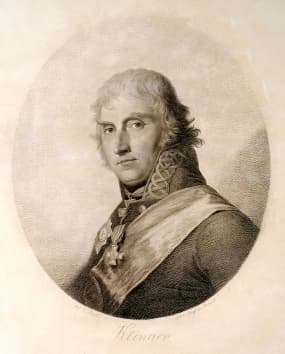
Friedrich Maximilian Klinger
Friedrich Maximilian von Klinger was a pivotal figure in German literature, best known for his contributions as a dramatist and novelist during the late 18th century. His play 'Sturm und Drang,' written in 1776, not only showcased his dramatic prowess but also lent its name to the influential artistic movement that emphasized emotion and individualism, marking a significant departure from the rationalism of the Enlightenment. Klinger, a childhood friend of Johann Wolfgang von Goethe, was closely associated with other prominent figures of the era, including Jakob Michael Reinhold Lenz, and played a crucial role in shaping the cultural landscape of his time. After a brief stint as a playwright for the Seylersche Schauspiel-Gesellschaft, Klinger left Prussia to pursue a military career, eventually becoming a General in the Imperial Russian Army. His literary works, characterized by their passionate themes and exploration of human emotion, contributed to the evolution of German drama and influenced subsequent generations of writers. Klinger's legacy is marked by his role in the Sturm und Drang movement, which paved the way for Romanticism and left an indelible mark on the trajectory of European literature.
Famous Quotes
View all 1 quotes“Erwürg mein Gefühl; oder schaff' mir einen Platz, wo ich all meine Tätigkeit, all mein Vermögen brauch‘.”
Books from the author




Link to this page
Add a free, dofollow link to Lex on your blog, forum, syllabus, or reading list.

<a href="https://lex-books.com/author/friedrich-maximilian-klinger"><img src="https://lex-books.com/badges/read-on-lex.svg" alt="Friedrich Maximilian Klinger on Lex" width="160" height="40"></a>[](https://lex-books.com/author/friedrich-maximilian-klinger)[url=https://lex-books.com/author/friedrich-maximilian-klinger][img]https://lex-books.com/badges/read-on-lex.svg[/img][/url]Friedrich Maximilian Klinger on Lex: https://lex-books.com/author/friedrich-maximilian-klinger