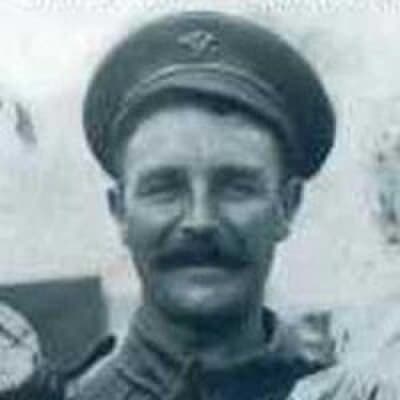
Frederic Manning
Frederic Manning was an Australian poet and novelist known for his poignant explorations of the human experience. Born in 1882, he spent much of his early life in Australia before moving to England, where he became involved in the literary scene. Manning's most notable work, the novel 'Her Privates We,' is a semi-autobiographical account of a soldier's experiences during World War I. The novel is distinguished by its raw and unflinching portrayal of the horrors of war, offering a perspective that was both personal and universal, which set it apart from other war literature of the time. Manning's literary significance lies not only in his vivid storytelling but also in his ability to convey the psychological complexities of his characters. His poetry, while less well-known, reflects a deep sensitivity to the nuances of emotion and the human condition. Despite his relatively small body of work, Manning's contributions have been recognized for their depth and insight, influencing later writers who sought to depict the realities of war and its aftermath. His legacy endures as a voice that captured the struggles of individuals against the backdrop of historical upheaval.
Famous Quotes
View all 3 quotes“Yea, she hath passed hereby, and blessed the sheaves, And the great garths, and stacks, and quiet farms, And all the tawny, and the crimson leaves. Yea, she hath passed with poppies in her arms, Under the star of dusk, through stealing mist, And blessed the earth, and gone, while no man wist. With slow, reluctant feet, and weary eyes, And eye-lids heavy with the coming sleep, With small breasts lifted up in stress of sighs, She passed, as shadows pass, among the sheep; While the earth dreamed, and only I was ware Of that faint fragrance blown from her soft hair. The land lay steeped in peace of silent dreams; There was no sound amid the sacred boughs. Nor any mournful music in her streams: Only I saw the shadow on her brows, Only I knew her for the yearly slain, And wept, and weep until she come again.”
“We are here in a wood of little beeches: And the leaves are like black lace Against a sky of nacre. One bough of clear promise Across the moon. It is in this wise that God speaketh unto me. He layeth hands of healing upon my flesh, Stilling it in an eternal peace, Until my soul reaches out myriad and infinite hands Toward him, And is eased of its hunger. And I know that this passes: This implacable fury and torment of men, As a thing insensate and vain: And the stillness hath said unto me, Over the tumult of sounds and shaken flame, Out of the terrible beauty of wrath, I alone am eternal. One bough of clear promise Across the moon”
“Death, of course, like chastity, admits of no degree; a man is dead or not dead, and a man is just as dead by one means as by another; but it is infinitely more horrible and revolting to see a man shattered and eviscerated, than to see him shot. And one sees such things; and one suffers vicariously, with the inalienable sympathy of man for man. One forgets quickly. The mind is averted as well as the eyes. It reassures itself after that first despairing cry: "It is I!" "No, it is not I. I shall not be like that." And one moves on, leaving the mauled and bloody thing behind: gambling, in fact, on that implicit assurance each one of us has of his own immortality. One forgets, but he will remember again later, if only in his sleep.”
Books from the author



Link to this page
Add a free, dofollow link to Lex on your blog, forum, syllabus, or reading list.

<a href="https://lex-books.com/author/frederic-manning"><img src="https://lex-books.com/badges/read-on-lex.svg" alt="Frederic Manning on Lex" width="160" height="40"></a>[](https://lex-books.com/author/frederic-manning)[url=https://lex-books.com/author/frederic-manning][img]https://lex-books.com/badges/read-on-lex.svg[/img][/url]Frederic Manning on Lex: https://lex-books.com/author/frederic-manning