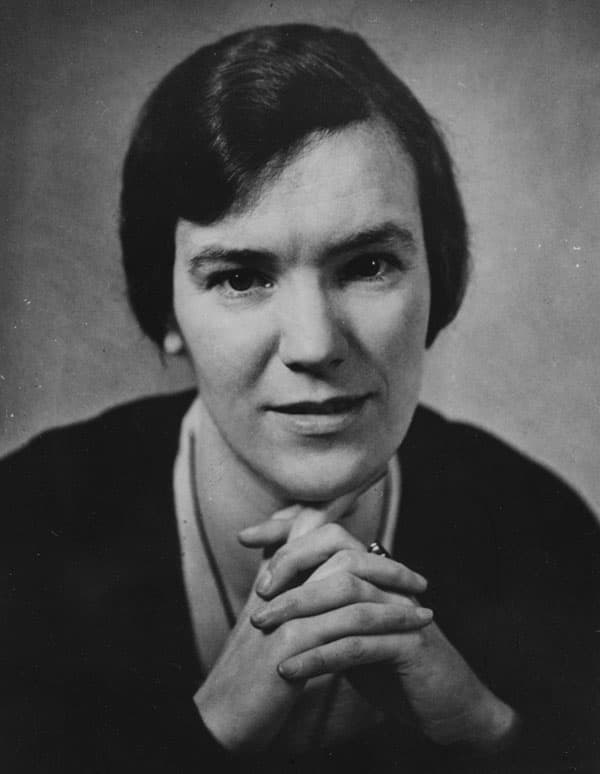
Eileen Power
Eileen Power was a pioneering British economic historian and medievalist, renowned for her innovative approach to the study of medieval society and its economic structures. Educated at Newnham College, Cambridge, she became one of the first women to gain prominence in her field, breaking barriers in a male-dominated discipline. Her work often focused on the intersection of economics and social history, emphasizing the importance of women's roles in medieval economies. Notable publications such as "Medieval English Nunneries" and "The Wool Trade in English Medieval History" showcased her meticulous research and ability to weave complex narratives from historical data, making significant contributions to the understanding of medieval life and commerce. Power's scholarship was characterized by a blend of rigorous academic analysis and engaging storytelling, which made her work accessible to a broader audience. She was also a key figure in the establishment of the Economic History Society and played an influential role in the development of economic history as a distinct academic discipline. Her legacy endures through her writings and the impact she had on future generations of historians, particularly in highlighting the economic contributions of women in history. Eileen Power's work remains a vital part of the discourse on medieval studies and economic history, marking her as a significant figure in the historiography of the period.
Famous Quotes
View all 3 quotes“Over and over again we find the Church councils complaining that the peasants (and sometimes the priests too) were singing 'wicked songs with a chorus of dancing women,' or holding 'ballads and dancings and evil and wanton songs and such-like lures of the devil'; over and over again the bishops forbade these songs and dances; but in vain. In every country in Europe, right through the Middle Ages to the time of the Reformation, and after it, country folk continued to sing and dance in the churchyard. Two hundred years after Charlemagne's death there grew up the legend of the dancers of Kölbigk, who danced on Christmas Eve in the churchyard, in spite of the warning of the priest, and all got rooted to the spot for a year, till the Archbishop of Cologne released them. Some men say that they were not rooted standing to the spot, but that they had to go on dancing for the whole year; and that before they were released they had danced themselves waist-deep into the ground. People used to repeat the little Latin verse which they were singing: ... Through the leafy forest, Bovo went a-riding And his pretty Merswind trotted on beside him-- Why are we standing still? Why can't we go away?”
“...it is plain that the proportion of celibates was high in the Roman empire and that the fall in the fertility of marriages was going on. It is the childless marriage, the small family system that contemporary writers deplore....'The human harvest was bad,' It was bad in all classes, but the decline was most marked in the upper ranks, the most educated, the most civilized, the potential leaders of the race.”
“This peaceful infiltration of barbarians which altered the whole character of the society which it invaded would have been impossible, of course, if that society had not been stricken by disease.”
Books from the author


Link to this page
Add a free, dofollow link to Lex on your blog, forum, syllabus, or reading list.

<a href="https://lex-books.com/author/eileen-power"><img src="https://lex-books.com/badges/read-on-lex.svg" alt="Eileen Power on Lex" width="160" height="40"></a>[](https://lex-books.com/author/eileen-power)[url=https://lex-books.com/author/eileen-power][img]https://lex-books.com/badges/read-on-lex.svg[/img][/url]Eileen Power on Lex: https://lex-books.com/author/eileen-power