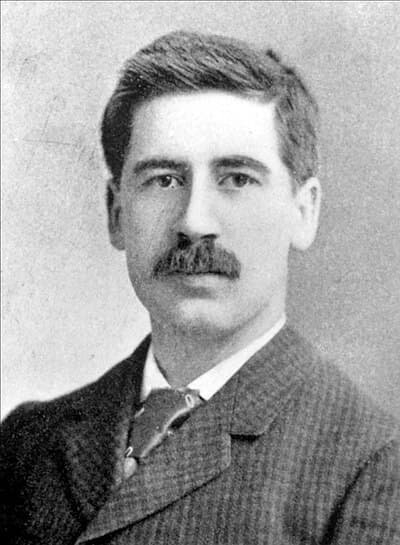
Edward Potts Cheyney
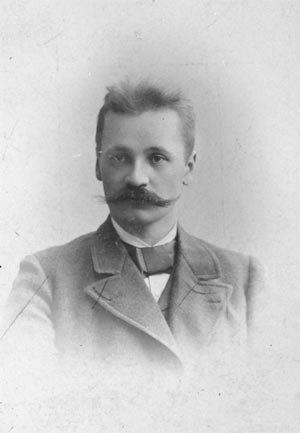
Edward Potts Cheyney was an influential American historian and economist, known for his extensive contributions to historical writing and economic theory. Born in Wallingford, Pennsylvania, he graduated from the University of Pennsylvania in 1883, later enhancing his academic pursuits with studies at German universities and the British Museum. His scholarly work earned him recognition, including election to the American Philosophical Society in 1904 and an honorary LL.D. degree from the University of Pennsylvania in 1911. Cheyney's notable works, such as 'A History of England' and 'A History of the United States,' were widely adopted as college textbooks, reflecting his ability to synthesize complex historical narratives for educational purposes. His writings not only provided a foundation for historical scholarship but also influenced the teaching of history in American universities. Cheyney's legacy endures through his contributions to the field of history and economics, marking him as a significant figure in early 20th-century American academia.
Famous Quotes
View all 3 quotes“such as a villain marrying without leave, failure to perform boon-works or bad performance of work, failure to place the tenant's sheep in the lord's fold, cutting of wood or brush, making unlawful paths across the fields, the meadows, or the common, encroachment in ploughing upon other men's land or upon the common, or failure to send grain to the lord's mill for grinding. Sometimes the offence was of a more general nature, such as breach of assize, breach of contract, slander, assault, or injury to property.”
“Henry I, on his accession in 1100, in order to gain popularity, had voluntarily granted a charter reciting a number of these forms of oppression and promising to put an end to them. The rebellious barons now took this old charter as a basis, added to it many points which had become questions of dispute during the century since it had been granted, and others which were of special interest to townsmen and the middle and even lower classes. They then demanded the king's promise to issue a charter containing these points. John resisted for a while, but at last gave way and signed the document which has since been known as the "Great Charter," or Magna Carta. This has always been considered as, in a certain sense, the guarantee of English liberties and the foundation of the settled constitution of the kingdom. The fact that it was forced from a reluctant king by those who spoke for the whole nation, that it placed definite limitations on his power,”
“Before the close of the thirteenth century the records of the manor courts, or at least of the more important of them, began to be kept with very great regularity and fulness, and it is to the mass of these manor court rolls which still remain that we owe most of our detailed knowledge of the condition of the body of the people in the later Middle Ages.”
Books from the author


Link to this page
Add a free, dofollow link to Lex on your blog, forum, syllabus, or reading list.

<a href="https://lex-books.com/author/edward-potts-cheyney"><img src="https://lex-books.com/badges/read-on-lex.svg" alt="Edward Potts Cheyney on Lex" width="160" height="40"></a>[](https://lex-books.com/author/edward-potts-cheyney)[url=https://lex-books.com/author/edward-potts-cheyney][img]https://lex-books.com/badges/read-on-lex.svg[/img][/url]Edward Potts Cheyney on Lex: https://lex-books.com/author/edward-potts-cheyney