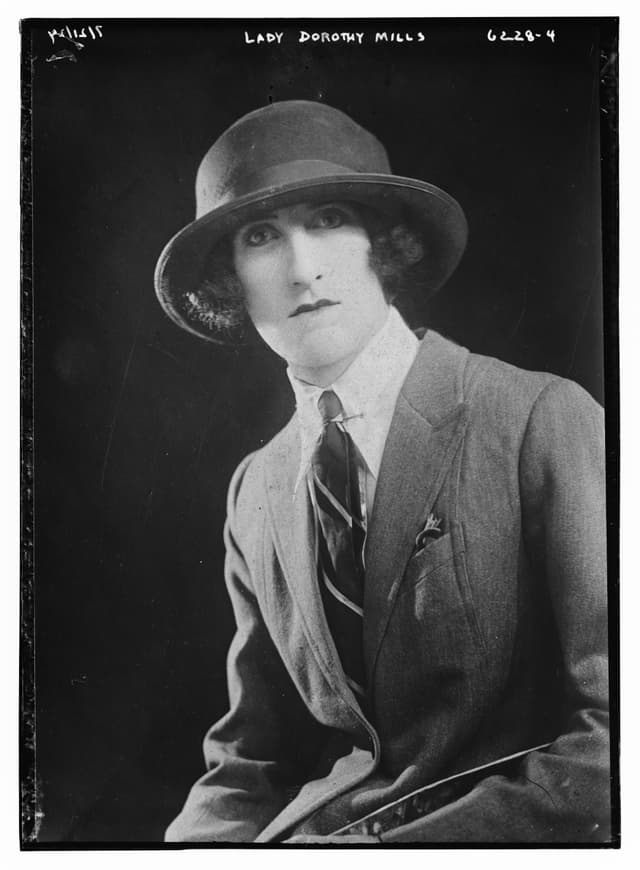
Dorothy Mills
Dorothy Mills was an influential figure in the realm of psychological thrillers, particularly known for her work in the 2008 film 'Dorothy Mills,' directed by Agnès Merlet. The film intricately weaves a narrative centered on a psychiatrist who becomes involved in the complex case of a disturbed young girl, exploring themes of mental illness and the human psyche. Mills' storytelling is marked by its psychological depth and suspense, contributing to the film's critical reception and its place within the genre. Though primarily recognized for this film, Mills' impact extends beyond a single work, as she played a significant role in shaping contemporary narratives that delve into the intricacies of mental health. Her ability to blend psychological insight with thrilling elements has left a lasting impression on audiences and filmmakers alike, solidifying her legacy in the world of psychological drama and mystery.
Famous Quotes
View all 4 quotes“The boys would quit school and sooner or later go to jail for something silly. I might not quit school, not while Mama had any say in the matter, but what difference would that make? What was I going to do in five years? Work in the textile mill? Join Mama at the diner? It all looked bleak to me. No wonder people got crazy as they grew up.””
“Trains passed in the opposite direction, taking back the cotton princes to Tidsley, Elton, Burrows, and further on to Southport, Blackpool, St. Anne's. She could see the occupants of the first-class carriages playing cards, or fallen into unlovely sleep. They did well to avert their eyes from the landscape they had made. They had made it; but they could not, like God, look and see that it was good. Monstrous slag-heaps, like ranges in a burnt-out hell; stretches of waste land rubbed bare to the gritty earth; parallel rows of back-to-back dwellings; great blocks of mill buildings, the chimneys belching smoke as thick and black as eternal night itself; upstanding skeletons of wheels and pulleys. Mills and mines; mills and mines all the way to Manchester, and the brick, the stone, the grass, the very air deadened down to a general drab by the insidious filter of soot.But Jane, Lancashire born and bred, did not find it depressing. It was no feeble, trickling ugliness, but a strong, salient hideousness that was almost exhilarating.””
“What if I stay?” She gaped at him. “What are you saying?” “You heard me. What if I keep the mill? Forget about Texas. Adopt Sophie. What then?” She was stunned. She’d never imagined such devotion even existed. “You love me that much? To give up everything you’ve ever wanted?” “Yes, darlin’. May the saints help me, I do.””
Books from the author






Link to this page
Add a free, dofollow link to Lex on your blog, forum, syllabus, or reading list.

<a href="https://lex-books.com/author/dorothy-mills"><img src="https://lex-books.com/badges/read-on-lex.svg" alt="Dorothy Mills on Lex" width="160" height="40"></a>[](https://lex-books.com/author/dorothy-mills)[url=https://lex-books.com/author/dorothy-mills][img]https://lex-books.com/badges/read-on-lex.svg[/img][/url]Dorothy Mills on Lex: https://lex-books.com/author/dorothy-mills