
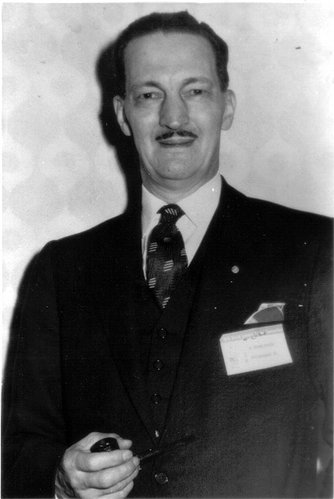
David H. Keller
David H. Keller was an American author and psychiatrist, known for his contributions to the genre of science fiction and horror during the early to mid-20th century. Born in 1880, Keller's medical background informed much of his writing, allowing him to explore themes of mental illness and the human condition with a unique perspective. His works often blended speculative elements with psychological insights, making them stand out in an era dominated by more traditional narratives. Notable stories such as 'The Last Man' and 'The Man Who Awoke' showcased his ability to intertwine science fiction with profound philosophical questions about humanity's future and the nature of existence. Keller's significance in the literary world extends beyond his individual works; he was a pioneer in the field of psychological horror and science fiction, influencing later authors with his innovative ideas. His stories frequently challenged societal norms and delved into the complexities of the human psyche, reflecting the anxieties of his time. Despite being less well-known today, Keller's contributions laid important groundwork for future generations of writers, and his exploration of the darker aspects of human nature continues to resonate within the genre. His legacy endures as a testament to the intersection of literature and psychology, marking him as a noteworthy figure in American speculative fiction.
Famous Quotes
View all 3 quotes“All space is relative. There is no such thing as size. The telescope and the microscope have produced a deadly leveling of great and small, far and near. The only little thing is sin, the only great thing is fear!("The Jelly-Fish")””
“About David's Gift Everyone should read this. Agree or disagree you should know what the pro-creation and anti-creation people have in their hearts.””
“Crossing the meadow, he came again to the mouth of the cave where he had stood so undecided only the twilight before. Knowing what he would find, he yet wanted the final confirmation. Pushing the evergreen branches aside from the smooth rock on the right side of the opening he found, deeply carved in the rock, an Ankh, Egyptian symbol of ever-lasting life, made possible only by the union of male and female. Partly covered by lichens, weather-worn by centuries of storm, it remained as he had seen it in his first dream. It was the first cross, and on it, generation by generation, humanity had crucified itself in order that future generations might live.("The God Wheel")””
Books from the author






Link to this page
Add a free, dofollow link to Lex on your blog, forum, syllabus, or reading list.

<a href="https://lex-books.com/author/david-h-keller"><img src="https://lex-books.com/badges/read-on-lex.svg" alt="David H. Keller on Lex" width="160" height="40"></a>[](https://lex-books.com/author/david-h-keller)[url=https://lex-books.com/author/david-h-keller][img]https://lex-books.com/badges/read-on-lex.svg[/img][/url]David H. Keller on Lex: https://lex-books.com/author/david-h-keller