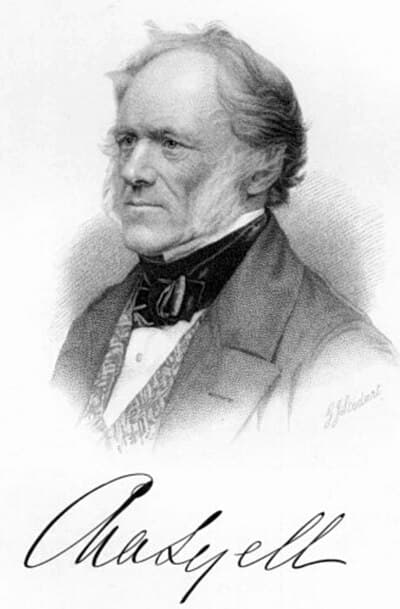
Charles, Sir Lyell
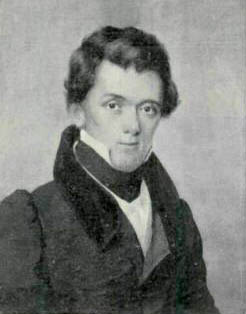
Sir Charles Lyell was a prominent Scottish geologist whose pioneering work laid the foundation for modern geology. He is best known for his influential book, 'Principles of Geology,' published in three volumes between 1830 and 1833. In this seminal work, Lyell introduced the concept of uniformitarianism, which posits that the Earth's features were shaped by the same natural processes still in operation today, rather than by catastrophic events. This revolutionary idea challenged the prevailing views of his time and significantly impacted the scientific community's understanding of Earth's history and geological processes. Lyell's contributions extended beyond his writings; he was also instrumental in popularizing geology as a science. His meticulous observations and field studies helped to establish geology as a rigorous discipline, influencing future generations of geologists, including Charles Darwin. Lyell's legacy is evident in the way geology is taught and understood today, as he emphasized the importance of empirical evidence and the gradual changes in the Earth's structure over time. His work not only advanced geological science but also had profound implications for the fields of biology and evolution, making him a key figure in the scientific revolution of the 19th century.
Books from the author










Link to this page
Add a free, dofollow link to Lex on your blog, forum, syllabus, or reading list.

<a href="https://lex-books.com/author/charles-sir-lyell"><img src="https://lex-books.com/badges/read-on-lex.svg" alt="Charles, Sir Lyell on Lex" width="160" height="40"></a>[](https://lex-books.com/author/charles-sir-lyell)[url=https://lex-books.com/author/charles-sir-lyell][img]https://lex-books.com/badges/read-on-lex.svg[/img][/url]Charles, Sir Lyell on Lex: https://lex-books.com/author/charles-sir-lyell